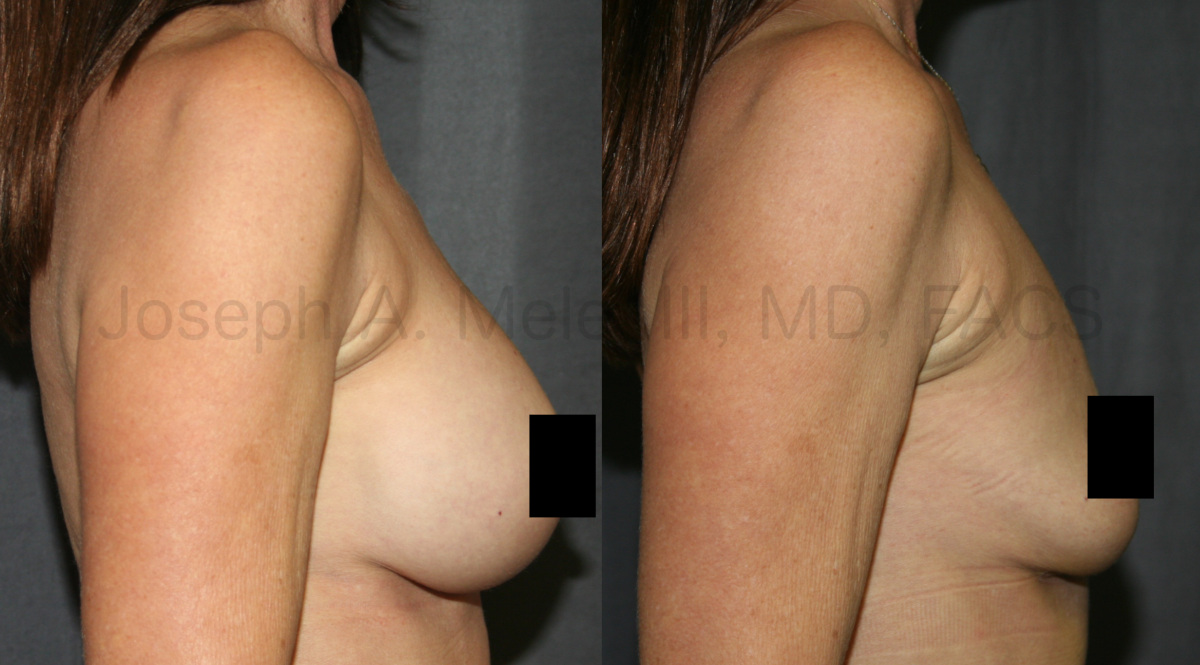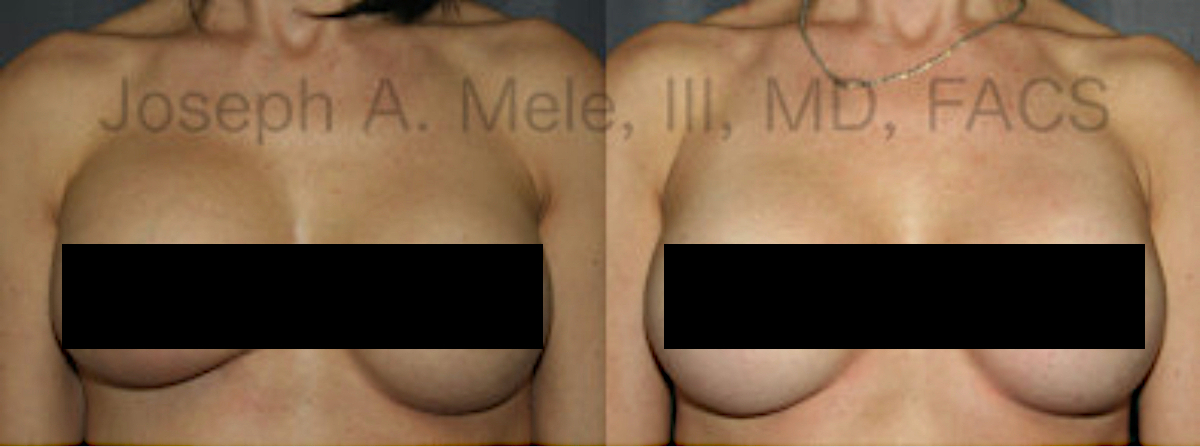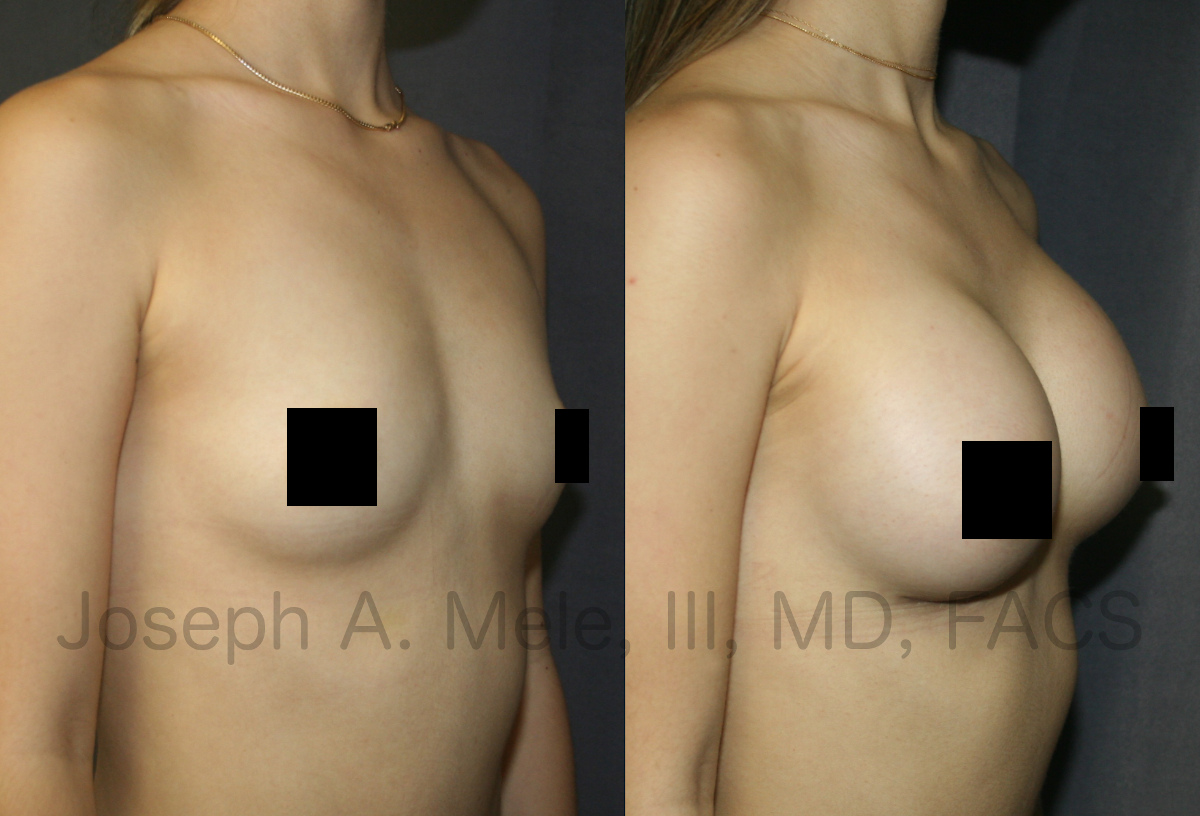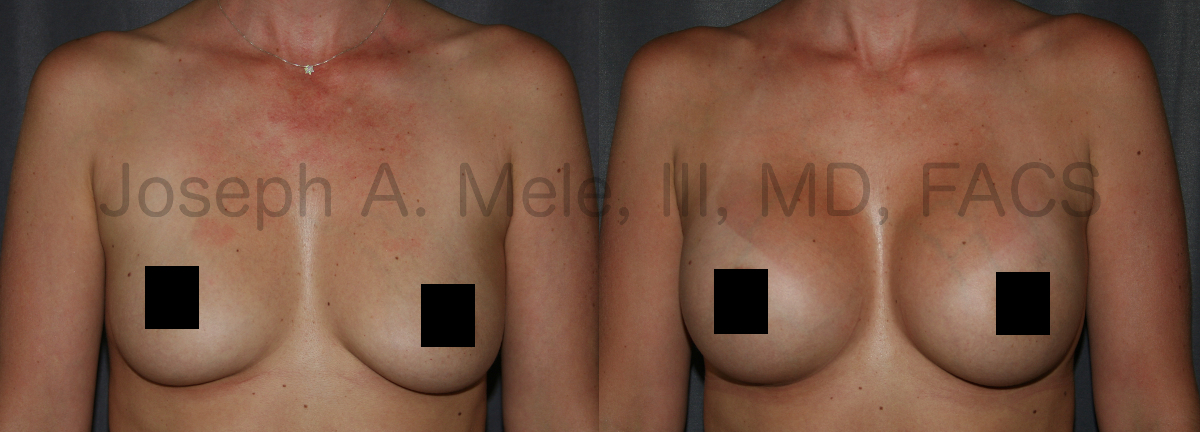
Breast Augmentation with Breast Implants remains one of the most popular cosmetic plastic surgery procedures in the San Francisco Bay Area, but breast enhancement comes in all shapes and sizes. As a Board Certified Plastic Surgeon in the East San Francisco Bay Area City of Walnut Creek, a large part of my private practice is dedicated to the numerous aspects of breast enhancement, including:
The simplest way to decide what to do to achieve the optimal results in Breast Enhancement Surgery is to independently evaluate what needs to be done to the size of the breast and what needs to be done to the shape of the breast. While intimately related, size and shape often need to be addressed separately.
The Best Breast Size
The best size for your breasts depends on you. The best breast size will vary, and depends on the size of your body (preoperative breast size, the dimensions of the chest wall, height, weight); your level of activity (couch potato, gym enthusiast, serious athlete, Olympian); and most importantly, your comfort level with your desired cup size. This is a simplification, but a good sampling of what I am considering during every breast enhancement consultation. Whether increasing the size of the breasts with breast augmentation or decreasing the size of the breast with Breast Reduction, there is a range of aesthetic outcomes determined by physical parameters. In the vast majority of cases, this range includes what my patient has pictured in her own mind. On the other hand, the imagination has no bounds, and occasionally it outstrips what is possible.
The Best Breast Shape
The ideal breast is perky, with the nipple centered over the most projecting aspect of the breast. Changes in shape solely due to absent or lost volume, like that seen after pregnancy or weight loss, can often be improved with breast implants alone. Changes in shape due to increasing breast volume, whether due to genetics, pregnancy or weight gain, are addressed with breast reduction.
It may seem like breast reduction is the opposite of Breast Augmentation. If you are considering only breast size, it is. However, when we consider breast shape, just removing volume is not sufficient. The result would be a deflated, saggy breast. Breast reduction surgery includes a breast lift as an integral part of the procedure.
The Best Breast Lift
Breast Lifts, like breasts themselves, come in different sizes. Small breast lifts are effective for small amounts of sagging, while big breast lifts are necessary to correct large amounts of sagging. The topic is too large to cover in a paragraph, or even a web page, but more general information is available on San Francisco Breast.
The important part about breast lifts is that they help enhance the shape of the breast. Whether you are born with tubular breasts, have breast asymmetry or your breasts are ptotic (saggy), a breast lift can reshape the breasts into a more attractive form. Unlike breast augmentation, which simply magnifies the existing shape of the breast, a breast lift can remove excess skin and elevate the nipple’s position on the breast mound.
Breast Enhancement Consultations
If you are considering breast augmentation, breast lift or breast reduction surgery, be certain to find a qualified Board Certified Plastic Surgeon. It is important to remember that while there may be several ways to accomplish your desired goals, the method is not as important as the person you choose to do your surgery. Choose a Board Certified Plastic Surgeon, who is an active member of the American Society of Plastic Surgeons (ASPS). If you are considering cosmetic plastic surgery, members of the American Society for Aesthetic Plastic Surgery (ASAPS) are ASPS members who have shown a special interest in the cosmetic side of plastic surgery. For those truly dedicated to Cosmetic Plastic Surgery, the ASAPS also offers a Certificate of Advanced Education in Cosmetic Surgery. Mine is pictured below, as evidence that I am dedicated to providing you with the best that Cosmetic Plastic Surgery has to offer.
Dr. Mele's Certificate of Advanced Education in Cosmetic Surgery
If you are in the Greater San Francisco Bay Area, and would like to take the next step and schedule a personalized consultation appointment, please give us a call at (925) 943-6353, or use the contact form to the left.
Breast Implant Revision Surgery is performed to improve the results of Breast Augmentation. While Breast Augmentation is both safe and effective, our bodies continue to change as we age. Breasts naturally change size and shape over time. This occurs with or without breast augmentation. While most changes are gradual, changes can happen relatively quickly with pregnancy and changes in weight.
Breast Implant Replacement
Breast implants can wear out too, requiring a new implant to be placed. The major US breast implant companies, Allegan and Mentor, do provide Breast Implant Warranties.
What Are the Common Reasons for Breast Augmentation Revision Surgery?
The most common reasons for Breast Implant Revision Surgery are a desire for a change in size, deflation of the breast implant, capsular contracture and breast implant malposition. It is important to clearly identify what problem(s) are bothersome, and to seek a consultation with a Board Certified Plastic Surgeon.
Below is number four of four of my latest Breast Implant Revision Videos. They appeared on KRON4′s Body Beautiful. The series covers Breast Augmentation, Breast Implants and Breast Augmentation Maintenance. The television show was broadcast live, so viewers could call in during the broadcast to have their questions answered. The (415) number shown in the video was only for the show; however, if you have Breast Augmentation or Breast Implant Revision questions, please call our San Francisco Bay Area Plastic Surgery Office directly at (925) 943-6353. If you prefer, you may also use the contact form on the left.
San Francisco Bay Area Breast Implant & Breast Augmentation Revision Video
San Francisco Bay Area Breast Implant Revision Questions
This Breast Augmentation and Breast Implant Revision Surgery video includes:
The type of trauma most likely to cause breast implant deflation
Common reasons for breast implant revision surgery
Changing breast implant size
Breast implant leaks
Capsular Contracture
Breast Implant Malposition
Breast Augmentation and Breast Implants Revision Resources
You are viewing number three of four Breast Implants Revision Video segments from Dr. Mele’s recent Body Beautiful television appearance. Here are links to the other segments:
Breast Implant Revision Surgery is performed to improve the results of Breast Augmentation. Breast Augmentation Revision can help with Breast Implants are the wrong size, in the wrong position, have developed capsular contracture or when other cosmetic deformities require correction. Specific techniques have evolved for the correction of the most common problems that can occur with Breast Implants. Some recently developed new techniques have significantly improved the results of breast implant revision for problems that have been difficult in the recent past.
San Francisco Bay Area Breast Augmentation
This segment of Body Beautiful focuses on before and after results. Breast Augmentation is reviewed, as well as the correction of specific breast implant problems like capsular contracture and implant malposition (bottoming out and symmastia). The following Breast Implant Revision Video was broadcast on KRON4′s live Medical Monday show, Body Beautiful. The television show allows viewers to call in during the broadcast and have their questions answered. The (415) number shown in the video was only for the show, so if you have Breast Augmentation or Breast Implant Revision questions, please call our San Francisco Bay Area Plastic Surgery office directly at (925) 943-6353, or use the contact form on the left.
San Francisco Bay Area Breast Augmentation & Breast Implant Revision Video
San Francisco Bay Area Breast Implant Revision Questions
This Breast Augmentation, Breast Augmentation Revision Surgery video includes:
Before and After Pictures of Breast Augmentation
Before and After Pictures of Breast Augmentation Revision including:
Before and After Pictures of Breast Augmentation Revision for a Breast Implant that is too low and a poorly formed inframammary fold (IMF)
Before and After Pictures of Breast Augmentation Revision for Grade III Capsular Contracture causing the Breast Implant to be too high (Capsulotomy/Capsulectomy)
Before and After Pictures of Breast Augmentation Revision for Grade IV Capsular Contracture causing the implant to ride up and appear significantly smaller
Before and After Pictures of Breast Augmentation Revision for Breast Implants that are too close (as seen in symmastia) and too far from the midline (often causing a large gap between the breast implants) and rippling on the inside of the breast (medial rippling)
Before and After Pictures of Breast Augmentation Revision for severe bottoming out with internal capsulorrhaphy (though a breast lift is the most frequently selected option)
Breast Augmentation and Breast Implants Revision Resources
You are viewing part two of four Breast Implants Revision Video segments from Dr. Mele’s recent Body Beautiful television appearance. Here are links to the additional segments:
Breast Augmentation remains one of the most popular cosmetic plastic surgery procedures. While often the procedure lasts a lifetime, breast augmentation revision is quite common. Breast Implant Revision has emerged as a specialty unto itself. While many of the tenants that lead to excellent Breast Augmentation results will also apply to Breast Augmentation Revision, new and specific techniques have evolved for the correction of the common problems that can occur with Breast Implants.
The most frequent reasons for Breast Augmentation Revision Surgery include the desire to change the size of the breast, breast implant deflation, problems with the position of the breast implants and tightening of the scar that normally forms around the breast. The last listed is called capsular contracture.
San Francisco Bay Area Breast Augmentation
What follows is a Breast Implant Revision Video segment from KRON4′s live Medical Monday show, Body Beautiful. The television broadcast allows viewers to call in and have their questions answered live. The (415) number shown in the video was only for the show, so if you have Breast Augmentation or Breast Implant Revision questions, please call our San Francisco Bay Area Plastic Surgery office directly at (925) 943-6353, or use the contact form on the left.
San Francisco Bay Area Breast Augmentation & Breast Implant Revision Video
San Francisco Bay Area Breast Implant Questions
This Breast Augmentation, Breast Augmentation Revision Surgery video includes:
What to consider before having Breast Augmentation
Is “routine maintenance” for Breast Implants required?
If my Breast Implants are too high, can they be lowered?
If my Breast Implants are too low, can they be raised?
If my Breast Implants are too wide, can they be moved towards the middle?
If my Breast Implants are too close together, can they be separated?
What causes Breast Implants to fail?
Can I maintain my body proportions and have Breast Augmentation?
What are the problems associated with Breast Implants which are too big?
Breast Augmentation and Breast Implants Revision Resources
You are viewing one of four Breast Implants Revision Video segments from Dr. Mele’s recent Body Beautiful television appearance. Here are links to the additional segments:
Breast Augmentation and Breast Implant Revision San Francisco Bay Area – 1 of 4 (You Are Here)
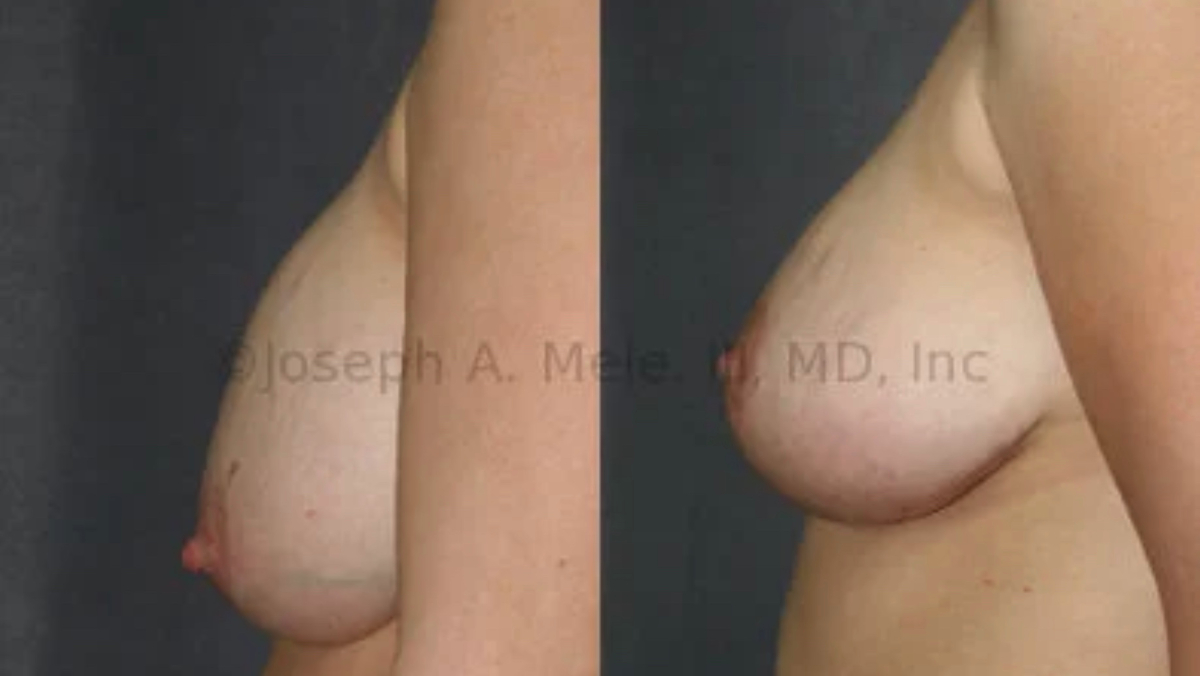
This patient had breast augmentation prior to becoming pregnant. Left: After pregnancy, the breast implant position remains unchanged; however, the breasts have dropped. Right: After breast augmentation revision, the breasts have been lifted and the breast implants exchanged, dramatically improving the breasts' shape and profile.
Pregnancy and Breast Augmentation
Pregnancy can change the volume and shape of breasts, and the result isn’t always positive. If you have been pregnant, you know firsthand. For the lucky few the changes are subtle, or even enhancing, but usually they are not. Many patients opt for breast augmentation after having children to restore what was lost. If you are trying to get pregnant, it is worth delaying your breast augmentation; however, if childbearing is not imminent, waiting may not be desirable.
Breast Implant Problems After Pregnancy
The breast augmentation revision before and after pictures above are of a woman who had breast augmentation at a young age, and enjoyed her breast implants for many years. After childbearing, her breast implants remained in a perky position, but the natural breast tissue sagged. Her breasts would have sagged and deflated whether she had breast implants or not, but with implants the result was normal elongated, deflated breasts, with the addition of disproportionate upper pole fullness from her breast implants.
The Breast Implant Revision Solution
The solution was a breast lift with breast implant exchange. The natural breast tissue was lifted to reduce the length of the breast and firm the natural breast tissue. The breast implant was exchanged to help with both shape and the post-partum changes in breast volume. Larger breast implants can be used to replace lost breast volume. Smaller implants, removal of the breast implants, or even breast reduction can help when the breast remain too large after lactation.
A desire to change breast implant size (larger or smaller)
Deflation of the breast implant
Firmness due to tightening on the breast implant capsule (capsular contracture)
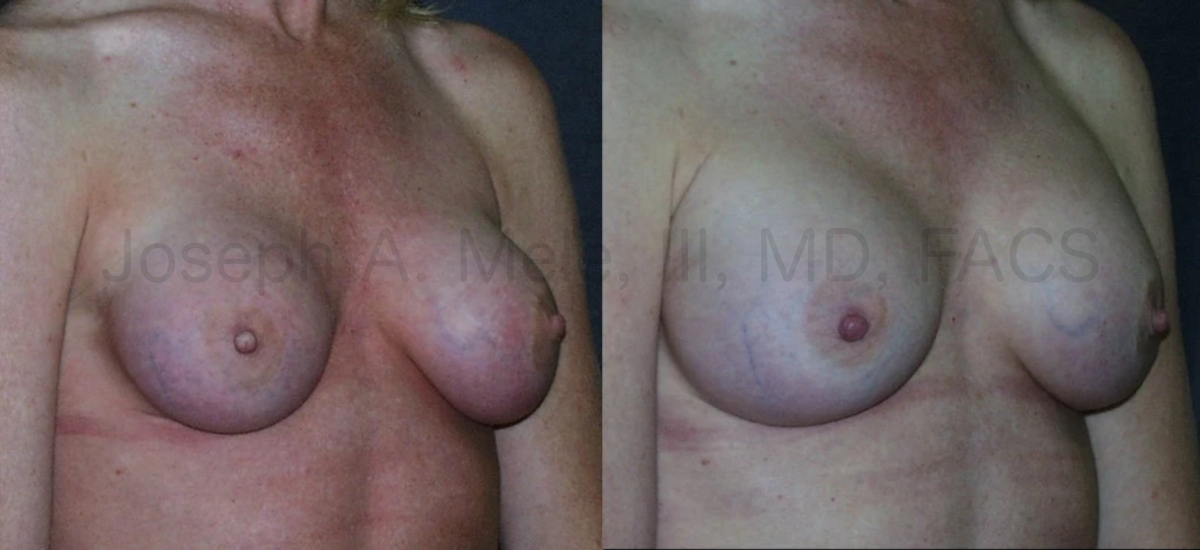
Breast implant asymmetry or malposition like bottoming out, double bubble or symmastia (uniboob)
If you have one of these problems, a Board Certified Plastic Surgeon, like Walnut Creek Breast Implant Specialist Joseph Mele, MD, FACS, can help.
Tomorrow, Dr. Mele will be appearing on Body Beautiful. The show airs live on KRON, channel 4, September 12, 2011, at 11:00 AM. Breast augmentation and breast augmentation revision surgery will be discussed. If you have questions, call in to the KRON studios on Monday at 11:00AM, or send us your question through the contact form on the left. Every effort will be made to answer your questions during the show.
Breast Implant Revision Videos
Below are links to previous television appearances on KRON4 featuring Breast Augmentation Revision Videos and Breast Augmentation Revision Before and After Photos:
Breast Augmentation Scar Revision Before and After Pictures
Breast Augmentation Scar revision is another reason for Breast Implant Revision Surgery. Follow the link for a case presentation of breast augmentation scar revision for a wide-spread periareolar scar : Hypertrophic Breast Scar Revision
Saline Breast Implants or Silicone Breast Implants? The question is asked every day in my Walnut Creek Plastic Surgery Office, and it is often followed by, “Which is Safe?” The decision to have breast augmentation surgery is a personal one. While both saline breast implants and silicone breast implants are both safe, which is best will depend on you.
Why Choose Silicone Breast Implants?
The main reason women choose silicone gel breast implants is because they feel softer. If you are thin and have small breasts, a breast implant will be more palpable. A silicone breast implant tends to give a softer, less detectable result. A silicone breast implant will move more like breast tissue too. These advantages are less pronounced for larger breasts.
Why Choose Saline Breast Implants?
The main reason my patients choose saline breast implants is because they are afraid of silicone. Saline implants are a bit firmer and can provide some additional projection when this is desired. They can also be placed through smaller incisions, because saline breast implants can be inserted empty, and filled after they are inside. The peace-of-mind that saline breast implants offer comes into play when we discuss breast implant leaks.
What Happens if My Breast Implants Leak?
Both the currently approved saline breast implants and silicone breast implants can leak. If and when the FDA gets around to approving the form-stable, gummi-bear breast implants, board certified plastic surgeons will be able to offer an implant that doesn’t leak. For now, leakage rates are low, but account for about one third of all breast implant revision surgery.
When Saline Breast Implants Leak
When a saline breast implant leaks it is obvious. The implant goes flat, and the volume is lost. No special test is necessary to make the diagnosis. Since saline is water with a little salt added to match your body’s saltiness, it is quickly absorbed and leaves no trace. US breast implant manufactures offer lifetime breast implant warranties, so the breast implant will be supplied without a charge, and if a leak occurs within 10 years of your primary breast augmentation, they will also supply money to help defray the cost of surgery to replace the defective implant.
When Silicone Gel Breast Implants Leak
When a silicone gel breast implants leaks, it may not be so obvious. The silicone is a cohesive gel and does not run like water. This is good in that the capsule around the implant often prevents the gel from migrating; however, it also means that the size of the breast does not change. The FDA has recommended that all patients with silicone breast implants obtain an MRI every other year to look for these silent leaks beginning three years after the initial surgery. If the gel migrates outside the capsule, the body will often form additional scar to wall-off the free gel. This can cause a lump in the breast and may be the first clue that a silicon breast implants has leaked.
So … Saline Breast Implants or Silicone Breast Implants?
There is no “correct” answer. For most patients a good result will be obtained with either saline breast implants or silicone breast implants. Silicone breast implants tend to give a more aesthetic result when the breast tissue is small and when the implant is large. The bigger the breast implant, and the smaller the breast, the more obvious breast augmentation may be. The silicone implants feels and acts more like breast tissue, so it can often provide a superior result in this situation. The advantage is not as pronounced if you have more breast tissue and a smaller breast implant.
While information is available on-line, the best way to get an informed opinion is by visiting a Board Certified Plastic Surgeon. If you would like to schedule an appointment with Dr. Mele give us a call at (925) 943-6353 or use the contact form in the left column.
It has been an interesting summer in the San Francisco Bay Area. The rest of the country is trying out the West Coast’s favorite natural disaster – Earthquakes. Earlier this week a 5.5 earthquake hit Cokedale, Colorado and a 5.8 struck in Mineral, Virginia. We are not slacking on that department, as I was awakened Tuesday night by a mild 3.6 quake, one of 75-100 San Francisco Bay Area Earthquakes this week.
Maybe it’s Earthquake weather, but this summer’s weather has been a bit odd. While the rest of the country has been roasting, it has been a mild summer for San Francisco. Bay Area Breast Augmentation, on the other hand, remains hot. In office procedures such as Botox, Fillers and Chemical Peels are still the most frequently performed facial enhancements, but Breast Augmentation (Augmentation Mammoplasty) remains the most popular cosmetic plastic surgery procedure, with 300,000 breast augmentations performed in 2010 just in the US.
Breast Augmentation Before and After Pictures
Reasons for Breast Augmentation
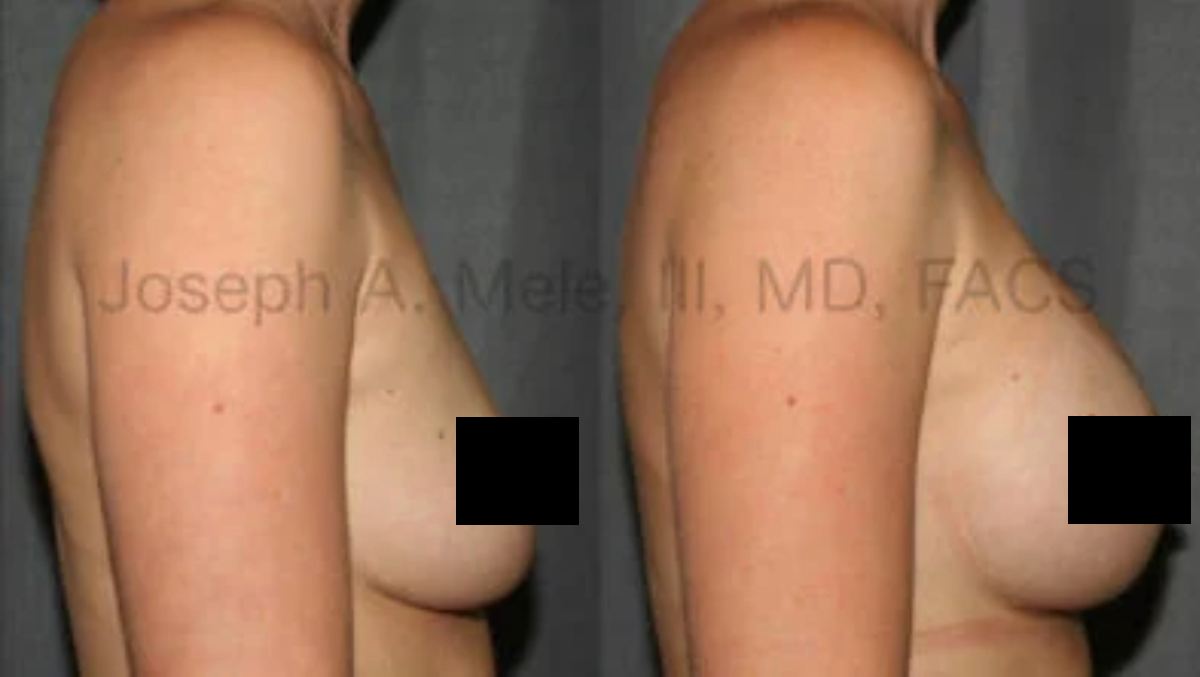
Breast Augmentation is performed for many different reasons, and the choice to get Breast Implants is a personal one. The most common reasons include the correction of breasts that never fully developed, restoring volume lost after pregnancy or weight loss, congenital deformities and the loss of a breast due to breast cancer. Breast Implants help restore body proportions, enhancing the way clothing fits. Some commonly asked questions about Breast Augmentation are answered on my main web site, and links are provided below.
If you are interested in learning more about Breast Augmentation, or you have Breast Implants and are considering Breast Augmentation Revision, give one of San Francisco Bay Area’s premier Breast Implant Specialists a call at (925) 943-6353, or contact us through the contact form in the left column.
Silicone gel filled breast implants were introduced to the US in 1962, and after 50 years of use, they remain among the most scrutinized medical devices currently available in the US. In June, 2011, the FDA released their Update on the Safety of Silicone Gel-Filled Breast Implants.
A Brief History of Breast Implants
1962 – Silicone gel-filled breast implants were introduced in the US. Prior to 1962, breast augmentation was performed with fat grafting or polyvinyl sponges.
1976 – US Congress passes the 1976 Medical Device Amendments to the Federal Food, Drug, and Cosmetic Act. Breast implants are classified as moderate risk (Class II) devices and required to comply with general controls and performance standards. The FDA reviews new breast implants through the 510(k) premarket notification process.
1980′s – Concerns are raised about associations between breast implants, particularly the silicone gel filled breast implants, and serious health issues such as breast cancer and systemic connective tissue disorders such as lupus, scleroderma and rheumatoid arthritis. The FDA reclassifies breast implants into Class III, higher-risk products needing premarket approval (PMA), and called for manufacturers to provide data demonstrating the devices were safe and effective.
1992 – The FDA decides that the manufacturers had not adequately addressed public concerns about certain complications. Rather than selecting the devices with a poor record, the FDA removes all silicone gel filled breast implants from the market, but only for elective cosmetic breast augmentation. The FDA continues to allow manufacturers to provide silicone gel filled implants for reconstruction after mastectomy, correction of congenital deformities, replacement of existing implants and for breast augmentation performed in conjunction with a breast lift. The Breast Implant Adjunct Studies were created, so that data could be collected about device performance and safety in these groups of women. In order to make breast implants again available for elective cosmetic breast augmentation, the FDA requires manufacturers to submit premarket approval applications that contained data on safety and effectiveness – like a new product. Europe follows the lead, but removes restrictions after 6 months, after reviewing the available literature and finding no links to serious systemic health issues.
1993 – The next generation of breast implants (Allergan Style 410 and Mentor Contour Profile Gel), textured, anatomic, highly cohesive (nearly form stable), silicone gel filled breast implants are complete, tested, and ready for submission for FDA studies in the United States and Europe … and Europe takes the lead.
1999 – The Institute of Medicine (IOM) releases a comprehensive report of the published literature and ongoing studies on breast implants, entitled Safety of Silicone Breast Implants. The study concludes that there is no evidence that silicone breast implants cause systemic health effects, such as cancer or autoimmune disease. Local complications (infection, bleeding, pain, deflation, capsular contracture, additional surgery) remain the primary safety issue with silicone breast implants.
2006 – The FDA approves Allergan’s Natrelle Silicone Gel Filled Breast Implants and Mentor’s MemoryGel Silicone Gel Filled Breast Implants. The FDA based its approvals on the manufacturers’ Core Studies. These clinical PMA studies followed hundreds of women with silicone gel filled breast implants for 4 years (Allergan) or 3 years (Mentor). The FDA determines that silicone filled breast implants are safe and effective and that the benefits and risks of breast implants were sufficiently well understood for women to make informed decisions about their use. As conditions of approval, the FDA requires both manufacturers to conduct six post-approval studies to investigate the long-term performance and safety of their silicone gel filled breast implants. From the FDA’s site these studies are:
Core Post-Approval Studies (Core Studies) – To assess long-term clinical performance of breast implants in women that enrolled in studies to support premarket approval applications. These studies were designed to follow women for 10 years after initial implantation.
Large Post-Approval Studies (Large Studies) – To assess long-term outcomes and identify rare adverse events by enrolling more than 40,000 silicone gel-filled breast implant patients and following them for 10-years.
Device Failure Studies (Failure Studies) – To further characterize the modes and causes of failure of explanted devices over a 10-year period.
Focus Group Studies – To improve the format and content of the patient labeling.
Annual Physician Informed Decision Survey (Informed Decision Study) – To monitor the process of how patient labeling is distributed to women considering silicone gel-filled breast implants.
Adjunct Studies – To provide performance and safety information about silicone gel-filled breast implants provided to U.S. women from 1992-2006, prior to approval, when implants could only be used for reconstruction and replacement of existing implants.
2011 – The FDA releases the Update on the Safety of Silicone Gel-Filled Breast Implants. The conclusion: breast implants, while not perfect, remain safe and effective. The most common problems associated with breast implants remain: capsular contracture, reoperation and implant removal (with or without replacement). Other frequent complications include: implant rupture, wrinkling, asymmetry, scarring, pain, and infection, among others. These observations are consistent with the local complications and adverse outcomes that were known at the time of approval, and there remains no apparent association between silicone gel filled breast implants and connective tissue disease, breast cancer, or reproductive problems.
What’s Next in US Breast Implants
A “new” breast implant has been available in Europe since 1993, and despite many years of experience, it continues to await US approval by the FDA. These from stable breast implants also are not perfect; however, they have a lower local complication rate than any breast implant currently available on the US market. San Francisco Bay Area Breast Augmentation patients and Plastic Surgeons alike, want to know, when will “gummi-bear” breast implants finally be approved? The date of approval remains anybody’s guess.
What follows is a video segment from my recent television appearance on the Bay Area’s Local News Station, KRON4. I was originally scheduled to talk about Tummy Tucks (Abdominoplasty), but we kicked off the show with this important late breaking news update for women with breast implants. The (415) phone number in the video was for the live broadcast only. If you have questions about abdominoplasty, feel free to call my office directly at (925) 943-6353, or use the contact format the bottom of the column to the left.
This ALCL (Anaplastic Large Cell Lymphoma) update video includes:
Information from the January 2011 FDA White Paper
Why is it called a lymphoma?
Why ALCL is not breast cancer?
What are the symptoms of ALCL?
How is the diagnosis of ALCL made?
How rare is ALCL (34 cases in 10 million breast augmentation patients)
How is ALCL treated?
Do my implants need to be removed?
The important points to keep in mind:
ALCL is very rare.
ALCL presents with symptoms.
increasing size
swelling
discomfort
fluid around the implant.
ALCL is not breast cancer.
ALCL treatment is available.
If you have concerns with your breast implants, seek advise from a Board Certified Plastic Surgeon in your area. If you have the symptoms above, don’t panic, it is still unlikely that ALCL is the cause, and your local Board Certified Plastic Surgeon can help.
I will get the rest of the show up shortly for all of you interested San Francisco Bay Area Tummy Tuck patients. Once the tummy tuck videos are uploaded, I will place links below. In the interim, if you have have questions, or would like to schedule a consultation, please give me a call at (925) 943-6353 or use the contact form on the left.
Silicone is used in many beauty aids. While most people equate silicone with breast implants, there is much more to how silicone is used. From contact lenses to shampoo (dimethicone) silicone is around us every day. Silicone drainage tubes can be life saving after brain injuries to prevent fluid on the brain and death. Silicone implants are used throughout the body to improve both form and function. Most silicone implants are solid. Injection of free silicone is different than using silicone implants. Free silicone injections are liquid, and unlike with breast implants, the liquid is not contained.
Q: Is Silicone a Liquid or a Solid? A: Yes
Silicone is extremely flexible in its use. At body temperature, silicone can be made with a wide range viscosities: liquid like water, cohesive like honey, soft solid like Jello, more firm like rubber or hard like a rock. The fact that silicone is extremely well tolerated by the human body, makes it an excellent substance for implantation; however, only silicone meant for medical use should be used, and only by a qualified professional should be consulted.
How is Silicone Used
As a Board Certified San Francisco Bay Area Plastic Surgeon, I use silicone implants every day in my Walnut Creek Plastic Surgery practice. In California, silicone implants are used to augment the breast, cheeks, chin, nose and many other areas.
Silicone Facial implants are made of a soft solid silicone. Since they are solid, they cannot leak. They are used routinely for Cheek Augmentation, Chin Augmentation and Nose Augmentation. Since silicone facial implants are used to augment boney prominences, the fact that they are firm is an advantage. They can be molded into specialized shapes and sizes, depending on the amount and location of augmentation desired. The smooth surface does not adhere to normal tissue, so it needs to be meticulously placed. The smooth surface also allows for easy removal, should removal ever become necessary. Solid silicone facial implants are firm but flexible. For larger augmentations, silicone facial implants may not be firm enough.
An example: for small to moderate chin augmentation, silicone chin implants work great. For larger chin augmentations, I prefer Medpore®, which is made from porous high-density polyethylene. It is much firmer, and since it is porous, it allows in-growth. In-growth can help stabilize the Medpore® chin implant, and further decrease the already small risk of infection. These are decisions best made during your presonal consultation with a Board Certified Plastic Surgeon. This allows an open, honest discussion of the pros and cons of each option with a trained expert who has the experience to back-up your specific surgery.
Silicone Breast Implants
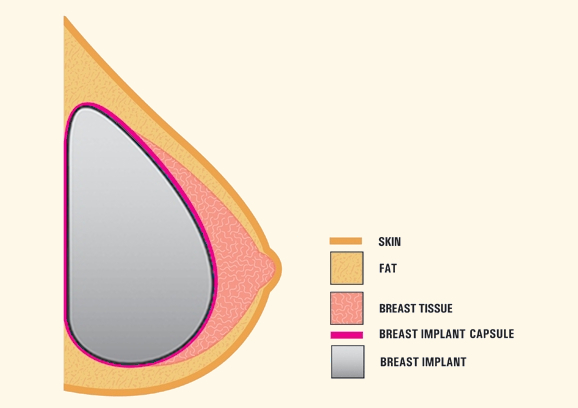
All breast implants have a silicone shell, even saline filled breast implants. When we say silicone breast implants we are talking about what is inside. Silicone breast implants have a solid outer shell, and a center filled with a cohesive silicone gel. Some older silicone breast implants were filled with a thin liquid, which would migrate if the shell ever broke. Currently, the cohesiveness varies from a very thick gel that likes to stay together (Allergan Natrelle® and Mentor Memory Gel® breast implants – currently available) to a solid with the consistency of Jello® (Gummy bear, Allergan Natrelle 410′s and Mentor Cohesive III Implants – Not yet FDA approved). These gummy bear implants can be made with various asymmetrical shapes, because they are thick enough to retain their shape.
Free Silicone Injections – Buyer Beware
The San Francisco Bay Area is a great place to be a plastic surgeon. We have an educated population that is interested and aware of many of the latest options in plastic surgery. Unfortunately, new doesn’t mean better, and sometimes new isn’t even new. Silicone injections are a great example. Even San Francisco plastic surgeons are still looking for the perfect injectable to fill wrinkles and augment the face without surgery. A well tolerated, stable substance, free from allergy, that will last a hundred years and remain soft remains elusive. There was a time when silicone was felt to be that substance.
Silicone is well tolerated, and can be made thick enough to prevent migration. The augmentation obtained is better than Restylane®, Juvederm®, Perlane®, Radiesse® or any other available dermal filler. It can remain soft for many years. Unfortunately, the body will form scar around free silicone, and this scar can continue to develop over years into a hard disfiguring mass.
Free Silicone in the Lips
Silicone has been used for lips. Initial results are great; however, the long term results are not predictable. Lisa Rinna, famous for her silicone augmented lips, recently had to have surgery to excise the silicone from her lips.
Free Silicone in the Buttocks
Silicone has been used for buttock augmentation. At first it looks great, but with time, it becomes hard and can cause visual disfigurement. Since medical grade silicone is not available in the United Stated, reports surface every year of an unqualified injector offering cheap buttock enhancement using silicone purchased at the local hardware store.
Free Silicone for Breast Augmentation
Free silicone was used for breast augmentation, as was fat injection, until they were replaced by a much more effective and safer alternative – breast implants. Breast implants use a solid silicone shell to contain the silicone inside. A thicker, more cohesive gel is used inside to help prevent migration, but even this should be removed if the implant breaks. Since the center is highly cohesive, it acts as a unit rather than a liquid, so it can be hard to tell if a silicone filled breast implant has leaked. This is why the FDA recommends women who have silicone gel breast implants obtain an MRI at three years and then every two years after having breast augmentation surgery.
“New” Silicone Injections
Research is on-going to find the perfect formulation for silicone injections. The latest attempts are looking into silicone with increased viscosity to help prevent migration and reduce the scar reaction. Since it often takes years for the scar around free silicone to develop into a noticeable mass, the results are still pending. One problem is that the thicker gel is much more difficult to inject without resorting to something like a caulking gun. Until the known problems are solved, the American Society of Plastic Surgeons and the American Society for Aesthetic Plastic Surgery and the FDA do not approve of the use of silicone injections outside of clinical trials.