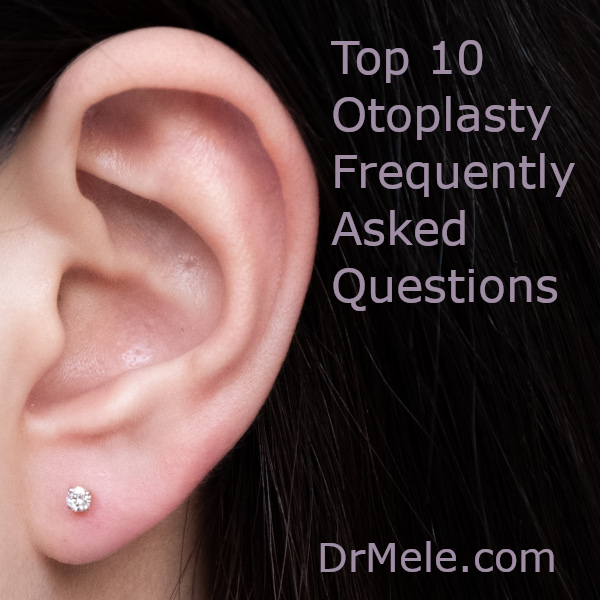
Otoplasty is used to reshape ears. Today, I answer the top 10 Otoplasty frequently asked questions.
Otoplasty, commonly known as Ear Pinning or Ear Reshaping Surgery, is a cosmetic and reconstructive procedure designed to reposition, reshape, or reduce the size of protruding or misshapen ears. The procedure primarily focuses on the external cartilage framework to bring the ears into better structural proportion with the rest of the face.
Here are the top 10 frequently asked questions about Otoplasty, and advice on who is qualified to perform Otoplasty for Children and Adults.
1. Who is the ideal candidate for otoplasty?
- Newborns: While newborns are not surgical candidates, in the first few days of life ear molding may be beneficial. It requires specialized helmets and continuous splinting for several months. This may be available through your local children’s hospital, but needs to be started quickly after birth.
- Children: Good candidates for Otoplasty are age five and older. By age five, the ears have reached 85% of their adult size, and are firm enough to hold surgical correction.
- Adults: Healthy adults of any age who feel self-conscious about their ears can undergo otoplasty. Sometimes additional techniques are needed if the cartilage is firm and has “memory” of the undesired shape.
- Expectations: Candidates must be in good health and possess realistic aesthetic expectations. Every ear is somewhat different, even on the same head. The goal is improvement, perfection is rarely possible, but is always the goal.
2. Will otoplasty affect my hearing?
- Short Answer: No.
- External Ear: Changes in ear shape and structure are limited to the external cartilage framework and skin. If you bend your own ear, your hearing does not change.
- Internal Ear: The ear structures that interpret sound are inside the ear canal, and remain completely untouched. So your hearing is unchanged.
3. Is the procedure painful?
- Sensation: Patients experience a variable amount of pain when the local anesthesia administered during surgery wears off. It can range from a dull throbbing ache to pressure. Rarely, patients experience sharp pain. Usually, this is still a normal response to the injury, but it could be the sign of bleeding, infection or too tight a dressing, and may require a quick return visit to your plastic surgeon to check the ear.
- Timeline: Discomfort is typically highest during the first one or two days after surgery.
Management: Surgeons routinely prescribe oral pain medication or recommend over-the-counter options to manage this initial phase. Most patients are off all pain meds in a few days.
4. What type of anesthesia is used?
- Children: General anesthesia is preferred to keep young patients completely still during surgery.
- Adults: General anesthesia or local anesthesia with a mild sedative are both options for adults. Local anesthesia requires a little more motivation on the part of the patient as you will have some discomfort during the numbing process, and will hear the surgery due to its location on the external ear. Some surgeons do the procedure under general for all patients, and do not give the option of local anesthesia. In my office about half may patients request general anesthesia and half request local anesthesia.
5. Where are the incisions placed, and will I have visible scars?
- Location: The main incision is placed in the natural creases behind the ear. Sometimes a short incision is placed in the curve of the ear in the front to score the cartilage. This can help prevent recurrence in adults or children with stiff cartilage.
- Visibility: This placement ensures that any resulting scars remain well-hidden from direct view. In rare cases when a keloid or hypertrophic scar forms, revision of the scar may be necessary.
- Healing: Over time, these fine lines fade significantly into the surrounding skin tissue. For most patients it is difficult to see the final scar after a year of maturing.
6. What does the immediate post-operative recovery involve?
- Dressings: You will leave the procedure wearing a bulky turban-style compression bandage over your ears. It is important that this is not removed before your surgeon gives the okay, or you will have a greater risk of recurrence.
- Protection: This dressing must stay dry and remain in place for several days to support the new cartilage position. It also protects the otoplasty results while you are sleeping.
- Headband: Once removed, you will transition to wearing a soft headband, primarily at night, for three months.
7. How should I sleep after the surgery?
- Position: You must sleep flat on your back with your head elevated on a few pillows. The head wrap protects you if you occasionally turn to the side at night.
- Restriction: Side-sleeping is strictly restricted for the first few weeks to prevent frictional trauma or asymmetrical pressure on the healing ears. For strict side-sleepers, an airplane neck pillow can be used. The ear is placed over the opening for the neck, to prevent pressure on the ear.
8. How much time do I need to take off from work or school?
- Routine: Most patients can return to school or non-strenuous desk jobs within 1 week. After the dressing is removed, most activities with the head elevated are allowed.
- Exercise: Light physical activities can resume around 2 to 3 weeks.
- Sports: Heavy lifting and contact sports must be avoided for at least 6 to 12 weeks to protect the ears from structural damage. This is especially true of activities likely to lead to ear trauma like soccer, boxing or wrestling.
9. Are the results of an otoplasty permanent?
- Longevity: Yes, the results are structurally permanent. Occasionally, recurrence can occur. Normally, this is within a few months from surgery. If this happens, a touch-up surgery may help achieve the desired results.
- Stability: The cartilage is permanently reshaped and anchored using durable internal sutures.
- Relapse: While a tiny degree of natural cartilage relaxation can occur, major relapse rates are below 5%.
10. Does health insurance cover the cost of otoplasty?
- Classification: In the vast majority of cases, insurance companies view otoplasty as an elective cosmetic procedure.
- Exceptions: Coverage may occasionally apply if the surgery addresses congenital deformities or traumatic injuries.
- Financing: Many surgical clinics offer specialized medical financing plans to help patients break down out-of-pocket costs into monthly installments.
11. Who is a qualified surgeon to perform an otoplasty?
- Board Certification: Look for a surgeon certified by the American Board of Plastic Surgery (ABPS)
or the American Board of Otolaryngology – Head and Neck Surgery (ABOHNS). - ABMS Recognition: These boards are fully recognized by the American Board of Medical Specialties (ABMS), ensuring the highest standard of residency training and medical safety.
- Experience: Always verify the surgeon’s specific volume of ear surgeries and review their past casework.
Otoplasty Consultations
Are you or your child a good candidate for Otoplasty? Do you have questions related to the surgery? The best way to get answers and make an informed decision is by scheduling an in person consultation. In the San Francisco Bay Area, give Board Certified Plastic Surgeon Dr. Joseph Mele a call at (925) 943-6353. He has over three decades of Otoplasty Experience for children and adults.
Previous Post Next Post