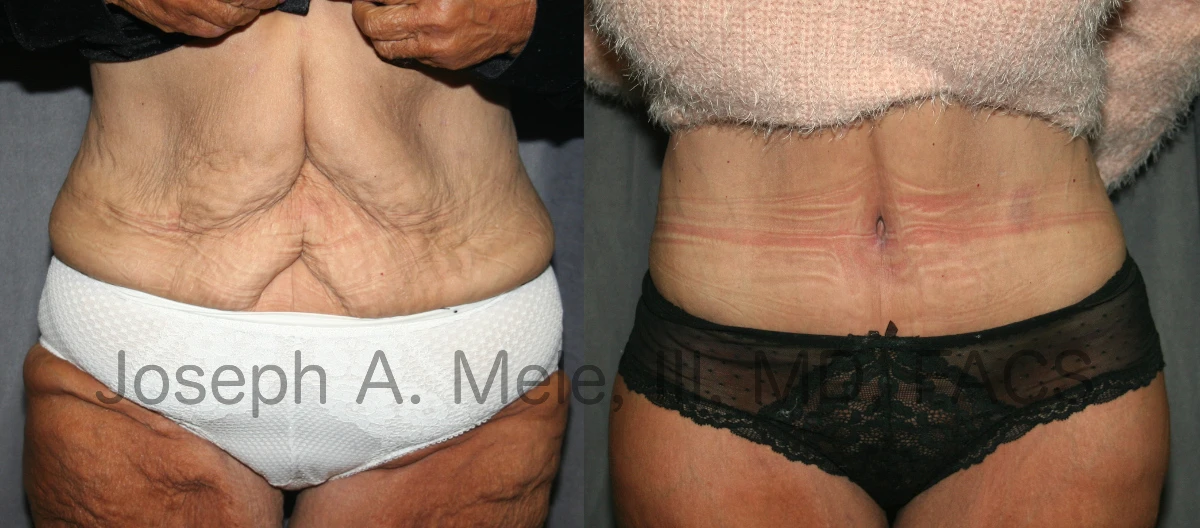
After massive weight loss, Abdominoplasty tightens the skin and muscle of the abdominal wall. In this case, a Tummy Tuck was combined with a Thigh Lift for more complete lower body contouring.
The Tummy Tuck remains one of the most frequently requested cosmetic plastic surgery procedures. About 175,000 Abdominoplasties are performed in the US each year, making it the third most popular cosmetic surgery. 98% Tummy Tucks are performed for women, with 2% performed for men after weight loss. If you are considering a Tummy Tuck, what do you need to know? Today, I am answering the top 10 frequently asked questions about Abdominoplasty.
The Top 10 Frequently Asked Questions About Abdominoplasty
Below are answers to the top 10 frequently asked questions about Tummy Tucks (Abdominoplasty), based on common patient inquiries in my Walnut Creek Plastic Surgery office, the American Society of Plastic Surgeons (ASPS), and The Aesthetic Society (ASAPS):
#1 – Am I a Good Candidate for a Tummy Tuck?
Ideal candidates are in good health, at a stable weight (close to their goal), non-smokers (or willing to quit at least 4 weeks before surgery), and have excess skin, stubborn fat, and/or separated abdominal muscles (diastasis recti) from pregnancy, major weight loss, aging, or prior surgeries. It’s not a weight loss procedure; however, it’s best for those who can’t achieve a flat abdomen through diet and exercise alone.
#2 – What Does Abdominoplasty Actually Involve?
The procedure removes excess skin and fat from the abdomen, tightens weakened or separated abdominal muscles, and maintains the belly button for a natural look. A full tummy tuck uses a horizontal incision low on the abdomen (often hidden in underwear/bikini lines).
#3 – What’s the Difference Between a Full and a Mini Tummy Tuck?
A full Abdominoplasty addresses the entire abdomen (above and below the belly button), repairs muscles throughout, and removes more skin/fat. A mini tummy tuck focuses only on the lower abdomen, often with a shorter incision and no (or limited) muscle repair—it’s for milder cases with good upper abdominal tone.
#4 – Will I Have Visible Scars after Abominoplasty?
Yes, scarring is inevitable. The main scar is horizontal and low (bikini-line level), often hidden by underwear or swimsuits. A second small scar may be around the belly button. Scars typically fade significantly over 12–18 months with proper care, but they don’t disappear completely.
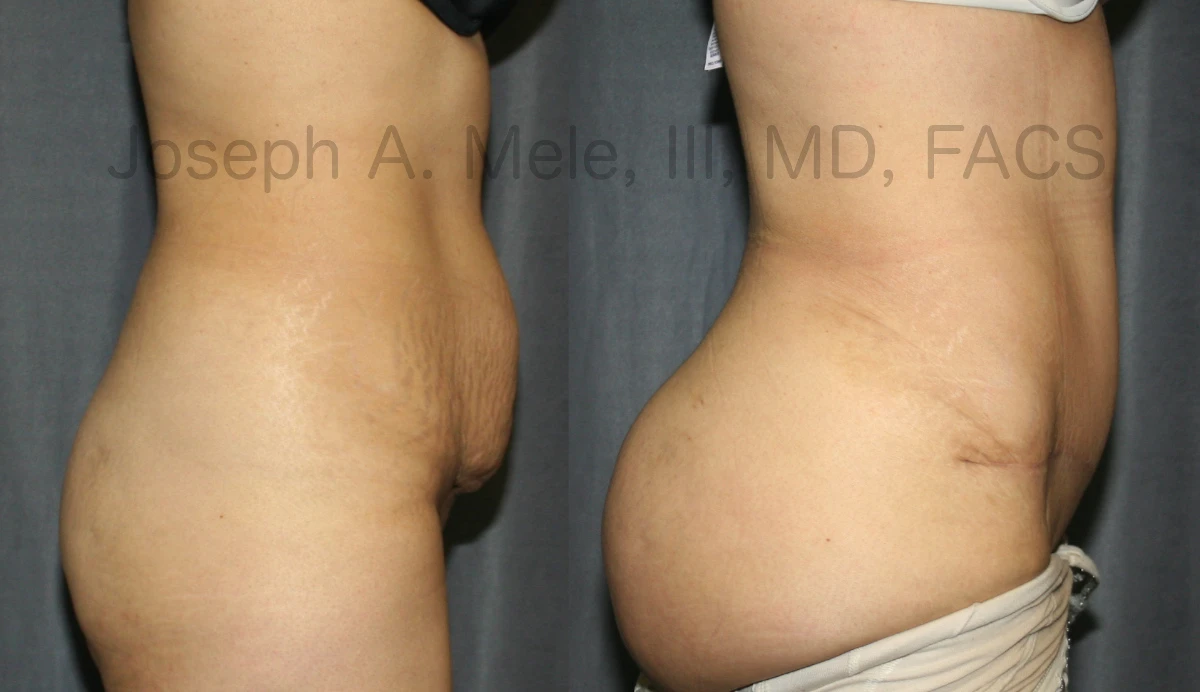
Abdominoplasty smooths the abdominal wall by tightening the muscles and removing excess skin and fat. In this case, fat from the belly was used to augment the curves of the buttocks with a BBL.
#5 – How Long is the Recovery After a Tummy Tuck?
Most patients need 2–4 weeks off work (longer for physical jobs). Walking is encouraged early, but full activity (including heavy lifting and intense exercise) usually resumes in 6–8 weeks. Swelling and bruising peak in the first 1–2 weeks and can linger for months; final results often take 6–12 months.
#6 – How Painful is Abdominoplasty Recovery?
Moderate to significant discomfort is common in the first week (managed with pain medication), due to muscle tightening and incision healing. Many describe it as tightness rather than sharp pain. Pain decreases steadily, and most patients feel much better after 7–10 days.
#7 – Does Insurance Cover a Tummy Tuck?
Rarely. Tummy Tucks are usually considered cosmetic. Exceptions may apply if excess skin causes medical issues (e.g., rashes, infections, or mobility problems after massive weight loss), but most cases are out-of-pocket.
#8 – How Long Do Abdominoplasty Results Last?
Results are long-lasting if you maintain a stable weight, healthy lifestyle, and avoid significant future pregnancies or major weight fluctuations. Aging and gravity continue naturally, but the improved contour and muscle repair typically endure for many years.
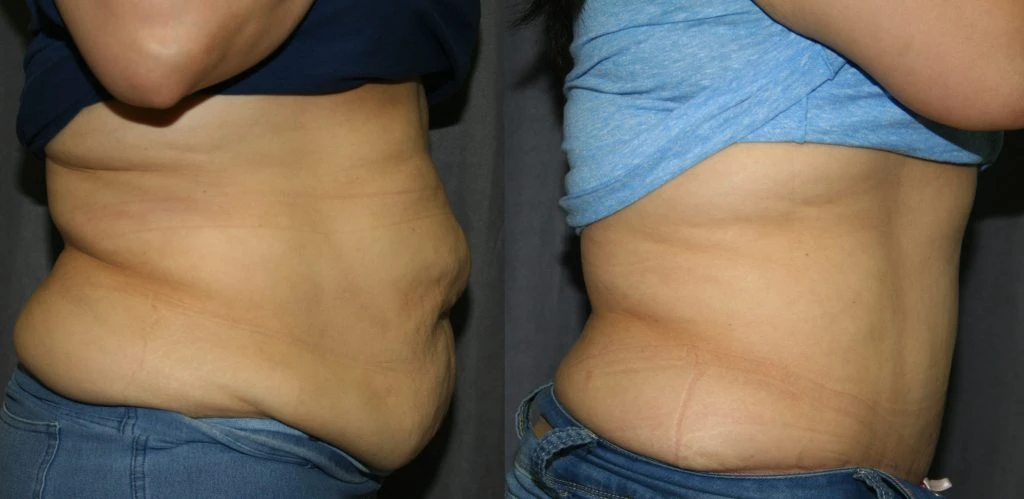
In this case, a Tummy Tuck is combined with Liposuction to both tighten the abdominal wall and contour the back fat.
#9 – What are the Main Risks of a Tummy Tuck?
Like any surgery, risks include bleeding, infection, poor wound healing, seroma (fluid buildup), numbness, asymmetry, or blood clots. Careful surgical technique and following post-op instructions minimize problems.
#10 – Can I Combine Abdominoplasty With Other Procedures?
Yes, Abdominoplasty is often part of a “Mommy Makeover” with Liposuction, Breast Augmentation/Lift, or other body contouring as shown throughout this post. Combining procedures can enhance overall results but may extend recovery time.
Tummy Tuck Consultations
The questions above represent the recurring topics which patients ask about. If you’re considering a Tummy Tuck (Abdominoplasty), a consultation with an experienced and Board Certified Plastic Surgeon is the best next step. For personalized answers based on your anatomy and goals, call (925) 943-6353, today, and schedule a consultation appointment.
Previous Post Next Post