What follows is a video segment from my recent television appearance on the Bay Area’s Local News Station, KRON4. I was originally scheduled to talk about Tummy Tucks (Abdominoplasty), but we kicked off the show with this important late breaking news update for women with breast implants. The (415) phone number in the video was for the live broadcast only. If you have questions about abdominoplasty, feel free to call my office directly at (925) 943-6353, or use the contact format the bottom of the column to the left.
This ALCL (Anaplastic Large Cell Lymphoma) update video includes:
Information from the January 2011 FDA White Paper
Why is it called a lymphoma?
Why ALCL is not breast cancer?
What are the symptoms of ALCL?
How is the diagnosis of ALCL made?
How rare is ALCL (34 cases in 10 million breast augmentation patients)
How is ALCL treated?
Do my implants need to be removed?
The important points to keep in mind:
ALCL is very rare.
ALCL presents with symptoms.
increasing size
swelling
discomfort
fluid around the implant.
ALCL is not breast cancer.
ALCL treatment is available.
If you have concerns with your breast implants, seek advise from a Board Certified Plastic Surgeon in your area. If you have the symptoms above, don’t panic, it is still unlikely that ALCL is the cause, and your local Board Certified Plastic Surgeon can help.
I will get the rest of the show up shortly for all of you interested San Francisco Bay Area Tummy Tuck patients. Once the tummy tuck videos are uploaded, I will place links below. In the interim, if you have have questions, or would like to schedule a consultation, please give me a call at (925) 943-6353 or use the contact form on the left.
Silicone is used in many beauty aids. While most people equate silicone with breast implants, there is much more to how silicone is used. From contact lenses to shampoo (dimethicone) silicone is around us every day. Silicone drainage tubes can be life saving after brain injuries to prevent fluid on the brain and death. Silicone implants are used throughout the body to improve both form and function. Most silicone implants are solid. Injection of free silicone is different than using silicone implants. Free silicone injections are liquid, and unlike with breast implants, the liquid is not contained.
Q: Is Silicone a Liquid or a Solid? A: Yes
Silicone is extremely flexible in its use. At body temperature, silicone can be made with a wide range viscosities: liquid like water, cohesive like honey, soft solid like Jello, more firm like rubber or hard like a rock. The fact that silicone is extremely well tolerated by the human body, makes it an excellent substance for implantation; however, only silicone meant for medical use should be used, and only by a qualified professional should be consulted.
How is Silicone Used
As a Board Certified San Francisco Bay Area Plastic Surgeon, I use silicone implants every day in my Walnut Creek Plastic Surgery practice. In California, silicone implants are used to augment the breast, cheeks, chin, nose and many other areas.
Silicone Facial implants are made of a soft solid silicone. Since they are solid, they cannot leak. They are used routinely for Cheek Augmentation, Chin Augmentation and Nose Augmentation. Since silicone facial implants are used to augment boney prominences, the fact that they are firm is an advantage. They can be molded into specialized shapes and sizes, depending on the amount and location of augmentation desired. The smooth surface does not adhere to normal tissue, so it needs to be meticulously placed. The smooth surface also allows for easy removal, should removal ever become necessary. Solid silicone facial implants are firm but flexible. For larger augmentations, silicone facial implants may not be firm enough.
An example: for small to moderate chin augmentation, silicone chin implants work great. For larger chin augmentations, I prefer Medpore®, which is made from porous high-density polyethylene. It is much firmer, and since it is porous, it allows in-growth. In-growth can help stabilize the Medpore® chin implant, and further decrease the already small risk of infection. These are decisions best made during your presonal consultation with a Board Certified Plastic Surgeon. This allows an open, honest discussion of the pros and cons of each option with a trained expert who has the experience to back-up your specific surgery.
Silicone Breast Implants
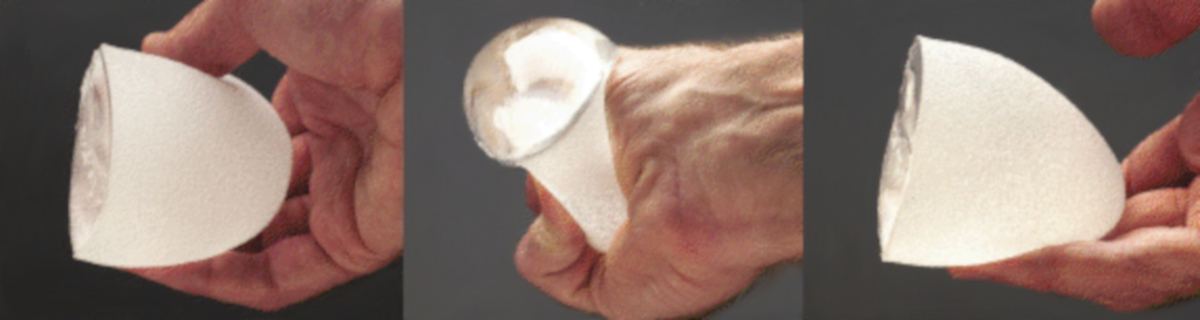
All breast implants have a silicone shell, even saline filled breast implants. When we say silicone breast implants we are talking about what is inside. Silicone breast implants have a solid outer shell, and a center filled with a cohesive silicone gel. Some older silicone breast implants were filled with a thin liquid, which would migrate if the shell ever broke. Currently, the cohesiveness varies from a very thick gel that likes to stay together (Allergan Natrelle® and Mentor Memory Gel® breast implants – currently available) to a solid with the consistency of Jello® (Gummy bear, Allergan Natrelle 410′s and Mentor Cohesive III Implants – Not yet FDA approved). These gummy bear implants can be made with various asymmetrical shapes, because they are thick enough to retain their shape.
Free Silicone Injections – Buyer Beware
The San Francisco Bay Area is a great place to be a plastic surgeon. We have an educated population that is interested and aware of many of the latest options in plastic surgery. Unfortunately, new doesn’t mean better, and sometimes new isn’t even new. Silicone injections are a great example. Even San Francisco plastic surgeons are still looking for the perfect injectable to fill wrinkles and augment the face without surgery. A well tolerated, stable substance, free from allergy, that will last a hundred years and remain soft remains elusive. There was a time when silicone was felt to be that substance.
Silicone is well tolerated, and can be made thick enough to prevent migration. The augmentation obtained is better than Restylane®, Juvederm®, Perlane®, Radiesse® or any other available dermal filler. It can remain soft for many years. Unfortunately, the body will form scar around free silicone, and this scar can continue to develop over years into a hard disfiguring mass.
Free Silicone in the Lips
Silicone has been used for lips. Initial results are great; however, the long term results are not predictable. Lisa Rinna, famous for her silicone augmented lips, recently had to have surgery to excise the silicone from her lips.
Free Silicone in the Buttocks
Silicone has been used for buttock augmentation. At first it looks great, but with time, it becomes hard and can cause visual disfigurement. Since medical grade silicone is not available in the United Stated, reports surface every year of an unqualified injector offering cheap buttock enhancement using silicone purchased at the local hardware store.
Free Silicone for Breast Augmentation
Free silicone was used for breast augmentation, as was fat injection, until they were replaced by a much more effective and safer alternative – breast implants. Breast implants use a solid silicone shell to contain the silicone inside. A thicker, more cohesive gel is used inside to help prevent migration, but even this should be removed if the implant breaks. Since the center is highly cohesive, it acts as a unit rather than a liquid, so it can be hard to tell if a silicone filled breast implant has leaked. This is why the FDA recommends women who have silicone gel breast implants obtain an MRI at three years and then every two years after having breast augmentation surgery.
“New” Silicone Injections
Research is on-going to find the perfect formulation for silicone injections. The latest attempts are looking into silicone with increased viscosity to help prevent migration and reduce the scar reaction. Since it often takes years for the scar around free silicone to develop into a noticeable mass, the results are still pending. One problem is that the thicker gel is much more difficult to inject without resorting to something like a caulking gun. Until the known problems are solved, the American Society of Plastic Surgeons and the American Society for Aesthetic Plastic Surgery and the FDA do not approve of the use of silicone injections outside of clinical trials.
The 2010 Plastic Surgery Statistics are out. The American Society of Plastic Surgeons released statistics on America’s consumption of what plastic surgeons had to offer. Here is the recap for 2010:
Americans spent 10.1 billion on 18.4 million plastic surgery procedures last year. Here is how it breaks down:
13.1 million cosmetic procedures were performed, up 5% from 2009. This includes:
1.6 million cosmetic surgical procedures (up 2%) and
11.6 million minimally-invasive procedures (up 5%).
5.3 million reconstructive plastic procedures were performed (up 2%).
While teen plastic surgery continues to make headlines, people aged 13-19 had the least plastic procedures (cosmetic and reconstructive) last year, accounting for 2% of the total. The largest age group continues to be 40 to 54 year-olds, who make up 48% of all plastic surgery procedures.
If you, or your loved ones, are considering plastic surgery, be certain to consult with a Board Certified Plastic Surgeon. All members of the American Society of Plastic Surgeons and the American Society for Aesthetic Plastic Surgery are required to be Board Certified. Certification can be easily checked on the American Board of Plastic Surgery web site. Check your Plastic Surgeon’s Certification here. Apologies for how bland the American Board of Plastic Surgery site is. I’ve been trying to get them to rejuvenate the site for years.
Liposuction remains one of the most frequently performed cosmetic plastic surgery procedures in the San Francisco Bay Area, California and the US in general. It is an effective method of selectively removing fat from problem areas.
Before (Left) shows localized fat of the chest (gynecomastia) and abdomen. After (right) reveals improved contours and better muscle definition with tumescent liposuction.
How Much Fat Can be Removed With Liposuction?
To improve patient safety, the American Society of Plastic Surgeons and the American Society for Aesthetic Plastic Surgery released a joint statement recommending an upper limit on the volume of fat removed of 5 liters. This is not to say that more fat cannot be removed safely. This recommendation was made for patients undergoing elective outpatient liposuction, on a come-and-go basis. In others words, if you are having liposuction and going home that same day.
Five liters is about 10 pounds, so you can see that liposuction is not a good method of weight control. Liposuction is best if you are near your ideal weight, and have localized, disproportionate accumulations of fat. Unlike weight loss, liposuction can remove fat from the areas you choose, this makes it ideal for stubborn areas that won’t leave. The selective nature of liposuction has lead some to use the term liposculpture.
Over the last few years, as the demand for liposuction increased, a large number of different liposuction techniques sprung up like weeds. All claim to better than every other technique, and most have no or an insignificant amount of proof to back their claims. The best technique remains the tumescent technique, under the guidance of a well trained professional. Ultrasound Liposuction (VASER, Liposelect) and Laser Liposuction (SmartLipo) both piggy back onto Tumescent Liposuction. As a result they get the same benefits of Tumescent Liposuction, but with increased cost and the chance of getting burned.
Before (left) localized fat collections of the inner and out thighs. After (right) tumescent liposuction provides smoothed contours, improved appearance and enhanced fit of clothes.
Can Liposuction Tighten My Loose Skin?
Loose skin is a contraindication for liposuction. While all techniques claim to shrink skin, none can significantly tighten loose skin. Studies comparing tumescent liposuction and other liposuction techniques have been done. In a well controlled study, in which tumescent liposuction was performed on one side of a patient, and laser liposuction was done on the other side, neither patients, nor surgeons, could not tell which side was which. Significant skin tightening remains a problem from all liposuction. You will find examples where the skin seems to dramatically tighten, but these lucky people would tighten with any modern technique. Unfortunately, they are the exception rather than the rule.
Liposuction Safety
The most important aspect of any elective cosmetic surgery is safety. It is surgery, and should be performed by a qualified surgeon in an accredited facility, with proper monitors, excellent anesthesia, meticulous sterile technique and with proper equipment.
How to Choose a Liposuction Specialist
As a Board Certified Plastic Surgeon trained in a program well known for cosmetic plastic surgery, I am biased, and with good reason. As a group, plastic surgeons receive the best surgical training available specific to plastic surgery. The San Francisco Bay Area has been home to three world class training programs, and as a result, you have many excellent professionals from which to choose. While there are some unique individuals, trained in other disciplines, who can get good results, if you are considering Cosmetic Plastic Surgery, considering seeing a Board Certified Plastic Surgeon.
At a minimum, your surgeon should be a member of the American Society of Plastic Surgeons (ASPS), and even better, a member of the American Society for Aesthetic Plastic Surgery (ASAPS). ASAPS members are plastic surgeons who specialize in cosmetic plastic surgery. ASAPS members are required to be Board Certified Plastic Surgeons, members in good standing of their local societies, operate only in certified facilities and allow periodic review of their results. More about these organizations can be found by clicking on their names.
Screening mammography, an important part of breast cancer diagnosis.
Remember when the revised US Preventative Service Task Force (USPSTF) recommendations for breast cancer screening were released in November 2009? Like the recent FDA White Paper and Advisory Statement on Anaplastic Large Cell Lymphoma (ALCL) in women with breast implants, the USPSTF caused quite a stir. A the heart of the controversy was the USPSTF’s advice against the long time recommendation for routine screening mammograms for women beginning at age 40. The USPSTF recommended delaying routine screening until age 50.
Immediately, cash strapped county health organizations and large HMO organizations alike, debated cutting dollars to fund screening mammograms for women under 50. Meanwhile, a large number of US health care organizations, including the American Society of Plastic Surgeons (ASPS), the American Cancer Society (ACS), the American College of Radiology (ACR), and the American College of Obstetricians and Gynecologists (ACOG), recommended that physicians and patients continue to follow earlier guidelines. They recommended to continue screening mammography for patients aged 40 to 49, despite the government committee’s recommendation to start at age 50. The recommendation to continue screening at 40 was based on all previous studies showing a benefit to finding early breast cancer.
40 is Still the Right Age for a Screening Mammogram
Two years later, the advice to continue screening mammograms at age 40 seems to have been right on the mark. I don’t think this comes as a surprise to anyone who cares for women with breast cancer; however, a study published in the American Journal of Radiology, which analyzed the same data as the USPSTF concurs with the earlier guidelines. According to the analysis, women who receive annual mammograms starting at age 40 can significantly reduce the risk of dying from breast cancer by 71 percent. This is in stark contrast to women who follow the USPSTF recommendations, who had only a 23.2-percent reduction in mortality.
What Have We Learned?
The lesson here is not that government is bad, but that science is good. The practice of medicine is based on the odds of something helping more than it hurts. While studies may at times seem to offer conflicting advice, carefully analyzing the details can often resolve the issue. In this case, the data used in the USPSTF study was used to prove the point. So ladies, if you are 40, it is time to get your mammogram.
How Does Science Work?
The best scientific tool we have is the prospective, randomized, controlled, blinded study. But what does that mean?
Prospective: the study is planned before the data is collected. In this way, data known to be conflicting can be accounted for, and will be less likely to distort the results. The opposite of a prospective study is a retrospective study, where data from the past, often not collected in the best way possible, is used to evaluate a treatment plan.
Randomized: patients are randomly selected to enter the treatment groups. This is very important. This allows for equity in the treated and untreated groups. For example, patients with a family history of breast cancer tend to have a higher incidence of breast cancer. If all patients with a family history of breast cancer elected to have early mammograms, as one would expect them to, the incidence of breast cancer would be higher in the group that received early mammograms. Without additional information, it would be assumed that mammograms caused more breast cancer. This would not be true, but the data would support it, because of the way the study was designed.
If patients are randomly assigned to the early and late mammogram groups, patients with a family history would be randomly (evenly) distributed between the two groups. The net effect would be the same expected incidence of breast cancer in both groups. In a randomized study, if the group with early mammograms had more breast cancer, it would indicate that the mammograms may be causing the problem. This is not what randomized studies show. We know that mammograms require radiation, and radiation can cause cancer; however, for all studies done, mammograms find and cure more breast cancer than they cause for women over 40.
Controlled: A control group is a group that is compared to treatment under study. If you have a new treatment, and you want to prove that is provides a benefit, you need to compare a group of patients receiving the new treatment to a group receiving the current treatment. The current treatment group serves as the control group. Comparing a new treatment to no treatment, may show that the new treatment is better than nothing, but it will not prove that is better than the currently accepted treatment without the head-to-head comparison.
Blinded: Blinded studies are designed so that the patients do not know which treatment they are receiving. Sometimes the doctors and health professional conducting the study are kept in the dark too. This is to prevent investigator bias, and to help randomize the placebo effect.
The Ideal Study for Screening Mammograms at Age 40
The mammogram on left is of normal glandular breast tissue. The white circle in the mammogram on the right is breast cancer.
So, the ideal test to prove the benefit of mammograms to screen for breast cancer between ages 40 to 49 would need the following under each of the categories described above:
Prospective: Before the study is started, protocol is established. This would include who would be studied (women age 40) and what conditions would be excluded (men, women who already have breast cancer, women with other severe health problems). The number of women needed to prove statistical significance. Reasons for dropping out, and how to handle the data collected for those dropping out. It might be good to estimate the number expected to drop out, so that the remaining groups could still show statistical significance.
Randomized: How women are selected to be in each group. Toss of a coin, even or odd days of birth, anything unrelated to the mammograms or breast cancer, so that the two groups will be as equal as possible in all the variables that are not being controlled.
Controlled: A definition of the control group is established. In this case, the control group needs to be matched for age, family history of breast cancer, smoking, weight and all other variables known to contribute to breast cancer. This way the study group receiving the mammograms, and the control group not receiving the mammograms, will be as equal as humanly possible.
Blinded: While not likely in this type of study, the best control group would do everything the study group does except get mammograms. A clever sham for the control group, would be to use mammogram machine, have it make a noise like a mammogram was done, but not use any radiation. No mammogram would be taken, but it would not be possible for the patient, and in some cases, even the mammogram technologist to know if a real mammogram was done. This way, if there was some other factor in the mammogram room that caused breast cancer, like the paint on the wall, that increased the risk of breast cancer, the exposure would be the same. Blinding can also prevent investigator bias. For example, if an investigator was truly convinced that there was a benefit to treatment, they would be less likely to allow someone with a family history of breast cancer to go into the control group and not receive treatment.
So the above study would have to run ten years to provide mammograms for the women from age 40 to 49, and to provide no mammograms for the control group. Then data will need to continue to be collected throughout every participants life to see if there was a benefit. Were tumors found sooner? Smaller? Once the diagnosis was made was the treatment for breast cancer easier? More effective? How many had recurrences? Were recurrences local, or were the recurrences to other organs like the lungs, liver, brain or bone? Did patients live longer in the screened group? The main question is, did fewer women in the screened group die of breast cancer?
Unfortunately, Compromise is Necessary
It might take 50 or 60 years to get the final results, and it would be very expensive to run this test. As a result, this type of testing, even though ideal, is never done. Often, new treatment protocols are unblinded early for ethical reasons. A separate group of investigators may be asked to review the unblinded results. This prevents bad treatments from doing more harm, and prevents good treatments from being withheld from the control group.
It is very important to keep the above principles in mind when reviewing data. Unblinded results can be dangerous if the investigator has a bias. Recent developments in the vaccine and autism controversy come to mind. It is important to remember that risk is always relative. Risks that occur often, but cause small problems may be acceptable. A cream that causes temporary burning, but clears a rash is acceptable. Even terrible consequences may be acceptable if they are very rare. An antibiotic that clears a particularly difficult and dangerous infection 99% of the time, but can lead to liver failure and death in 1 in a million treated with it, would be acceptable if they had a better chance of dying without the antibiotic.
Medicine and the Evening News
The evening news is not the best place to get medical information. While many reports are fair, most are sensationalized. Increased drama equals increased viewership, and that leads to more advertising dollars. The motivation to inform is in all reporters and producers, but if the story is not interesting, it will never air.
So in 2011, doctors are still recommending screening mammograms, beginning at age 40. For women with a family history of breast cancer developing at a young age, earlier screening may be recommended. The study by the American College of Radiology (ACR), is much more thoughtful, and certainly more objective, than the US Preventative Service Task Force (USPSTF) recommendations. But you won’t see the same prime time news coverage tonight for the ACR paper that we did in 2009 when the USPSTF made their announcement. The results are not as … interesting.
Yesterday, the FDA released a White Paper and Advisory Statement on Anaplastic Large Cell Lymphoma (ALCL) in women with breast implants. It is important that all patients and plastic surgeons understand the current state of knowledge surrounding this condition.
What Are My Chances of Getting ALCL if I Get Breast Implants?
This condition is incredibly rare. In fact, the known ALCL cases are too few to say conclusively that breast implants cause the disease. Efforts over the past 25 years by all the worlds major plastic surgery societies to raise awareness among members and to identify patients with ALCL have identified 34 unique cases worldwide among an estimated 10 million+ implanted devices. That’s about 1 in 300,000. To put this in perspective: the chance that you will get hit by lightning at some time during your lifetime is 1 in 6250. The chances are the same of you knowing 50 people who have been hit by lightning or one person with breast implant associated ALCL. On the other hand, the chance a developing a “real” breast cancer is 1 in 9.
So it’s Rare … but What if it Happens to Me?
As opposed to the systemic, nodal pattern of ALCL, in published reports, ALCL seen in the presence of breast implants has demonstrated an indolent course. In other words, it doesn’t spread. The women who developed ALCL, were cured with treatment. While ALCL seen in the presence of breast implants does fulfill the current WHO classification for ALCL, a form of Non-Hodgkins Lymphoma, the type of ALCL associated with breast implants potentially represents a distinct clinical entity. This condition is clearly NOT breast cancer.
Because of the extreme rarity of this condition, at this point no standard treatment has been determined. ALCL has been treated with everything from simple explantation (removal of the breast implant) and capsulectomy (removal of the scar around the breast implant) to aggressive systemic therapy. With either treatment, the condition was resolved.
Where Does the FDA Stand?
The FDA has not changed the status or availability of breast implants and has reaffirmed that the devices are safe and effective. In order to better understand this rare condition, the FDA has entered into an agreement with the American Society of Plastic Surgeons (ASPS) to create a registry for ALCL cases in the presence of breast implants. Until this registry is up and running, any clinical case will be reported directly to FDA. The FDA documents provide instructions for how to report any clinical cases to FDA. The American Society for Aesthetic Plastic Surgery fully supports the FDA and ASPS in this endeavor.
It’s Rare … But What Should I Look For?
Despite what you may have heard on the nightly news, the vast majority of breast implant patients will never have this problem. Moreover, most plastic surgeons will never see a single case in a lifetime of practice. The occurrence of ALCL with implants is so rare that routine screening of asymptomatic patients is not indicated; however, we all need to know what signs to look for.
The Presentation of ALCL with Breast Implants
This unusual tumor presents in two main ways:
A collection of fluid (a seroma) that develops well after breast implant placement
A mass involving the scar around a breast implant (the capsule)
Non specific findings: pain, lumps, swelling, or asymmetry, have also been associated with the above findings, and some cases have been associated with capsular contracture (firmness of the breast). If you think there is a problem, contact your Board Certified Plastic Surgeon today for follow-up.
ALCL Does Not Act Like Breast Cancer and There is More Good News
Knowledge is power. Raising awareness should be empowering and not frightening. Recent news reports on ALCL and breast implants seem a bit overblown; however, they do serve as a reminder that all women, with and without breast implants, need to be concerned about breast health. While ALCL is unlikely, the incidence of breast cancer is one in nine, and the vast majority of women who develop breast cancer do not have a family history of the disease.
The good news it that breast health is being discussed openly. I encourage you to do monthly breast exams, and to obtain routine mammography. The sooner a breast cancer is found, the easier it is to treat, and the better the quality of the life saved. Routine screening may seem a bother, but the life you save, will be yours to enjoy.
The ASAPS, the ASPS and Board Certified Plastic Surgeons around the world are all working together on this and other issues to keep cosmetic plastic surgery safe and predictable for everyone. For more information on ALCL and breast implants follow these links:
Every now and then, a State Bill comes along that just makes sense. AB 583 is such a bill. It has no hidden agenda, it is easy for health care practitioners to comply with and it provides meaningful objective information for patients.
AB 583 (Hayashi) requires health care practitioners to disclose their name, license type (RN, MD, DO, etc), highest level of academic degree received and for physicians, their board certification. This information must be placed on the health care practitioner’s website, and is also required to be given to the patient in writing at the initial patient encounter or must be prominently displayed in their office.
AB 583 is not yet a law. There is some debate, mostly from practitioners who are not Board Certified, to withhold any type of disclosure requirement. As a Board Certified Plastic Surgeon, I fully support this disclosure. As a Walnut Creek Plastic Surgeon, I have many well educated patients. I have had to care for patients who have seen less qualified practitioners, and who have received questionable treatment and results. Often they are surprised and embarrassed to find out the “Plastic Surgeon” they had entrusted with their health, was not a Board Certified Plastic Surgeon, and in some cases, was not even a doctor.
Critics will say that even the best Board Certified Plastic Surgeons can have poor results. While this is true, when the correct approach is instituted from the start, the chances of a poor result are significantly decreased, and the chances of recovery from a poor result are significantly enhanced.
The more you know as a patient, the safer you can be. In California, anyone with a Physicians and Surgeons License can perform plastic surgery. Non-MD oral surgeons are allowed to do facial plastic surgery. AB 583 helps patients by requiring your health care provider to inform you about the type and duration of training they have received. This will not protect you from the truly unscrupulous, but it will help you to know the type of training any ethical health care practitioner has received.
I encourage you to support passage of AB 583. Letters can be sent to the Governor here:
The Honorable Arnold Schwarzenegger
Governor of California
State Capitol Building
Sacramento, CA 95814
or you may fax your letter to 916 558-3160.
Your opinion is important. Please act before September 17th (the earlier the better) to let your viewpoint be heard.
Dr. Joseph Mele, guest author for ABoardCertifiedPlasticSurgeonResource.com
I was recently asked to contribute to A Board Certified Plastic Surgeon Resource, an online resource helping patients find Board Certified Plastic Surgeons. My article stresses the importance of Board Certification, and explains how to recognize a true Medical Board.
Most Medical Boards are self regulating. The long standing, traditional medical boards are also under the regulation of the American Board of Medical Specialties (ABMS). Under the ABMS the only Board specifically dedicated to Plastic Surgery is the American Board of Plastic Surgery. Other sound-alike boards, for example The American Board of Facial Plastic Surgery and the American Board of Cosmetic Surgery, have not been accepted as ABMS Boards, and thus fall outside the regulation of the ABMS.
The International Society for Aesthetic Plastic Surgery (ISAPS) started its 40th anniversary meeting this weekend in San Francisco. While the majority of the meeting will be spent discussing the finer points of plastic surgery technique, Saturday was spent discussing patient safety on a global scale.
The ISAPS is leading the way in global guidelines for plastic surgery patient safety. Topics included:
Uniform global plastic surgeon certification requirements
Uniform global facility accreditation requirements
Medical Procedures Abroad ™ i.e. Medical tourism
Guidlines for patient safety
Medical device guidelines and usage
Sunday was spent discussing Blepharoplasty (eyelid surgery) and Rhytidectomy (face lift surgery). Today was dedicated to Rhinoplasty (nasal surgery) and Mammoplasty (breast surgery: breast augmentation, breast implants, breast enhancement, breast reduction, beast reconstruction, congenital breast deformities and breast lift surgery).
Tomorrow Maria Siemionow, MD, the team leader of the first U.S. face transplantation surgery, will be making a special presentation. Tuesday will focus on aesthetic reconstructive surgery, as well as Abdominoplasty (tummy tuck) and Body Contouring (liposuction and body lifts).
The final day of the conference, Wednesday, will be spent on Cosmetic Medicine and finally Patient Safety and Complications. It’s been great so far. If you would like more information on any of these procedures, please click on any of the Categories to the left, or visit my main website: DrMele.com.
Body art traditionally refers to tattoos and piercings, but some would say cosmetic plastic surgery is a form of body art. It is not scalpelling, but a scalpel is used. As body art becomes more main stream, questions regarding breast augmentation before and after nipple piercing come up more often than you might think.
Preexisting Body and Nipple Piercing - Before Breast Augmentation
After Breast Augmentation - Body and Nipple Piercings Survived.
Pre-Existing Nipple Piercing
If you have pierced nipples, and are considering breast implants, breast augmentation can be safely performed in the presence of pierced nipples. A few precautions need to be taken to maximize the safety and predictability of you surgery:
The piercings need to be clean and without irritation. Irritated piercings are a set up for infection, and this could lead to an infection around the breast implants.
The jewelry should be removed from the piercing immediately before surgery. Electrocautery is used routinely during surgery to prevent bleeding. An electric shock to your piercings would cause a burn.
The jewelry should be replaced immediately after surgery. At the end of the breast augmentation I normally replace the jewelry to prevent the piercing from closing.
If the piercing should become irritated or infected after surgery, it should be addressed immediately. Sometimes this means removing the jewelry from the piercing.
Nipple Piercing After Breast Augmentation
If you already have breast implants, and are considering getting your nipples pierced, I don’t recommend it. If you are still determined to get a nipple piercing, you need to be especially vigilant. Choose a reputable establishment, which uses sterile technique. Infections can occur with any piercing, and every infection has the potential to spread.
Nipple piercings can be especially problematic as the breast gland itself can become infected. This can put the both the breast tissue and the breast implants at risk, especially if your breast implants are in front of the pectoralis muscle. If there is any redness, swelling, discharge or increasing pain at the piercing site, call you plastic surgeon, and seek immediate treatment. The jewelry may need to be removed, but it is better to lose a piercing than to lose a breast implant.