March 31st, 2013 Dr. Mele
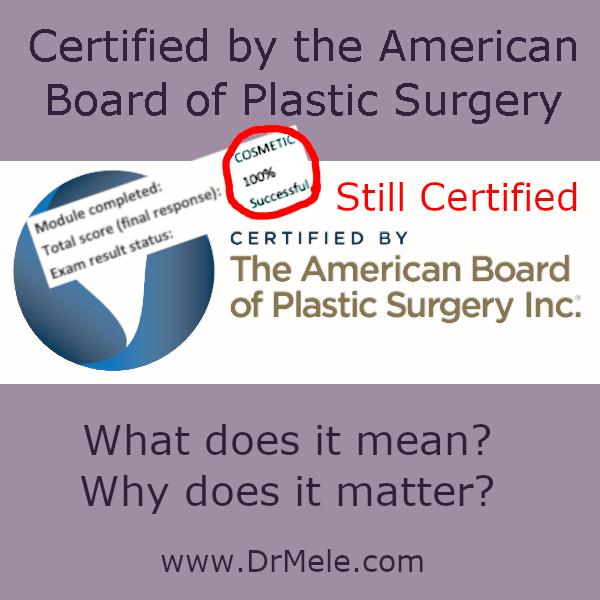
Once upon a time, Board Certification was a lifetime distinction, but this is no longer true. Now, Board Certification requires maintenance of certification. Every year, the American Board of Plastic Surgery requires Board Certified Plastic Surgeons to submit to a review of their practice.
Board Certified for Life
For the American Board of Plastic Surgery, diplomates certified prior to 1995 where given certificates without an expiration date. After finishing an accredited Plastic Surgery training program, all one had to do was pass a written qualifying examination and an oral certification examination and you were Board Certified, for life. No further exams, no further evaluations and no further review was required.
Recertification – the First Step
The first step toward assuring the public that Board Certified Plastic Surgeons are also current with the latest techniques in surgery and patient safety was recertification. Every 10 years, passing a written examination was required to remain Board Certified. If you could not pass, you could no longer claim to be Board Certified. Lifetime certificate holders, however, are not required to participate to remain Board Certified.
Maintenance of Certification
The latest incarnation of Board Certification from the American Board of Plastic Surgery requires a yearly activity to remain Board Certified. Again, Plastic Surgeons certified before 1995 are still not required to participate in order to retain their Board Certified title.
Some of the yearly tasks are simple, like paying the ever increasing fees; however, this is not nearly enough. Many of the tasks are more than menial and are listed below:
- Verification of unrestricted state medical license
- Verification of hospital privileges
- Verification of accreditation of non-hospital based freestanding outpatient surgery centers
- Submission of advertising material
- Active membership in one of the Board’s sponsoring organizations (ASPS or ASAPS)
- Peer review
- Verification of 150 Continuing Medical Education (CME) credits every three years
- Completion of additional MOC-approved educational activities
- Completion of one Practice Assessment Module
- Review of Benchmarking Report for comparison of data to peers
- Completion of Action Plan for Improvement
- Case Collection of de-identified data from all cases over a six-month period
- Successfully completing the MOC in Plastic Surgery Recertification Examination every 10 years
All This for a Little Piece of Paper
After completing all these tasks, here what I received…

… a Little Piece of Paper: The American Board of Plastic Surgery Recertification for 2013
The American Board of Medical Specialties (ABMS)
The American Board of Plastic Surgery program requirements are aligned with the four basic components approved by all 24 Member Boards of the American Board of Medical Specialties (ABMS). The ABMS represents the gold standard of Medical Boards and for Board Certification. There are more than 24 “boards” out there, but these 24 represent the core of medicine and are the “real” Medical Boards. Beware of sound-a-like boards. Some are valid adjuncts to the core, but none are a substitute for the real boards.
Why Look for Board Certification?
The idea behind Board Certification is to provide a benchmark for the public for a doctor’s training and qualifications. Below are links with which you can check me out, or check out any other Board Certified Doctor.
Maintenance of Certification takes dedication and persistence. You owe it to yourself to check your plastic surgeon before having any procedure. Just click on what you want to do:
Check if your doctor is Board Certified by the American Board of Plastic Surgery.
Check if your doctor is Board Certified by another American Board of Medical Specialties board. You will need to register to use this site, but it is safe, free and fast.
Check if your doctor has an unrestricted California Medical License. Read the disclaimer and click “Continue to Search” at the bottom. If you are not in California, Google your state’s medical board for a link.
Posted in About Dr. Mele, Home, Plastic Surgery Societies | No Comments »
March 20th, 2013 Dr. Mele
Lisa Rinna has had a very successful Hollywood career which she credits, in part, to her large, Augmented Lips. When it comes to a beautiful face, the lips are second only to the eyes. Subconsciously, we associate fuller lips with youth and fertility. Larger lips are a big contributor to the “glow” of a pregnant woman’s face. As we age, so do our lips, and gradually they become thinner and thinner. Lip augmentation can be an integral part of facial rejuvenation.

Lisa Rinna is putting her lip troubles behind her.
Lip Augmentation with Silicone Injections
Lisa Rinna had been very forthcoming with the fact that her lips were enhanced with injectable silicone. Liquid silicone injections are problematic, and her honesty has helped other young women avoid the same fate. Right after silicone injections everything looks great, but with time, the body creates scar tissue around the globs of silicone. The result is palpable, and often visual, lumps and lip distortions. Lisa does not regret her decision, but 20 years after the Silicone Injections, her lips were a lumpy mess. She underwent surgery to remove as much of the silicone and scar as possible. Here is the story in her own words:
“Here’s the story: 25 years ago, I had my lips injected with silicone. Stupid thing to do at 24. I saw ‘Beaches.’ Remember that movie ‘Beaches’? I did it with my best girlfriend, so she and I go and we get our lips done. Fine. I have it like that for my whole career, right? So then cut to a couple of years ago, I have a doctor remove as much as they possibly can because it got to the point where they were yucky. You know, they get hard. It’s gross. They are now whatever that was after they took out as much of the silicone as they could.”
Surgical Correction after Silicone Injections to the Lips
Lucky for Lisa, her lips still look fine. Twenty-five years ago, the risks of silicone injections were not as clear cut, and the only approved injectable was Collagen, which was hard and completely gone in a month or two. Today, we have much better alternatives. Lip Augmentation can be performed with injectable HA’s like Restylane and Juvederm in a few minutes in the office. The results do need to be maintained; however, the results are full and soft, something that has not been possible previously without surgery. How long the results last is variable. Average results are 4-6 months and if you decide you not longer need it, after the plateau phase, the lips gradually return to their original size.
Permanent Lip Augmentation
Since lips thin as we age, there are no Permanent Lip Fillers. Even the perfectly sized lips will need a little maintenance to counteract the normal aging process. Inserting permanent fillers, like silicone, promotes the formation of chronic scars and foreign body reactions like granulomas. HA fillers are made from Hyaluronic Acid (HA), a normal component of skin and joints. Unlike free silicone injections, our bodies recognize HA as a normal component of the skin, and we have natural hyaluronidase, an enzyme that can clean up HA.
Lip Augmentation Before and After Pictures

Lip Augmentation Before and After Photos: Lip enhancement performed with HA filler.
Lip Enhancement Consultations
If you are considering Lip Augmentation, especially if it is your first time, consider a brand name HA filler like Restylane or Juvederm. They can give a soft natural result, which is easy to maintain. Swelling is minimal, and with ice and elevation, the appearance is normal in 24-48 hours. Longer lasting alternatives are available, but they require a longer recovery, and are best when the goal size is well known.
Other Lip Enlargement Resources
Other articles on lip augmentation are available on the San Francisco Plastic Surgery Blog and my main web site. Here are the links:
Posted in Fillers (Restylane Juvederm Perlane Radiesse), Home, Lip Enhancement/Augmentation | 1 Comment »
March 17th, 2013 Dr. Mele
A large portion of a Plastic Surgeon‘s day is spent sharing information. Whether it’s one-on-one in the office, or during a live television broadcast, my goal is the same. Knowledge is power, and the sharing of knowledge can be extremely powerful, but as the saying goes, a little knowledge….

Frequently Asked Questions About Plastic Surgery
Plastic Surgery Frequently Asked Questions
People come to my Walnut Creek Plastic Surgery office every day with questions about the procedures I offer. Whether cosmetic or reconstructive, the questions are the same:
- What can be done?
- How is it done?
- Where is it done?
- Who helps you?
- How many have you done?
- What is the recovery?
After a consultation, the answers are usually simple, but the answers will vary from patient to patient.
Specific Answers for Specific Patients
I try to give solid information about my San Francisco Bay Area Plastic Surgery practice on my web sites. Sharing information about the procedures I do is easy. Unfortunately, the information must remain somewhat generic. Answers to questions about a specific procedure will vary depending on your anatomy and needs. Sometimes, even the best procedure will change. The differences can cause confusion, but are also responsible for better results. So I spend a lot of time explaining. In person, it’s an interactive process, but explanations via email can be difficult, especially if we have not yet met.
Plastic Surgery Consultation Appointments
Even during a full consultation appointment, I cannot share every nuance. I did not learn everything I know about Breast Augmentation in an hour, but I can get the important questions answered. I can also tailor my answers to you, so that some of the unknowns are removed for the procedure. The goal is to make the reasons for the choices clear. It provides direction, fosters trust and removes some of the unknowns and worries from the process.
A Little Knowledge is a Dangerous Thing
We have all heard the expression, “A little knowledge is a dangerous thing.” It works both ways. If you don’t have enough knowledge about how to get the results you expect, you may pursue the wrong procedure or practitioner. If I don’t have all the information, I can’t make the best decisions for you. It is important to share with your plastic surgeon. I need to know not only what you expect from the procedure, but all other health issues, the medications you take, even something as simple as the best way to reach you can make a difference. Something as little as forgetting to mention you take a baby aspirin every day can be a big problem. Trust works both ways. To get the maximum benefit from our knowledge and experience, there needs to be trust.
Trust and Television
Television is a great medium. It provides sound and picture and the detailed descriptions of the story told are quite compelling. It works well for entertainment, where a certain suspension of belief is necessary; however, for describing plastic surgery, it is lacking. There is not enough time to describe every aspect of the decision making that goes into a Facelift. So instead, the answers are made to fit an imaginary patient, and the details necessary to provide better individual results as glossed over. The devil is in the details.
Zithromax
I think of the recent news stories about Zithromax causing arrhythmias. The tag line is “FDA warns Zithromax can cause fatal irregular heart rhythm.” It good information, but it’s also a little knowledge, without the benefit of tailoring that information to your specific needs. What is left out is the millions and millions of stories of people world wide who benefit from the simple effectiveness of a once a day Z-pack. Covering that would be fair and balanced, but also extremely boring and would likely be protested as nothing more than corporate influence. Now I’m not saying it is wrong to question your doctor if they prescribe Zithromax. In fact you should; however, after all the information has been shared (in both directions), at some point it comes down to trust. From your doctor’s viewpoint, every medication has the potential to do good and to do harm. We are trying to pick the best medication, with the best ratio of risk to benefit, for our patients specific situation.
New and Exciting Plastic Surgery Breakthroughs
I don’t prescribe a lot of Zithromax, but I do perform a lot of surgery, and the same rules apply. Surgery has the potential to provide great deal of benefit, but no procedure is perfect. When I tell someone that they have too much loose skin for me to do Liposuction, and that the better operation would be a Tummy Tuck, it’s not because I’d rather do a Tummy Tuck. It’s because, in that specific situation, Liposuction is not the best choice. Liposuction, whether it’s Smart-Lipo or Dumb-Lipo, cannot fully correct loose skin. When there is too much loose skin, Liposuction has less potential to do good, and more importantly, an increased risk of making things look worse.
There is little new about the Tummy Tuck. It is tried and true, with well defined benefits and risks. As a result, there is very little coverage about Tummy Tucks in the news. Over 150,000 women had a tummy tuck in 2012, but unless your name is Star Jones, Kate Gosselin or Shar Jackson, it didn’t make the news.
Informercials offering magical belts, creams and exercise DVD’s, that claim to do what a Tummy Tuck can do, are broadcast just about any hour of the day. If they did work, I’d be offering them. I am all for using the simplest solution to a problem, but it has to work. A Tummy Tuck can cost $8000 to $10000, if an $80 cream worked, I’d be selling it, and a lot of it! But creams don’t work. Tummy Tucks, on the other hand, receive a 95% worth it rating on RealSelf by almost 4000 patients. So with that little bit of knowledge, who do you trust?
Cosmetic Plastic Surgery Consultations

Get Answers About Plastic Surgery.
If you are considering cosmetic plastic surgery, be certain to find a Board Certified Plastic Surgeon in your area who as experience in the procedure you need. Spend time researching not only your procedure, but also your doctor. Above all else, choose a doctor you can trust, who is willing to share more than just a little knowledge.
You may always ask me questions via the contact form on the left, but for specific questions, I will likely need to see you. The more information I have, the better the answer you get, and it’s hard to beat an in person consultation. Call (925) 943-6353 today, to schedule your Personalized Plastic Surgery Consultation Appointment.
Posted in Breast Augmentation, Facelift (Rhytidectomy), Home, Liposuction, Patient Safety, Tummy Tuck (Abdominoplasty) | No Comments »
February 16th, 2013 Dr. Mele
Every now and then I am reminded what is great about being a doctor. I came across a posting on the Internet entitled: This letter from my late mother’s doctor has changed my life. It’s short and sweet and reminds me how big an impact one person can have on another.
The redacted version is included here, and a copy of the letter is included at the end of this post. It says a lot in a few words:
- Dear Mr. (blacked out),
I am the Emergency Medicine physician who treated your wife Mrs. (blacked out) last Sunday in the Emergency Department at the New York Presbyterian Hospital. I learned only yesterday about her passing away and wanted to write to you to express my sadness. In my twenty years as a doctor in the Emergency Room, I have never written to a patient or a family member, as our encounters are typically hurried and do not always allow for more personal interaction. However, in your case, I felt a special connection to your wife (blacked out), who was so engaging and cheerful in spite of her illness and trouble breathing. I was also touched by the fact that you seemed to be a very loving couple. You were highly supportive of her, asking the right questions with calm, care and concern. From my experience as a physician, I find that the love and support of a spouse or a family member is the most soothing gift, bringing peace and serenity to those critically ill.
I am sorry for your loss and I hope you can find comfort in the memory of your wife’s great spirit and of your loving bond. My heartfelt condolences go out to you and your family.
(blacked out), MD
These short paragraphs say it all. Taking care of patients, even in the waining hours of health and life, is a great responsibility and privilege. To be a doctor, is a choice I made early in life that I have never regretted. I can hear the cynics out there saying, “You’re a Plastic Surgeon, not a real doctor.” Heck, I’ve heard some of my colleges make the same comment, but that’s not how I feel about it. I do specialize in Cosmetic Plastic Surgery, but “Do no harm” means knowing a lot more than how to do liposuction. I do also practice Reconstructive Plastic Surgery, and I don’t always get to give good news.
My thanks goes out to the gentleman who publicly shared this handwritten note from his mother’s ER doctor, as well as the doctor for so simply and legibly, expressing the impact that patients can have on their doctors, even if it’s just one visit. Last, but not least, thank you to my pateints for your trust and kindness.
Here is a copy of the original letter:

Excellent Medicine – A thoughtful letter from an ER doctor to a grieving family.
Posted in About Dr. Mele, Home | No Comments »
February 9th, 2013 Dr. Mele

Dr. Mele is Board Certified by the American Board of Plastic Surgery
Any licensed physician can call himself or herself a Cosmetic Surgeon, so the importance of finding a properly trained and certified provider is paramount. The goal of this post is help patients looking for a qualified Plastic Surgeon know what to ask and how to check on their prospective doctor. I encourage everyone considering cosmetic plastic surgery to spend as much time researching their doctor as their procedure.
For Plastic Surgery Think PS
If you are considering cosmetic surgery there are three main goals that are mandatory, and the first two letters of Plastic Surgery can help. The three goals are:
- Proper Surgery
- Proper Surgeon
- Proper Setting
You want the most appropriate procedure performed by a qualified and experienced surgeon in a setting that provides for your safety.
Underground Plastic Surgery
Underground Plastic Surgery has grown along with the Board Certified variety. As Cosmetic Plastic Surgery has gained acceptance and popularity so has the quest for a bargain. There are no exact numbers, because those practicing cosmetic surgery illegally do not track or report their procedures to a national society like the American Society of Plastic Surgeons (ASPS) or the American Society for Aesthetic Plastic Surgery(ASAPS), but more about them later.
The way we usually hear about illegal plastic surgery is when something goes horribly wrong. On January 3, 2013, a second person was arrested and charged in the death of a 37-year-old woman who died from pulmonary complications after receiving silicone-like injections to enlarge her buttocks. The patient was introduced to the unlicensed practitioner after paying $200 to an Internet referral source. The fact that the procedure was performed at home, rather than a medical facility, should have been a big red flag.
This unfortunate patient had the wrong procedure, performed by the wrong person in the wrong setting. While fat grafting has gained some traction as a viable way to provide buttock enlargement in selected cases, there are currently no FDA approved off-the-shelf injections available in the US for buttock enlargement. Anyone offering these types of injections, no matter how low the cost, is not doing you a favor, and is not practicing medicine within the current standard of care.
Licensed Plastic Surgery
As mentioned above, any licensed physician can call himself or herself a cosmetic surgeon. At one meeting. I met a doctor, not from the San Francisco Bay Area, who performs Breast Augmentation one day a week, and works as an Emergency Room doctor the rest of the week. The state of California finds this perfectly reasonable, because he is a licensed physician.
Plastic Surgery was born from a union of General and Head & Neck Surgeons, who had an interest in plastic and reconstructive surgery. There is a lot of overlap between Plastic Surgeons and other specialists like Otolaryngologists, Ophthalmologists and even Gynecologists. Each of these specialists receives specific surgical training in their discipline, but Emergency Medicine?
Trained Plastic Surgery
I knew early on that I wanted to be a Plastic Surgeon. As a result, I chose the most direct path available: Surgical Internship, General Surgery Residency and Plastic Surgery Fellowship. All along the way I had my eye on the prize, to become a Board Certified Plastic Surgeon. I did not start learning plastic surgery after completing some other discipline. My desire to be a plastic surgeon shaped my training from its inception. I was fortunate enough to be in a General Surgery training program that had Plastic Surgeons, but no plastic surgery residents. This gave me the opportunity to get a head-start on my Plastic Surgery Training well before my Plastic Surgery Fellowship.
After finishing my General Surgery Residency, I completed a three-year Plastic Surgery Fellowship. There I concentrated only on plastic surgery. I was fortunate to train in a program that not only provided a firm foundation in Reconstructive Plastic Surgery, but also was strong in Cosmetic Plastic Surgery. This depth and breadth of this training cannot be provided by a weekend course, or a few proctored cases. It’s the best way to learn plastic surgery, and it is why I chose to complete a Plastic Surgery fellowship as my path to becoming a Plastic Surgeon.
Board Certified Plastic Surgery
The San Francisco Bay Area is currently home to two Plastic Surgery Training programs: UCSF and Stanford, and for a long time was home to the oldest plastic surgery training program west of the Mississippi at Saint Francis Memorial Hospital. Additionally, the Bay Area is a nice place to live, so finding a well trained Plastic Surgeon in our area is pretty easy.
Board Certification is a process that occurs throughout the course of a Plastic Surgeons practice. Lifetime certificates where given out before I started my training, but currently certification requires continuous maintenance. The details for Plastic Surgery Board certification are available here: Certification by the American Board of Plastic Surgery.
The goal of Board Certification is to provide recognition for the most qualified practitioners in their discipline. It means they have the best training and have been vigorously evaluated by other Board Certified doctors to make sure their expertise is up to the standard of care.
The Three PS’s
PS #1 – Proper Surgery - Finding the proper procedure on the Internet can be difficult. While there are many sources of good information, there are a lot of claims that are too good to be true. While it is good to have an idea of what procedure will work, it is best to reserve final judgement until after an in-person consultation. A big part of my job is listening to what is bothering you, and finding the best way to fix it.
PS #2 – Proper Surgeon - Finding a Board Certified Plastic Surgeon is a good start in being certain you have the proper surgeon. For selected procedures, there is overlap with other specialties. Board Certified Ophthalmologist are well trained in Blepharoplasty and Board Certified Otolaryngologists are well trained in Rhinoplasty. What you will need is a well trained professional with experience. This helps assure that good skills are coupled with good judgement.
PS #3 – Proper Setting - Real surgery requires the correct setting. While Botox and Injectable Fillers, and minor surgical procedures can be safely done in an office setting, Breast Augmentation, for example, should be performed in an operating room. An operating room in an accredited facility is preferable. Placing a Breast Implant requires an FDA approved device and sterile technique; otherwise, you won’t be keeping it long.
Membership Counts
To be an ASPS Member Surgeon, a physician must meet these rigid requirements:
- Board certified in plastic surgery by the ABPS
- Graduate from an accredited medical school
- Complete a combination of at least five years of general surgery and plastic surgery residency training
- Pass comprehensive oral and written exams
- Operate only in accredited medical facilities
- Adhere to a strict code of ethics
- Fulfill continuing medical education requirements, including standards and innovations in patient safety
An easy way to be certain you have the PS’s covered is to seek an ASPS member. If you are considering cosmetic plastic surgery, a subset of the society, the ASAPS, are ASPS members dedicated to the cosmetic side of plastic surgery.
You Owe it to Yourself
It takes dedication, persistence and effort to maintain Board Certification, and so does being a Plastic Surgeon. You owe it to yourself to do the research and check your plastic surgeon before having any procedure. The Internet makes it easy. The following links, will make it even easier. Just click on what you want to do:
Check if your doctor is Board Certified by the American Board of Plastic Surgery.
Check if your doctor is Board Certified by another American Board of Medical Specialties board. You will need to register to use this site, but it is safe, free and fast.
Check if your doctor has an unrestricted California Medical License. Read the disclaimer and click “Continue to Search” at the bottom. If you are not in California, Google your local medical board for a link.
Posted in About Dr. Mele, Home, Patient Safety, Plastic Surgery Societies | No Comments »
June 16th, 2012 Dr. Mele
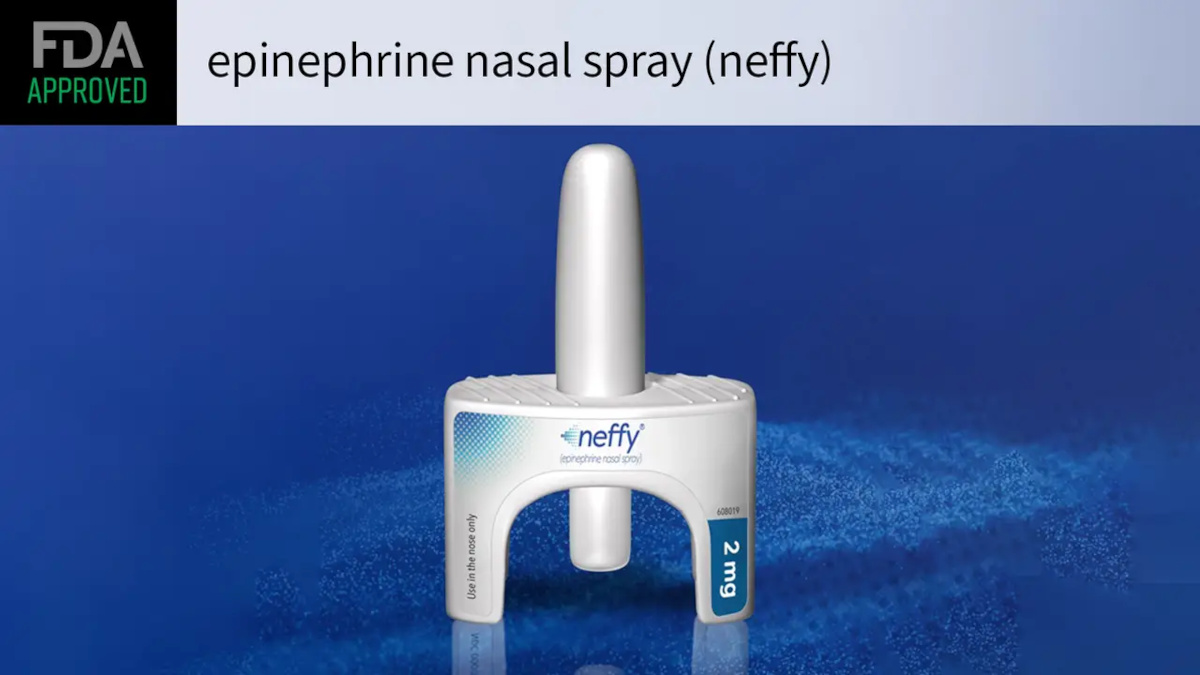
I’ve spent a lot of time reporting about the newly FDA approved highly cohesive, high-strength silicone gel breast implants by Sientra, but what does FDA approved really mean?
The FDA (U.S. Food and Drug Administration) makes distinctions for approval depending on what is being approved. Since the FDA reviews everything from tongue depressors to artificial hearts, it makes sense that different levels of review exist. It also means that “FDA Approved” means something different for different medical devices, pharmaceuticals and medical equipment.
It may surprise you to know that breast implants are one of the most investigated medical devices in the history of the FDA. Since their introduction half a century ago, the FDA has mandated several large studies, involving tens of thousands of women. These studies have proven the efficacy and more importantly the safety of the current and the next generation breast implants, and the work is ongoing. Large scale investigations of both saline and silicone breast implants continue today. We are over half way through ten-year studies on the currently available breast implants. I am a primary investigator in these studies, and many of my patients have volunteered to participate in order to provide up-to-date safety data for the next generation of breast augmentation patients.
FDA Approved Breast Implants
Breast implants are classified as a medical device. When FDA review is needed prior to marketing a medical device there are two levels of approval:
- FDA Clearance - The FDA will “clear” the device after reviewing a premarket notification, otherwise known as a 510(k) (a section in the Food, Drug, and Cosmetic Act), that has been filed with the FDA. To acquire clearance to market a device using the 510(k) pathway, the submitter of the 510(k) must show that the medical device is “substantially equivalent” to a device that is already legally marketed for the same use.
- FDA Approval - The FDA will “approve” the device after reviewing a premarket approval (PMA) application that has been submitted. To acquire approval of a device through a PMA application, the PMA applicant must provide reasonable assurance of the device’s safety and effectiveness.
When it comes to breast implants, FDA approval means a lot. For the three companies currently FDA approved to sell breast implants in the US (Allergan, Mentor and now Sientra), the process was long, involving years of research and thousands of women. The process allowed the FDA to identify several quality control issues with the French manufacturer PIP, before their breast implants were allowed to be marketed in the U.S. PIP did not receive FDA approval, and sale of these adultered breast implants was blocked. The FDA single-handedly protected U.S. women from the problems PIP breast implants are causing around the world. Providing, the women did not go outside the U.S. for their surgery.
FDA Approved Radiation-Emitting Electronic Products – Huh?
I consulted the FDA web-site for the definition. A radiation-emitting electronic product is any product that uses electricity to power an electronic circuit that gives off any kind of radiation. Radiation means energy traveling across space. X-rays, microwaves, radiofrequency (RF) waves, laser, visible light, sound, ultrasound, and ultraviolet light are a few examples of the many types of radiation that may be produced by an electronic product. These devices include many of the latest fads in non-invasive, non-surgical cosmetic rejuvenation. But “FDA Approved” does mean the same thing for these devices, despite what is implied by the glossy adds featuring women too young to need the procedures.
The emphasis for all device approval is safety. The main goal of the FDA is to be certain that the device, when properly used by a trained professional, is not likely to cause injury. Even a low energy laser pointer can cause you serious injury, if pointed at your eye. Like with implantable medical devices, the FDA does a good job in ascertaining device safety.
The efficacy side of FDA approval, for external medical devices like lasers, ultrasound and R-F devices, is much less strenuous. While thousands of women were enrolled in breast implant studies, most radiation-emitting electronic products’ studies have low numbers of enrollees (10 – 40 is not unusual). As long as no one is hurt, and one patient shows some improvement, the device is “FDA Approved.” So it’s still buyer beware, especially if you are promised something that sounds too good to be true.
The Tool vs. the Professional
FDA approval is very important for medical devices. As a Board Certified Plastic Surgeon, I appreciate everything the FDA does to provide me with the best tools of the trade. While the proper tools are important, the person holding the tool is even more important. If you are seeking cosmetic surgery, be certain to find a Board Certified Plastic Surgeon to be your guide. We are very fortunate in the San Francisco Bay Area to have some of the best training programs and professionals in the world. With the right tools, in the proper hands, great things are possible.
Posted in Breast Augmentation, Home, Patient Safety | No Comments »
May 19th, 2012 Dr. Mele
Dr. Mele is Board Certified by the American Board of Plastic Surgery
How to Choose a Plastic Surgeon
A few years ago, the state of California passed a law requiring all physicians advertising Board Certification to explicitly state the Board they are certified by. The goal was to allow consumers to identify the training of their doctors, and to avoid confusion.
Terms that Sound Like Plastic Surgeon
The intentions were good; however, there is no area with more Board Envy and confusion than the American Board of Plastic Surgery. As the popularity of Plastic Surgery has risen, more and more sound-a-like Boards have formed, and honestly, some of them even sound better than plain-old Plastic Surgery.
But a better sounding name is not the same as a better trained doctor, and no Board provides better training in Plastic Surgery than the American Board of plain-old Plastic Surgery.
Better Than Plastic Surgery
It may seem a no brainer that no Board provides better training in Plastic Surgery than the American Board of Plastic Surgery; however, some non-ABMS boards claim, without merit, that they have more specific training. They refer to Board Certified Plastic Surgeons as General Plastic Surgeons, and refer to themselves as sub-specialists. If you hear these claims, buyer beware.
What Does Board Certification Mean?
Board Certification means that your doctor has taken the appropriate training for their Board. It means they have passed written and oral exams, administered by doctors who are experts in the specialty. Today, this certification needs to maintained on a yearly basis with periodic re-examination.
The new buzz word is not just Board Certification, but Maintenance of Certification or MOC. The logo for this, seen at the top of this post, can only be used by Board Certified Doctors who continue participation in their Board’s MOC program. I am proud to maintain Board Certification in two ABMS Boards: The American Board of Plastic Surgery and the American Board of Surgery.
ABMS Recognized Boards
Determining if your doctor is certified by an ABMS Board is simple. You can go to the ABMS site and check (links are provided at the bottom of this post.). Any Board not specifically listed below is not an real ABMS certified Board.
Here is a listing of all ABMS recognized boards with links:
The American Board of Medical Subspecialties (ABMS)
Any group can create a Board. I could create the American Board of Breast Augmentation. I could define my own criteria for “Board Certification,” and accept anyone who meets my criteria, without any outside supervision. This type of Board is suspect, I prefer a Board that opens itself up to outside scrutiny.
Continuity and accountability within US Medical Boards is provided by the American Board of Medical Specialties (ABMS). For over 75 years the ABMS has provided responsible oversight for the certification of all physicians. It is the only recognized Certifying Body for Medical Specialty Board Certification in the United States.
The ABMS provides valuable resources for consumers and physicians alike, including a free online search that lets you check if you doctor is certified by a recognized board. To check your doctor click here -> Is Your Doctor Certified?
The American Board of Plastic Surgery (ABPS)
The American Board of Plastic Surgery (ABPS) also maintains a free online search. If you are considering Plastic Surgery, check if your doctor is a Board Certified Plastic Surgeon. To check if your doctor is a Board Certified Plastic Surgeon, click here -> Certified by the American Board of Plastic Surgery.
Plastic Surgery Professional Societies
The American Society for Aesthetic Plastic Surgery (ASAPS) and the American Society of Plastic Surgeons (ASPS) require current ABMS Board Certification for membership. They also require that all members operate in only Certified Centers and adhere to a strict Code of Ethics. I am a proud active member of both these world renowned plastic surgery societies.
For more about my training click “Meet Doctor Mele” here or at the top of any San Francisco Plastic Surgery Blog page. Click here for more about my -> American Board of Plastic Surgery Maintenance of Certification.
Posted in Home, Plastic Surgery Societies | No Comments »
December 3rd, 2011 Dr. Mele
Earlier this year, the San Francisco Plastic Surgery Blog reported an extremely unusual, but possible association between breast implants and a rare form of Non-Hodgkin’s Lymphoma named Anaplastic Large Cell Lymphoma or ALCL. The tumor is extremely rare. Of the 5-10 million women with breast implants, fewer than 100 cases have been identified. Literature reviews have identified 34 unique cases, and as many as 75 cases may have been identified worldwide. Because of the rare nature of the tumor, it is not clear what the association between ALCL and breast implant is.

Anaplastic Large Cell Lymphoma
Demographics of all Known Reported Cases
Demographics of the cases are as follows:
- Age: Median 51 years old, Range 28-87 years old
- Implant Type: Silicone 24, Saline 7, Not specified 3
- Time from implant to ALCL diagnosis: Median 8 years, Range 1-23 years
- Reason for Breast Implant: Reconstruction 11, Cosmetic 19, Not Specified 4
The American Society of Plastic Surgery (ASPS) and the American Society for Aesthetic Plastic Surgery (ASAPS) have partnered with other international plastic surgery societies like the International Society for Aesthetic Plastic Surgery (ISAPS), to provide an organized way to report, and characterize the diagnosis and treatment of ALCL since its discovery.
ALCL is Not Breast Cancer
Breast cancer dwarfs ALCL in both numbers of cases and lethality. Breast cancer has an incidence of 1 in 9 women. This means for a group of nine randomly selected women, one woman would be expected to develop breast cancer in her lifetime. The actual breast cancer rate is a little higher, and this is why routine mammograms after age 40 are so important for early detection. The risk of getting breast cancer is about 700 times higher than the risk of getting struck by lightning.
No Increased Rate of Breast Cancer for Women with Breast Implants
While the association between ALCL and breast implants is still being worked out, there is no increased risk of breast cancer in women with breast implants. In fact, the results of more than seven long-term follow-up studies show that women with implants have a lower rate of breast cancer than is expected in the general population, and higher survival rates, perhaps due to enhanced breast awareness and early detection.
Looks Like ALCL, but Doesn’t Act Like ALCL
ALCL associated with breast implants is not as aggressive as other types of ALCL. It acts more like cutaneous lymphomas than the more systemic form of ALCL. ALCL associated with breast implants has been characterized as a rarely occurring, low-grade lymphoma, that seems to grow slowly and locally. While the risk of breast cancer is 1 in 9, the risk of ALCL is less than 1 in 300,000, and most resources quote ranges of 1 in 500,000 to 1 in a million. The risk of getting ALCL associated with breast implants is 50 to 150 times lower than the risk of getting stuck by lightning.
Last week, news of the first reported death from ALCL associated with breast implants hit the French news. The details are not known at this time, and unfortunately, the case is further complicated by the use of fraudulent breast implants that were filled with industrial grade silicone instead of the required medical grade silicone. The implants were manufactured by Poly Implant Prothèses (PIP) at La Seybe-sur-Mer in the Var. The company was forced to close in March of 2010, after it was determined that the implants were filled with non-medical grade silicone gel. These implants have more gel bleed, and are ten times more likely to break. Even though the company was forced to withdraw its products from the market when the discovery was made, thousands of French women are known to still have the defective implants. These implants have never been FDA approved in the US. Only Allergan’s Natrelle and Mentor’s Memory Gel breast implants are currently FDA approved.
The Latest ALCL News
The best information currently available on the topic is a review of opinions by a panel of experts from RAND Health, UCLA’s department of medicine’s division of hematology-oncology, the University of Michigan Health System’s department of surgery’s division of plastic surgery and others. The article has been accepted by ASPS’s Plastic and Reconstructive Surgery Journal, but has not yet been published. The results are based on the small number of cases known to exist, represent the opinions of the seven panel members and are not based on prospective randomized evidence. A copy of the article can be found here. The article’s disclaimer reads: Support for this study was provided by the Plastic Surgery Educational Foundation (PSEF) and the Aesthetic Surgery Education and Research Foundation (ASERF) through unrestricted grants from Allergan, L.L.C.; Mentor Worldwide, L.L.C.; and Sientra, Inc. Neither the study sponsors nor the listed companies had roles in the design and conduct of the study; collection, management, analysis, and interpretation of the data; and preparation, review, or approval of the manuscript.
As more information becomes available, I will post more updates. It is important to remember that this is an extremely rare problem. It is a sensational story though, so it is sure to hit the mainstream media soon. The ASPS, ASAPS and ISAPS are actively seeking all known cases of ALCL found around breast implants to determine what, if any association exists, if there is a causal relationship and how best to treat the disease when discovered. If you have, or know someone who has, ALCL associated with breast implants, please contact one of these plastic surgery societies and the FDA.
More Information About ALCL
A current summery of ALCL cases appeared in the June issue of Plastic and Reconstructive Surgery. The abstract can be read here.
The FDA has an ALCL and breast implants FAQ page here. Moreover, all confirmed cases of ALCL in women with breast implants should be reported to Medwatch, the FDA’s safety information and adverse event reporting program. Report online here or by calling 1-800-332-1088.
How to Detect ALCL Associated with Breast Implants
The chances of getting breast implant associated ALCL are extremely remote. I have thousands of patients with breast implants, and chances are that I will go my entire career without seeing one case. This, however, will not keep me from looking for it.
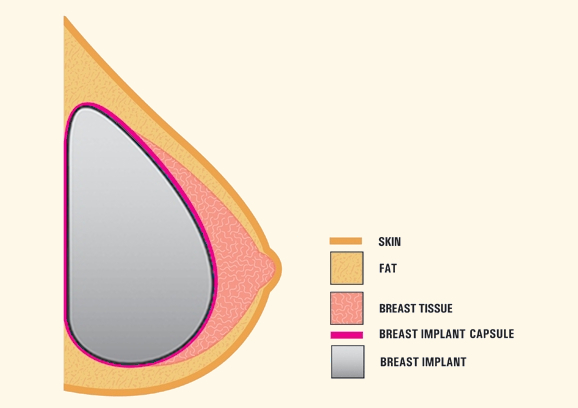
Most cases of ALCL in patients with breast implants have presented with a seroma (fluid collection) around the breast implant more than six months after the initial surgery. To try and detect ALCL as soon as possible, experts are recommending aspirating (draining) seromas around breast implants when they occur later than six months after breast augmentation or breast augmentation revision surgery, and also sending the fluid for cytologic analysis to check for abnormal cells. If you feel you have a problem with your breast implants, do not delay; seek the advice of a Board Certified Plastic Surgeon in your area.
Posted in Breast Cancer Awareness, Home | No Comments »
October 16th, 2011 Dr. Mele
Update: Thank you to everyone expressing interest in the clinical trial for tummy tuck scar reduction. The trial has met it’s enrollment goal, so no new participants can be enrolled. If another trial opens up, I will be certain to post the opportunity here on the San Francisco Plastic Surgery Blog.
Original Article:
If you are considering surgery for a Tummy Tuck, or Abdominoplasty, you may be interested in a post-surgical incision care research study.
General Information
We are now enrolling patients in a clinical research study to look at an investigational post-surgical incision care dressing used in scar healing. If you are thinking of having a tummy tuck (also called abdominoplasty), you may qualify for the clinical research study. The investigational dressing will be applied to one side of your abdominoplasty incision and the other side will be treated will be treated per the normal standard of care.
To Qualify You Must
To qualify you must:
- be a man or woman between the ages of 18 and 65
- be willing to participate in the study to evaluate a new dressing 1 week after a tummy tuck procedure
- not have any known reactions to medical tapes or adhesives
- not have a history of collagen vascular disease, cutis laxica, connective tissue disease, psoriasis, or lupus
- not be diagnosed with scleroderma
- not have a BMI > 30
- not have had weight loss of >100 lbs. within six months of the tummy tuck procedure
- not be a current smoker
- not be taking steroid therapy within 2 months from the date of study enrollment
Study Participation Involves
Study participation involves:
- study-related procedures and investigational dressing at no charge
- weekly office visits (lasting approximately 20 minutes) for up to 12 weeks post surgery with application of a new dressing at each visit
- photographic record taken of the incision at several visits
- follow-up visits and photographic record at six and 12 months post surgery
Enrolled participants will be compensated for their time and travel at the completion of the study. To learn more about this study give us a call, (925) 943-6353, and schedule a free consultation appointment. We are conveniently located in the San Francisco East Bay Area community of Walnut Creek, California.
This is an IRB controlled study. More information about this clinical trail is also available here.
Posted in Home, Tummy Tuck (Abdominoplasty) | No Comments »
September 25th, 2011 Dr. Mele
The headline reads…
Anthem Plastic Surgeon Gets 25 Years for the Deaths of Three Patients
…but Dr. Peter J. Normann, MD, was never a Plastic Surgeon. He was never a Surgeon and is now, thankfully, no longer a Doctor. Today, Peter J. Normann is a convict, a prisoner of the State of Arizona, convicted of multiple murderers.
My deepest sympathies to the families and friends of these three patients, and to others who have come forward since these tragedies. I have written several posts on the San Francisco Plastic Surgery Blog about how to select a Plastic Surgeon. I’m certain the jaded view these as self serving; however, I view these as part of my duty as a physician to do no harm. While this is but one case, there are too many others, and saying nothing, and ignoring the problem, would be harmful.
No one is perfect. Everyone makes mistakes, even well trained, experienced Board Certified Plastic Surgeons. The reason I spent eight years in training after graduating from the University of California, Davis, School of Medicine, was to reduce the chances of mistakes, to gain as much knowledge and experience as possible, and to prevent poor decision making. To not only learn how to operate, but how to provide patients with the best environment in which to operate and maybe most importantly, to know when not to operate. In this light, I present the following information, and three simple links that can help you have the safest possible plastic surgery. In fact, two of these links can help you, no matter what type of elective surgery you are considering.
How to Check Your Doctors Credentials – As Easy As 1, 2, 3
There are three places every patient should check before having any plastic surgery.
Let’s use these simple online resources to check out Dr. Normann…
Dr. Normann – Didn’t Check Out
#1 – The American Board of Plastic Surgery
A quick check on the American Board of Plastic Surgery website reveals “No records found…” for Dr. Normann. This means he is not a Board Certified Plastic Surgeon.
#2 – The American Board of Medical Specialties (ABMS)
The ABMS website is the best way for you to determine what board has certified your doctor. Checking the American Board of Medical Specialties (ABMS) website currently reveals no certification by any board. According to healthgrades.com, he was Board Certified in Internal Medicine at some point in time, but this cannot be confirmed on the ABMS site. The reasons may be 1) He was never Board Certified in Internal Medicine; 2) He was Board Certified in Internal Medicine, but he did not pass recertification; or 3) His Board Certification was removed after his Arizona Medical License was revoked. The best case scenario here is that Dr. Normann was Certified by the American Board of Internal Medicine, but this not a Surgical Board.
#3 – The State Medical Board
A check of the Arizona Medical Board website reveals: one listing for Normann, Peter J. with a listed specialty of Emergency Medicine.
His detailed profile reveals that Peter J. Normann graduated Medical School on June 27, 1994, from St George’s University in St. Georges. The Caribbean Campus located in St. Georges, Grenada, West Indies, is perhaps best know from the October, 1983, invasion of Grenada. Part of President Reagan’s justification for the invasion was to rescue American medical students at St. George’s University endangered by the violent coup that had overthrown Grenada’s Prime Minister, Maurice Bishop.
The profile also states that Normann completed a three-year residency (06/24/1994 – 06/30/1997) in Internal Medicine at Roger Williams Medical Center in Providence, RI. At this time, it cannot be confirmed on the American Board of Medical Specialties (ABMS) website, and the ABMS website is the best way for you to determine what board has certified your doctor.
The Arizona Medical Board site also lists Normann’s License Status as Revoked. A revoked license means no license, and the practice of Medicine without a license is a crime. Call me Dr. Obvious, but this is worth knowing even if you are not having plastic surgery. For example, in November, 2004, Dr. Bach A McComb, DO, injected himself, his girlfriend and another couple with fake Botox leading to emergency room admissions for the resulting overdose and prolonged hospitalization for systemic paralysis. A simple check of Dr. McComb’s license prior to the incident, would have shown that his license was suspended for overprescribing painkillers. People convicted of bad judgement are likely to have recurrences. Dr. McComb couldn’t buy Botox without a license. His solution, additional bad judgement and the use of unregulated black market Botox.
Back to Normann. On the Arizona Medical Board’s Website, his areas of interest are listed as Emergency Medicine, Internal Medicine and Dermatology. His training however, was only in Internal Medicine, and at some point in time, he was ABMS Board Certified in Internal Medicine. While there is some overlap with Internal Medicine, Emergency Medicine and Dermatology are specialized branches of Internal Medicine with their own residencies, additional years of training and separate ABMS Board Certifications. Surgery is not a branch of Internal Medicine. After medical school, surgical training and medical training diverge. There is little overlap between Internal Medicine and Surgery, and even less overlap between Internal Medicine and the specialized procedures performed by Plastic Surgeons.
Too Many Red Flags
Normann’s credentials do not add up to excellent plastic surgery training. A quick Internet search reveals he was not a Board Certified Plastic Surgeon. He was an Internal Medicine doctor with no formal surgical training. He certainly did not complete a Plastic Surgery residency. During the course of the murder investigation, it was revealed that he had seven sessions of training in liposuction.
Your Federal and State Governments Cannot Protect You
Every state maintains a Medical Board. Their job is to check the training of all physicians and surgeons practicing in the state, and if qualified, the boards allows the qualified doctors to purchase a license to practice medicine. Each state has its own board, but the requirements are not widely varied. The federal government regulates prescription drug use, and licensed physicians can purchase a DEA certificate which allows them to prescribe drugs. Neither the state nor the federal government restrict the practice of medicine based on the type of training a doctor has completed. In fact, the MD degree is granted after completing Medical School, and a state license is granted in California after completing one year of internship and passing the required exams. With a state license, a DEA certificate can be obtained, before any specialized training is started.
Since a license is granted before specialized training is started, there are no restrictions on the type of medicine a license holder can perform. A doctor trained in Internal Medicine (diabetes, high blood pressure, lung disease…) can perform brain surgery, as long as they conform to the standard of care. This pushes the responsibility onto hospitals. Hospital medical staffs review qualifications within each specialty and grant privileges for specific procedures after a period of supervised proctoring. This peer review can help for hospital based disciplines like brain surgery, but most cosmetic surgery is outpatient surgery and is not performed in a hospital. The American Society of Plastic Surgery and the American Society for Aesthetic Plastic Surgery both require that all members have hospital privileges for all procedures they perform, even if they are normally performed outside the hospital.
Time for Restricted Medical Licenses
There has been much debate through the years for States to do more to protect their citizens from unqualified doctors practicing outside the scope of their training. Special interest money has made this is most impossible, and there is little interest in drafting this difficult legislation. While reviewing silicone breast implant leakage rates, the FDA noted that leaks occurred more often in the hands on non-Board Certified Plastic Surgeons, often in the operating room. Debate was had to restrict the use of breast implants to only physicians who are Board Certified Plastic Surgeons. It was decided that the FDA lacked the authority to enforce such a recommendation and, the subject was dropped. Until there is a public outcry for reform, it is unlikely that we are going to get this sort of assistance from our States.
Buyer Beware
So it is up to you to find the best doctor for the job. It is your body, your health and your life. Plastic surgery is elective surgery, and you have time to decide how to proceed and who to trust. Resources are available online to help you make the best possible decision. While the recommendations above cannot guarantee perfect results, they can certainly improve the odds.
Be certain to check the three resources above. If your surgeon is a member of the The American Society of Plastic Surgery and the American Society for Aesthetic Plastic Surgery, you can be assured that they are Board Certified Plastic Surgeons, with valid state licenses, who practice in Accredited facilities, and who maintain hospital privileges.
Bargain Basement Plastic Surgery
Bargain hunting is great, but not for Plastic Surgery. A low price might mean corners are being cut, and you may pay the ultimate price for it. I want the best possible outcomes for my patients, and this is reflected in everything I do. I completed eight years of residency after medical school, and maintain both the Board Certifications I have earned, one with the American Board of Plastic Surgery and the other with the American Board of Surgery. I operate only in accredited hospitals and surgery centers. I work with Board Certified anesthesiologists. I only use FDA approved products from reputable sources. I maintain membership in the most prestigious Plastic Surgery Societies. All of this costs more than cutting the corners, but it shows my patients that I take my responsibilities seriously, and that I am committed to achieving the best possible outcomes. A cut rate purse might look good, but low quality doesn’t last. You can always purchase another purse, but you cannot replace your face, your breasts, your tummy or any other part of your body. Why risk something irreplaceable? You are worth taking care of. While there can be no guarantee that you won’t meet a Dr. Normann, by taking a few precautions, you can increase your chances of walking away before the encounter ends badly. More details, and video coverage of the case, can be found here: ABC15 Phoenix, AZ.
Posted in Home, Patient Safety | No Comments »