August 5th, 2010 Dr. Mele

Allergan, the manufacture of Juvéderm XC and Vivité, is giving away a free Vivite Defining Lip Plumper to patients receiving a Juvederm XC injectable filler treatment.
Juvederm is now available as Juvederm XC with Lidocaine added for comfort. All qualifying patients receiving Juvederm between now and September 30, 2010, are eligible to receive a free Vivite Defining Lip Plumper (a $45 value).
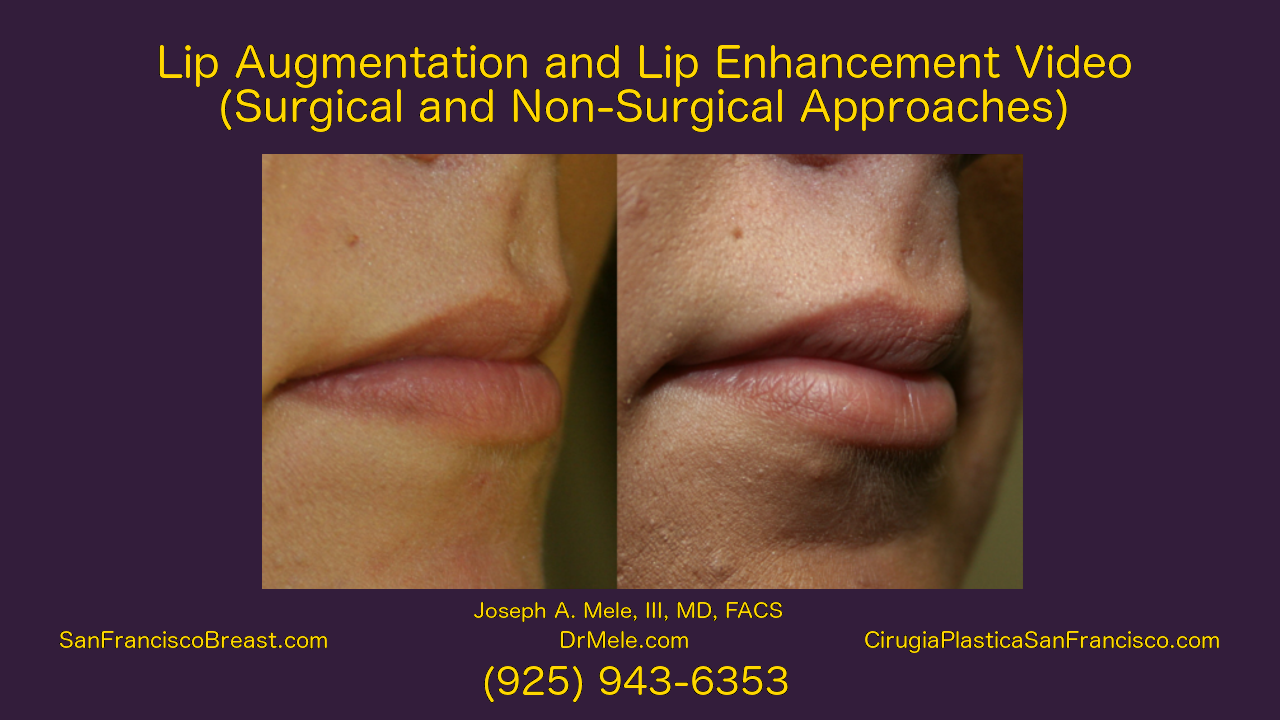
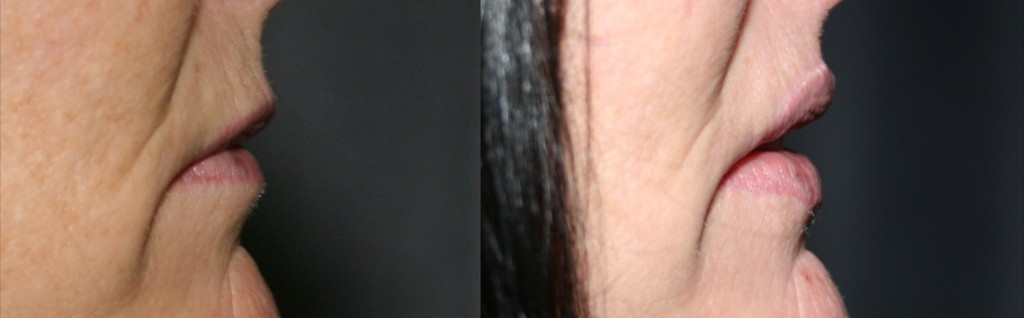
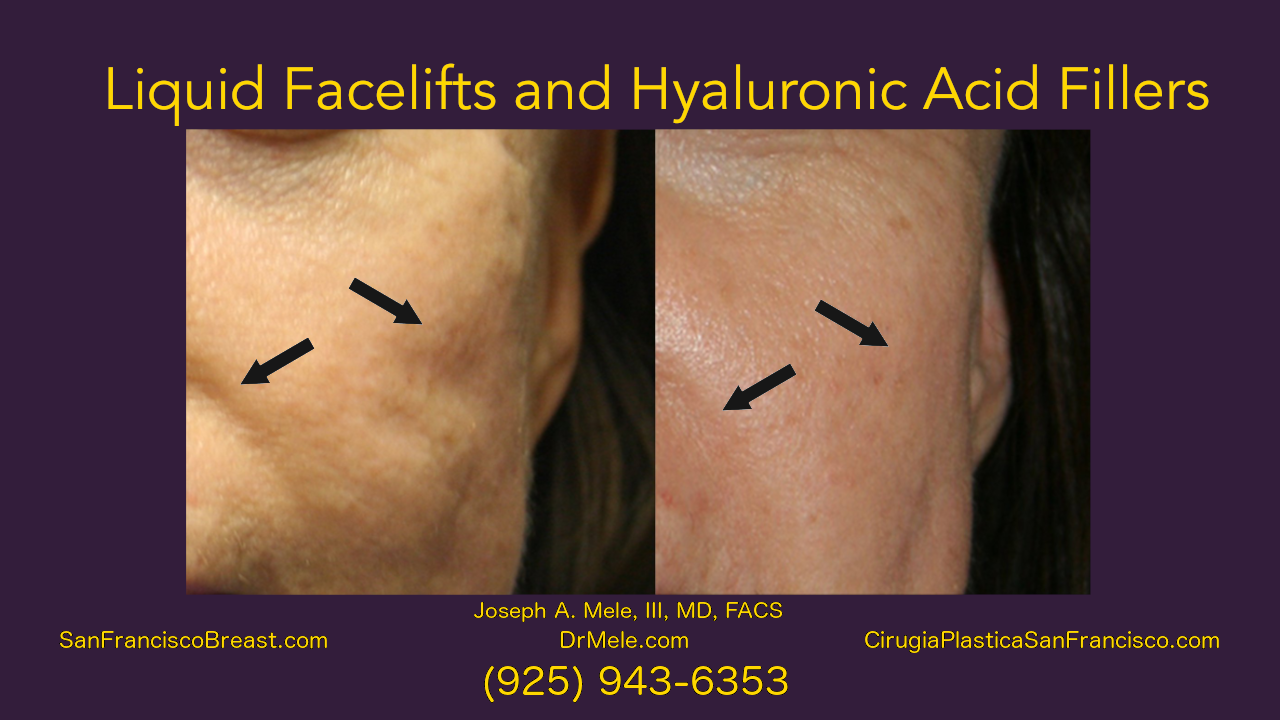
If you are not familiar with Juvederm, it is an HA filler similar to Restylane and Perlane. This year, all three were reformulated with Lidocaine (a local anesthetic). This significantly decreases injection site discomfort compared to the HA products without Lidocaine. HA is a filler used to attenuate the appearance of moderate to deep facial wrinkles. The most frequently treated areas are the nasolabial and marionette lines, which can give the appearance of parenthesis around the mouth. (Thus the clever logo at the top of this article.) Juvederm is also used for lip augmentation, to add volume to lips.
If you have wanted to try Juvederm, or you are ready for a refresher, now is a great time to schedule a consultation appointment. Just give us a call at (925) 943-6353. Juvederm treatments must be completed by September 30, 2010 to qualify for the Vivite Defining Lip Plumper give away.

Posted in Home, Lip Enhancement/Augmentation, Wrinkle Reduction (Non-surgical) | No Comments »
March 20th, 2010 Dr. Mele
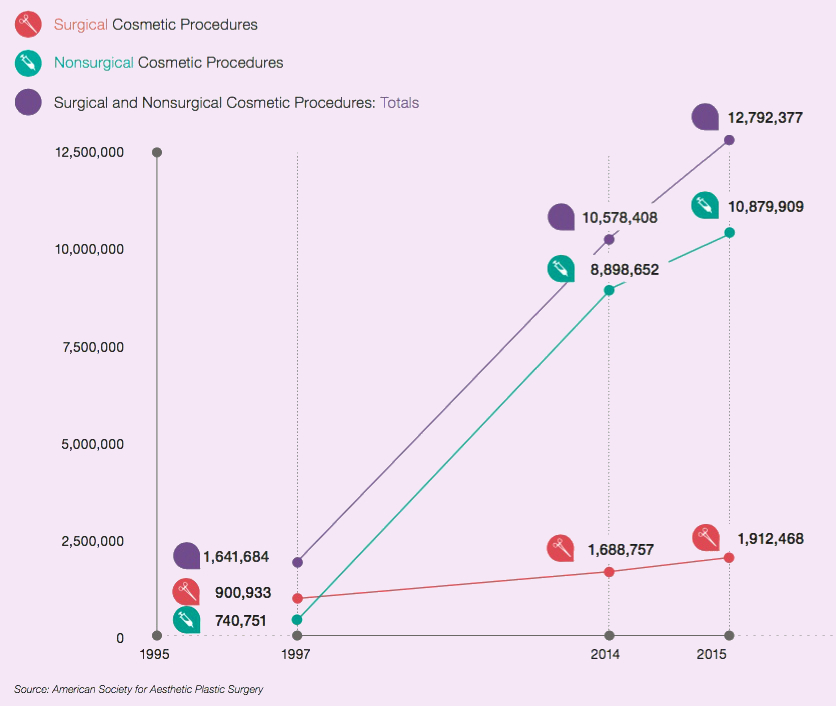
The American Society for Aesthetic Plastic Surgery (ASAPS) and the American Society of Plastic Surgeons (ASPS) have released their annual statistics on cosmetic plastic surgery for 2009. Surgical and non-surgical procedures are tallied and compared to previous years. Overall the numbers are down 2% from 2008, but still up 147% since 1997, when the statistics were first compiled. Of the almost ten million procedures performed in 2009, 85% were non-surgical and 15% were surgical. He are some quick facts, a link to the full statistics can be found at the end of this article.
The Top Five Non-Surgical Procedures
- *Botox injections (BOTOX Cosmetic® & Dysport®) – 2,557,068 procedures
- *Hyaluronic Acid Fillers (Restylane®, Perlane®, Juvederm®…) – 1,313,038 procedures
- Laser Hair Removal – 1,280,031 procedures
- Microdermabrasion – 621,943 procedures
- *Chemical Peels – 529,285 procedures
The Top Five Surgical Procedures
The Top Five Surgical Procedures for Women
The Top Five Surgical Procedures for Men
Additional information can be found on the ASAPS web site, or downloaded here. It is a large file, and may take a while…
*Dr. Joseph Mele offers these procedures through his Walnut Creek Plastic Surgery Office. Search the San Francisco Plastic Surgery Blog categories to the left, or click on the links above for more detailed information available on DrMele.com.
Posted in Breast Augmentation, Breast Reduction, Breast Reduction (Men), Breast Reduction (Women), Eyelid Lift (Blepharoplasty), Liposuction, Rhinoplasty (Nasal Surgery), Tummy Tuck (Abdominoplasty), Wrinkle Reduction (Non-surgical) | No Comments »
March 16th, 2010 Dr. Mele
If the red color of the lips (the vermillion) is with barely visible, adding volume may not be enough. If the vermilion is short, over filling may lead to increased projection without adequately increasing the height of the vermillion. This can result in a “trout pout”, rather than a fuller more voluptuous lip.
Lip advancement surgery can help. This is not the most mainstream lip enhancement, but in carefully selected patients it is the best option. Originally designed to improve the function and appearance of the lips after removing lip cancer, it preferentially enlarges the red part of the lip (the vermillion). The upside, lip advancement surgery will reveal more vermillion and can be done with or without increasing lip volume. The down side, it leaves a scar along the border of the skin and the vermillion of the lip.
Here is an example of an average scar at 4 months after surgery. The volume is stable at this point in time, and the scar will continue to improve, it is hard to see already. Most patients can cover the scar one week after surgery with lipstick.
 Lips before lip advancement with reduced height. |
 Lips after lip advancement with full restored height. |
 Lips before lip advancement with lip skin projecting farther forwards than the vermillion. |
 Lips before lip advancement with lip vermillion now projecting farthest forwards. |
If you have very thin lips, that are barely visible when the lips are at rest, lip advancement surgery may be the answer to how to achieve fuller lips. If dermal fillers increase lip projection forward, but are not revealing more vermillion, lip advancement may help. Lip advancement surgery is the most direct and effective method of increasing the amount of red lip that shows.
Several alternative methods are available for enhancing your lips. To learn more click on the links below:
Posted in Home, Lip Enhancement/Augmentation, Wrinkle Reduction (Non-surgical) | No Comments »
March 12th, 2010 Dr. Mele
Dermal fillers (Restylane®, Juvederm® and Perlane®) are the most popular way to enhance the lips. The procedure is safe, effective, predictable and relatively simple. It is the best way to “try out” large lips, as it is reversible. In order to maintain your results with lip filler, you need periodic touch-ups. These can be from 3 to 12 months apart depending on your lips.
Sometimes an alternative treatment is desired that has the potential to last years. Lip surgery can give longer lasting results. The local lip tissue can be advanced from inside the lip to provide fullness (V-Y lip advancement), or dermal tissue can be taken from elsewhere on the body and used as implant (dermal grafting).
This entry focusses on V-Y lip advancement, a procedure that rearranges the lips tissues to preferentially give fullness to the vermillion (the red part) of the lip. For information on other methods of lip enhancement, please see the links at the bottom of the page.
Lip Enhancement with Local Tissue Rearrangement

The upper row shows before and the lower row shows after lip enhancement with V-Y flaps.
The soft tissue of the lip is moved forwards to enhance the fullness and natural curves of the lips.
(Click picture for an enlarged view.)
This particular type of lip enhancement borrows fullness from the inside of the lip to enhance the outside. The soft tissue inside the lips can be pushed forward to enhance lip fullness and the central pout.
The Pro’s and Con’s of Surgical Lip Enhancement
- The Advantages:
- No artificial materials are necessary … no allergies or foreign body reactions.
- Stability … Soft tissues won’t migrate.
- Softness … Since lip is enhanced with lip, it feels like lip.
- Results … Longer lasting results
- The Disadvantages:
- Recovery … weeks rather than a few days with the fillers.
- Size … maximum volume is limited to the soft tissue available.
- Cost … more than one filler treatment, but often less costly over time .
- Complications … overall complications rates are low, but slighter higher than with fillers.
Alternative Lip Augmentations
Several alternative methods are available for enhancing your lips. To learn more click on the links below:
Posted in Home, Lip Enhancement/Augmentation, Wrinkle Reduction (Non-surgical) | No Comments »
March 8th, 2010 Dr. Mele
The two main goals of lip enhancement surgery are to:
- Increase lip volume, and
- Increase the amount of vermillion (the red part of the lip) seen.
To accomplish these different goals, different procedures may be selected.
Lip Enhancement Surgery – Volume, volume volume
 Lips: Woman in her late 50's with thinning lips before lip implants (dermal grafts taken during a facelift) |
 Lips: After lip enhancement with dermal grafts. Notice restoration of the balance and projection of the lips. |
Adding volume to the lips is how lip fillers work. Dermal fillers like Restylane®, Juvederm® and Perlane®, add volume from right off the shelf. The amount of volume is virtually unlimited, and can be added directly to where it is needed.
Surgery can add volume too. This can be accomplished with:
- Lip Implants
- Natural Implants (Dermal and/or Fat Grafts)
- Man-Made Implants (Gortex, Silicone)
- Man-Made Natural Implants (Restylane, Juvederm, Perlane, Collagen – man made but normally found in the lips)
- Rearranging the soft tissue already present in the lip (V-Y flaps, lip advancement flaps)
This article focuses on Lip Implants, information on the other available methods of lip enhancement San Francisco, and lip augmentation can be found via the links at the bottom.
Lip Augmentation With Man Made Materials
Gortex® and SoftForm®
Lip implants have been used for years. The most frequently used artificial lip implants are made of Gortex®. It was selected because it is soft. In fact, one of the most popular Gortex® lip implants is named SoftForm®. While it can work well in carefully selected patients, unfortunately, it is not soft enough. I am not a fan of artificial lip implants for several reasons.
Because lips move, and because lips are softer than artificial lip implants, lip implants can:
- Tether the lips, and prevent the lips from stretching when smiling fully (even when the implants is sectioned).
- Be felt along the edges.
- Can cause a visible bulge at the ends of the implant (especially with motion).
- Can erode through the skin causing exposure and infection requiring removal of the implant
Silicone Lips
Silicone is available in two forms for lips: Solid (Silicone Lip Implants) and Liquid (Injectable Silicone). I am a fan of neither. Solid implants have the same problems as Gortex® implants, except worse. They are more stiff and thus more likely to erode and get infected.
Liquid silicone injections are even less predictable. They may give you the softest, poutiest lips one day, and then become hard, lumpy and uncomfortable without warning. Once this happens, it is rarely correctable, ask Lisa Rinna. Last year, while touring for the release of her book, Rinnavation, she confessed to having silicone injected into her lips. She also disclosed her personal silicone lip injection problems.
Lip Augmentation With Your Own Cells
Dermal Grafts
Because of the recent advancements of dermal fillers, I rarely use artificial lip implants any more. Instead, when injectable can’t do the trick, I rearrange what is already there. Dermal tissue can be taken from elsewhere on the body and used as an implant (dermal grafting), or the local lip tissue can be advanced from inside the lip to provide fullness (V-Y lip advancement discussed in the next article).
A small incision is made hidden in the corner of the lip, and the dermis is inserted under the vermilion. The results are similar to adding volume with a filler; however, can be much longer lasting. The swelling after this type of surgery lasts longer too. Instead of a couple days, it may take a couple weeks.
Fat Grafting
When more volume is necessary, fat can be retained on the dermal graft. This adds volume, with better volume predictability and better contours than injecting free fat grafts.
Free fat grafting is when fat is removed (liposuctioned) from one area, and reinjected into an area where more volume is desired. For small volumes this can be safe and predictable, and I use this technique most frequently for the nasolabial folds (the parenthesis around the mouth). On the lips it can be more problematic. We want soft lips, especially when kissing, and free fat grafting can cause firm lumps in the lips. Because better alternatives are now available, I rarely use free fat grafting to the lips.
These are minor surgical procedures, and can be done as an outpatient with local, sedation or under anesthesia. Lip augmentations can be done as a stand alone operation, or can be incorporate as part of plan for overall facial rejuvenation. My patients considering a facelift are frequently also experiencing lip thinning. A lip enhancing procedure can be incorporated to solve two problems at the same time.
Alternative Lip Augmentations
For information on other methods available for enhancing your lips, click on the links below:
Posted in Home, Lip Enhancement/Augmentation, Wrinkle Reduction (Non-surgical) | 3 Comments »
March 4th, 2010 Dr. Mele
Nothing says youth like full lips. Research shows that full lips are a requirement for a youthful face. Grace Gold of AOL’s StyleList reports in The Pursuit of Beauty: The Secret to Youth: Full Lips. Her inspiration? An article in the DailyMail.
Thin is Not Always In
It is an unfortunate truth that as we age, our lips shrink. Whether conscious or unconscious, the size of the lips is one of the most important variables programmed into our brains’ youth calculator. In other words, thin lips are aging. There are several ways to turn back the clock on lip aging, and dermal fillers are currently the most popular treatment.
Off the shelf dermal fillers, are safe, effective and convenient. These lip fillers are supplied as prefilled, single use syringes. Any volume can be used, and a simple block with local anesthesia, makes the procedure an in office option. All three of these products have received FDA approval for new formulations with Lidocaine in the mix to ease the injections.
What Makes Lip Fillers so Popular?
 Lips before enhancement with a Dermal Filler (Restylane®, Juvederm® and Perlane® are the most popular in the US) |
 Lips after enhancement with a Dermal Filler. Notice the augmentation and preservation of the normal curves. |
The advantage of this type of lip enhancement is its simplicity. I can choose different products for different lips. Lip enhancement can be performed in the office, with local anesthesia if needed, and the results are quickly apparent. There is sometimes mild discomfort, swelling, and bruising, which normally resolve quickly. While the enhancement is instant, it is best to have a few days for the lip augmentation to settle before an important event.
Dermal fillers provide two main benefits for the lips: increased volume, and wrinkle reduction. Lip enhancement is performed for small, thin lips, to increase volume. In this situation, the main goal is to increase the size of the lips. Lip enhancement can also be used to smooth the wrinkles that can form around the lip. Sometimes called Smoker’s Lines, they can occur without smoking. Often radially aligned, the wrinkles that form around lip edges can cause the lipstick to bleed. For lip wrinkles, the primary goal of lip enhancement is to attenuate the aged appearance. Both volume enhancement and wrinkle reduction may be desired for the same pair of lips, and these techniques can be easily combined for optimal results.
The longevity of the results can vary. Most results last 3-6 months, and many patients experience longer satisfaction. It is the perfect product to try out larger lips. The volume can be gradually increased to your comfort, and maintained.
But, what if you are looking for a longer lasting result? The are several surgical alternatives for enhancing lips. While no results are permanent, surgery can give longer lasting, natural results.
To learn more click on the links below:
Posted in Home, Lip Enhancement/Augmentation, Wrinkle Reduction (Non-surgical) | 2 Comments »
February 28th, 2010 Dr. Mele
Lip augmentation is a popular and very satisfying procedure. Full lips are one of the most significant signs of youth. In my San Francisco Bay Area, Walnut Creek office, I perform hundreds lip enhancements. The most common method for lip augmentation is with a dermal filler like Restylane®, Juvederm® or Perlane®. While fillers of the most widely used method for lip augmentation, there are several other options available.
When I first started writing this week’s article on Lip Enhancement Walnut Creek, my goal was to quickly cover today’s options for lip augmentation. I realized, however, this is going to take more than one post. Over the next two weeks I will briefly review the latest trends in enhancing lips. Be it the ubiquitous injectable fillers you see advertised daily on TV, or lip enhancing surgical procedures known to a smaller group who desired a longer lasting result, and who can afford a little more downtime.
There is more to lip augmentation than meets the eye. In the coming weeks, links to the latest and the most popular ways to enlarge and rejuvenate your lips will be activated at the end of this article. I will try to illustrate each method with lip enhancement before and after pictures. The goal is to provide general information, but to determine the methods best for your lips, you will want to make an appointment with a board certified plastic surgeon, and explore your options.
It Seems So Simple
Plastic surgery often looks simple, but it takes careful planning and the meticulous attention to detail to makes it look simple. Lip enhancement is more than just lip enlargement. While making the lips larger is often the goal, it must be done carefully to keep the lips balanced. It is important to match the volume of the lips to the size of the face, and more importantly, to maintain proper proportions between the upper and lower lips. Hint: the lower lip is meant to be bigger.
So What is Important for Beautiful Lip Enhancement?
The goals:
- Volume, volume, volume … the correct volume is very important
- The shape of the lips … maintaining or creating the curves
- The projection of the lips … the proper pout (not the trout pout)
- The height of the lips … must match the facial proportions
- The amount of vermilion (red stuff) seen on the lips … fillers may not be enough
- The softness of the lips … one of the big benefits of HA’s over Collagen
- The motion of the lips … one of the limiting factors for lip implants
- Correcting the wrinkles around the lips … last but definitely not least
Most lip enhancement treatments can help with more than one of these goals, but no treatment is perfect. It is important to discuss all the available options with a Board Certified Plastic Surgeon who is experienced in all methods of lip enhancement. This way, you can be certain that you are getting the best possible treatment for your individual lips.
Alternative Lip Augmentations
Several alternative methods are available for enhancing your lips. To learn more click on the links below:
Posted in Home, Lip Enhancement/Augmentation, Wrinkle Reduction (Non-surgical) | 1 Comment »
October 23rd, 2009 Dr. Mele
Most plastic surgeons offer more than plastic surgery. Despite the latest glossy ad you may see, there is still nothing that replaces the quality, safety and predictability that today’s cosmetic plastic surgery provides. On the other hand, not every wrinkle needs surgery.
Unlike a facelift, the so called liquid facelift, fillers, cannot correct skin laxity, and unlike a browlift, Botox® and Dysport® cannot lift a sagging brow, but they can help with the wrinkles. I use both these wrinkle reducers to delay and sometimes to enhance the results of my surgical procedures. If you have lines that look like “elevens” between the eye brows, or folds that look like “parentheses” around the mouth, there are non-surgical treatments which can reduce the length and the depth of these lines, and it can be done during a short office visit.
Starting at the Top.
 BOTOX Cosmetic from Allergan |
 Dysport from Medicis |
Botox and Dysport can reduce the lines that develop on the upper face. Both products are FDA approved to reduce the frown lines we get between our eyebrows; moreover, they are used off-label, to do much more. In many cases, a skilled plastic surgeon can reduce the following:
- Transverse forehead lines
- Frown lines (the “elevens” between the eye brows)
- Laugh lines or crows feet (around the eyes)
- Mild brow ptosis (mild sagging usually of the outer eyebrow)
Botox and Dysport are not fillers. They reduce wrinkles at the source, by inhibiting the muscle action causing them. Care must be taken with these medications, to inhibit the offending muscle actions while always trying to preserve normal animation.
The Mid and Lower Face
 Restylane from Medicis |
 Perlane from Medicis |
 Juvederm from Allergan |
 Radiesse from BioForm Medical |
Since Botox and Dysport reduce expression, they are not ideal for the mid to lower face. We can look normal without the ability to frown, but we need to be able to smile. This is why fillers are ideal for the correction of the lines around the mouth.
The most popular fillers in the US today are hyaluronic acid (HA) based. HA is a clear gel, and a normal component of our skin and joints. There is no allergy to it, unless we are allergic to ourselves. The most popular HA fillers are:
- Restylane
- Perlane
- Juvederm
The most common areas treated with fillers are:
- The parentheses (nasolabial and marionette lines bracketing the mouth)
- The lips for enhanced fullness
- The fine lines around the mouth (smoker’s lines even if you don’t)
- Other mild to moderate wrinkles of the face
Radiesse is also a filler, but it is not an HA. It is white and gives a firm result. Good for deep lines like the nasolabial folds and marionette lines (i.e. the parentheses), but not as good superficially like in the lips where it may be seen or felt. Radiesse is also good for mild enhancement of the chin and cheek bones.
It is important to have a face-to-face evaluation with your plastic surgeon to determine if you are a good candidate for a procedure. This includes non-surgical procedures. When performed by a trained professional, the treatment should be simple and easy. If you are in the San Francisco Bay Area, and would like to have a consultation appointment in my Walnut Creek Plastic Surgery office, give me a call at (925) 943-6353. More information on non-surgical wrinkle reduction, check my main web site, www.DrMele.com .
Though not common, possible adverse reactions should be discussed with your plastic surgeon prior to initiating treatment. The most common problem with all these products is mild bruising, so you do not want to have your injections the day before you want your results. The results last for months, so allowing a couple weeks for the optimal results to develop is recommended.
There is some crossover between the botulinum toxins and the facial fillers. Sometimes deeper lines on the upper face may need a little filler to improve the wrinkle reduction and speed the results. Less frequently, Botox and Dysport are used on the lower face, to treat facial asymmetry, lip lines and neck (platysmal) banding. These are special cases and require careful selection in order to provide the best results.
Posted in Home, Wrinkle Reduction (Non-surgical) | No Comments »
August 31st, 2009 Dr. Mele
I previously posted articles on what’s new in Plastic Surgery San Francisco including Hydrelle® and Dysport®. Well, there is new information to share with both products, and this information can save you some money too. The news about Dysport® is here … Hydrelle® there.

$75 off coupons coming to a Plastic Surgeon's office near you.
Dysport® is the only FDA approved competitor to BOTOX Cosmetic®. To celebrate the launch of it’s new botulinum toxin, Dysport®, Medicis will be offering $75 rebate coupons to patients receiving Dysport® (botulinum toxin type A) wrinkle reduction. The coupons will be available after the Labor Day Weekend, beginning September 8th, and continuing through October 31st, 2009.
“Botox Day” is the usually third Wednesday of each month (e. BOTOX Cosmetic® and Dysport® will both be available. Other days may be available upon request, call the office for details (925) 943-6353.
If you haven’t heard about Dysport®, please see the post mentioned above. While Dysport® has been available in Europe for years, Medicis has only recently received FDA approval for its use in the US. Expect to hear move from them in the near future. The informational literature and advertisements for the United States have just now passed FDA review, so you will be hearing more about Dysport® soon.
Dysport® and BOTOX Cosmetic® are not fillers but are good for reducing wrinkles on the upper face. Fillers. like Restylane®, Perlane®, Juvederm® and the newest addition Hydrelle® are better for the mid and lower face.
Happy wrinkle reduction San Francisco.
Posted in Home, Wrinkle Reduction (Non-surgical) | No Comments »
August 31st, 2009 Dr. Mele
UPDATE: I can no longer recommend this product. I would suggest using Restylane®, Perlane® or Juvederm®. All three are now available with Lidocaine, all three seem to have fewer adverse reactions and superior customer service. Please see “The Ugly” below for details.
I previously posted articles on what’s new in Plastic Surgery San Francisco including two new cosmetic plastic surgery products: Hydrelle® and Dysport®. Well, there is new information to share with both products. The scoop on Hydrelle® is here … Dysport there.

Hydrelle®: the first FDA approved wrinkle filler with numbing added.
Hydrelle® was featured on the hit television series The Doctors.
I have had a chance to use Hydrelle® and it is easy to work with. It is very similar to Restylane®, Perlane® and Juvederm®. If you are familiar with these dermal fillers, the results last for about the same amount of time; however, Hydrelle® is more concentrated.
The Good, the Bad and the Ugly
The good news is that Hydrelle® requires about half the volume of the other products for wrinkle correction. Similar correction, half the volume. Moreover, the local anesthetic (0.3% lidocaine), which is added to Hydrelle®, really cuts down on the discomfort of the injections. While I almost always use a local anesthetic block to administer the current HA fillers, with Hydrelle® I rarely need to block the area before treating.
The bad news is that the concentrated product tends to swell more than the others dermal fillers. This is most apparent the first day or two, and then it settles down. Also, if you are allergic to sulfites (red wine or dried fruit) this product is not for you.
The Ugly
EDIT: Three to four weeks after injecting a patient with Hydrelle® they developed two large sterile abscess on the cheeks which required weeks of antibiotics, steroids, and surgical drainage to treat. This complication is rare, but other examples can easily be found on line. The injection was in the nasolabial folds and technique used was as recommended by the manufacturer, and the same technique I use with the other HA fillers (Restylane®, Perlane® and Juvederm®) This patient’s cultures were negative and they were not allergic to Sulfites.
If I continued to use Hydrelle®, I might go the rest of my career without seeing this extreme reaction again; however, the only way I can be 100% certain the Hydrelle® will not cause more problems in my practice is to no longer use the product. Good, safe and time tested alternatives are available with and without Lidocaine: Restylane®, Perlane® and Juvederm®.
The FDA is currently reviewing this and other reports of adverse reactions submitted regarding Hydrelle®, and for now it remains on the market. I was very excited about this product as it seems to fill better than the other fillers; however, I will no longer be offering Hydrelle® in my Walnut Creek Plastic Surgery office.
I have used HA fillers since they became available in the US, and I have never seen this type of delayed onset and prolonged recovery with any other HA product, and I hope I never do again. Complications can occur with any procedure, so if you develop redness, lumps, pain, increasing swelling, or any other signs of an adverse reaction, be certain to contact your plastic surgeon immediately.
All adverse reactions, for any product not just Hydrelle®, should be reported to the FDA. The FDA’s online submission form is here. My patient sample size is too small to draw any conclusions, and the FDA is there to compile this data and make the appropriate recommendations. If you have had an adverse reaction, you should submit it. The FDA will compare the number of adverse reactions to the number of units sold to see if it is an acceptable number.
Please understand, my results may not be typical, and others will hopefully never have this type of reaction. My only goal in suppling the above information is to improve patient safety.
Posted in Home, Wrinkle Reduction (Non-surgical) | No Comments »