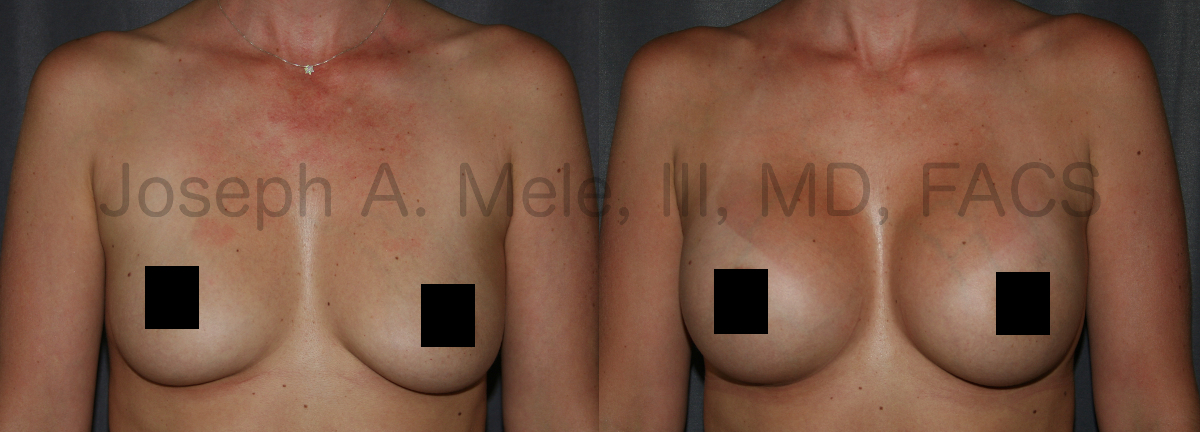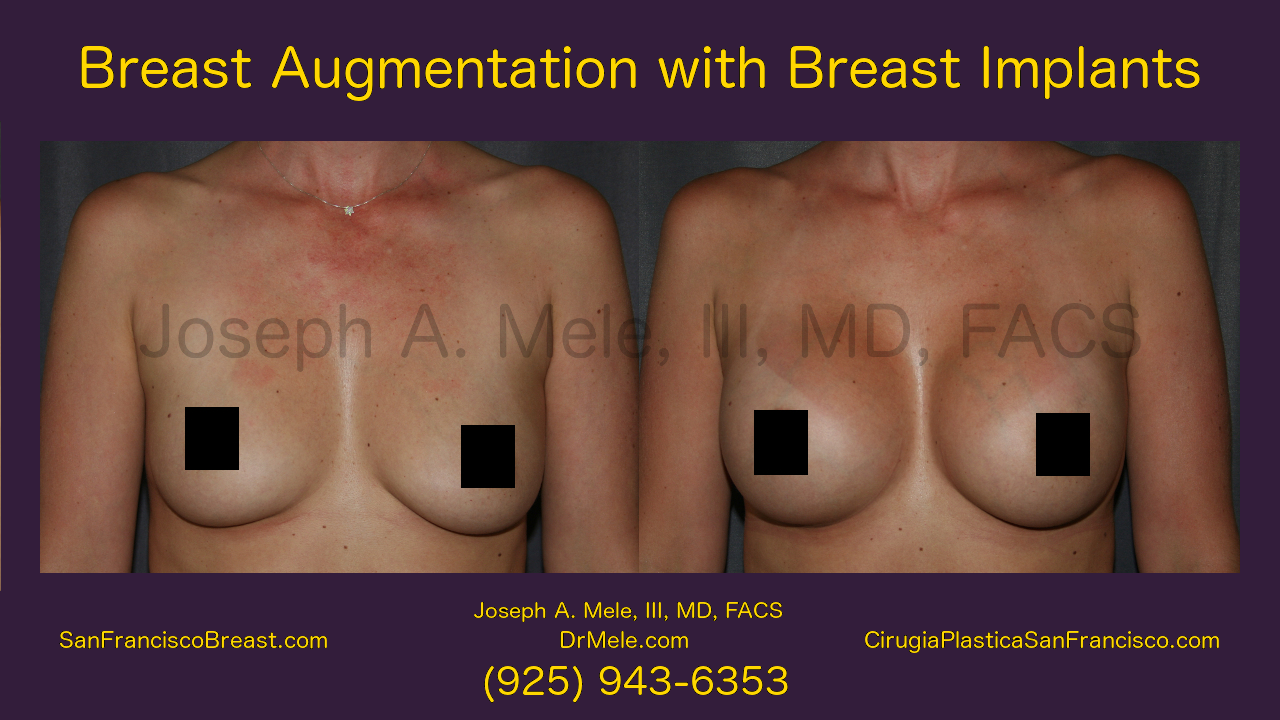
Breast Augmentation remains one of the procedures that I perform most frequently. Whether you’ve always had small breast and want them larger, or you had larger breast and want them back, Breast Augmentation can help you achieve your goals.
Breast Implant Revision Surgery is performed to improve the results of Breast Augmentation. While Breast Augmentation is both safe and effective, our bodies change as we age. Breasts naturally change size and shape over time, and this happens even after breast augmentation. Changes can certainly be exacerbate by pregnancy and changes in weight, but most of the time the changes are gradual and sneak-up on us.
What’s New in Breast Implants and Breast Augmentation?
If you are considering Breast Augmentation or Breast Implant Revision surgery, you should know that new breast implants are available and more are on the horizon. New techniques are also being developed to help make your Breast Enhancement simpler, safer, more predictable and easier overall. Be certain to seek a Board Certified Plastic Surgeon for all your Cosmetic Breast Surgery needs.
Below is part three of four of my Breast Implant Revision Video that appeared on KRON4′s Body Beautiful. Options in Breast Augmentation, Breast Implants and Breast Augmentation Maintenance are reviewed. The television show was broadcast live, so viewers could call in during the broadcast to have their questions answered. The (415) number shown in the video was only for the show; however, if you have Breast Augmentation or Breast Implant Revision questions, please call our San Francisco Bay Area Plastic Surgery Office directly at (925) 943-6353. If you prefer, you may also use the contact form on the left.
San Francisco Bay Area Breast Implant & Breast Augmentation Revision Video
San Francisco Bay Area Breast Implant Revision Questions
This Breast Augmentation, Breast Implant Revision Surgery video includes:
The Breast Implants currently available
Saline Breast Implants – Natrelle (Allergan) and Mentor (J&J)
Silicone Gel Breast Implants (Natrelle and Memory-Gel)
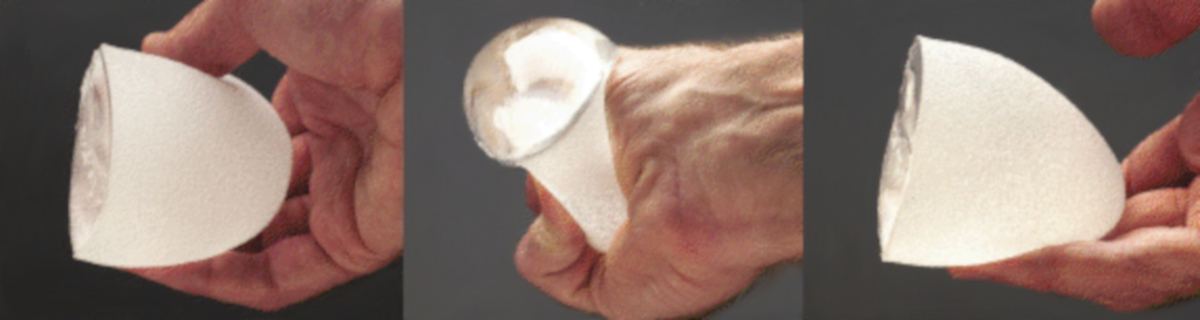
Soft-Solid Silicone Breast Implants (GummiBear Implants)
Natrelle 410′s*
Mentor Contour Profile Gel (CPG)*
*The 3 yr and 5 yr data for the 410′s and CPG breast implants surpasses that of the breast implants that are already approved in this country. Why are they not approved? Only your FDA knows for sure.
Breast implant deflation
What are the signs and symptoms associated with a leaking breast implant?
How to check for a breast implant leak
How long do Breast implants last?
How are breast augmentation and breast lifts combined?
Breast Augmentation and Breast Implants Revision Resources
You are viewing number three of four Breast Implants Revision Video segments from Dr. Mele’s recent Body Beautiful television appearance. Here are links to the other segments:
Breast Implant Revision Surgery is performed to improve the results of Breast Augmentation. Breast Augmentation Revision can help with Breast Implants are the wrong size, in the wrong position, have developed capsular contracture or when other cosmetic deformities require correction. Specific techniques have evolved for the correction of the most common problems that can occur with Breast Implants. Some recently developed new techniques have significantly improved the results of breast implant revision for problems that have been difficult in the recent past.
San Francisco Bay Area Breast Augmentation
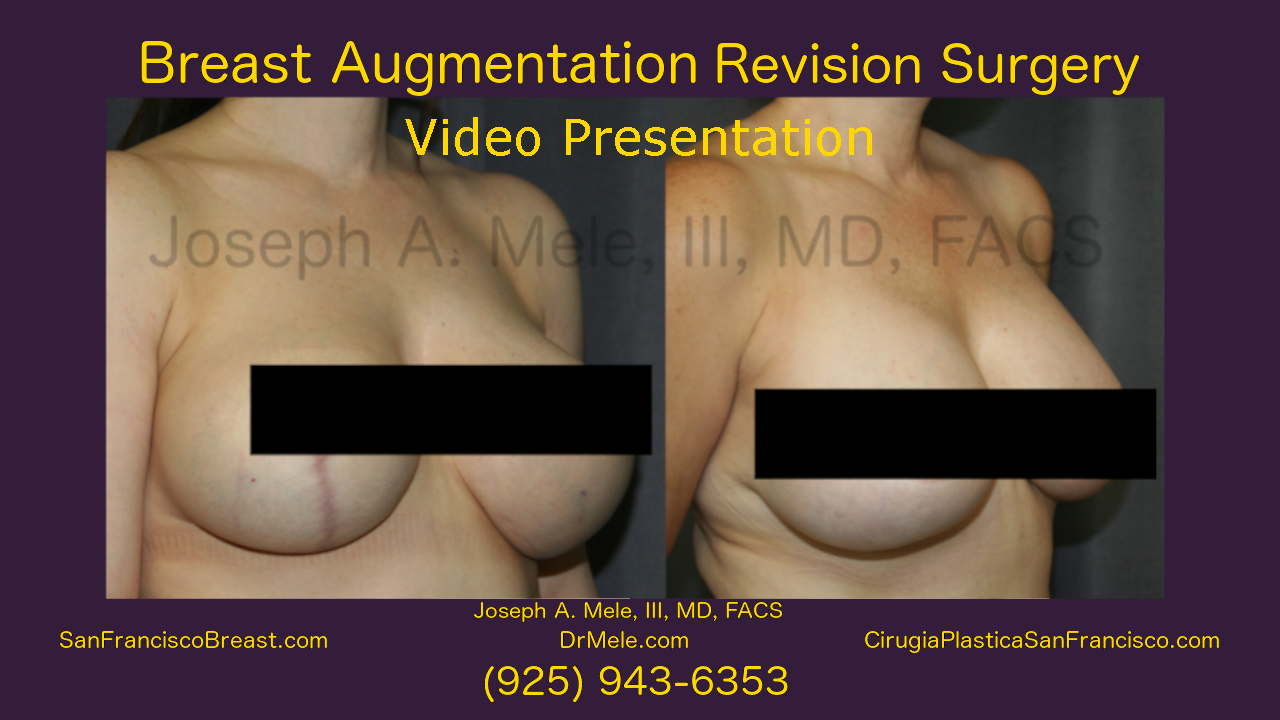
This segment of Body Beautiful focuses on before and after results. Breast Augmentation is reviewed, as well as the correction of specific breast implant problems like capsular contracture and implant malposition (bottoming out and symmastia). The following Breast Implant Revision Video was broadcast on KRON4′s live Medical Monday show, Body Beautiful. The television show allows viewers to call in during the broadcast and have their questions answered. The (415) number shown in the video was only for the show, so if you have Breast Augmentation or Breast Implant Revision questions, please call our San Francisco Bay Area Plastic Surgery office directly at (925) 943-6353, or use the contact form on the left.
San Francisco Bay Area Breast Augmentation & Breast Implant Revision Video
San Francisco Bay Area Breast Implant Revision Questions
This Breast Augmentation, Breast Augmentation Revision Surgery video includes:
Before and After Pictures of Breast Augmentation
Before and After Pictures of Breast Augmentation Revision including:
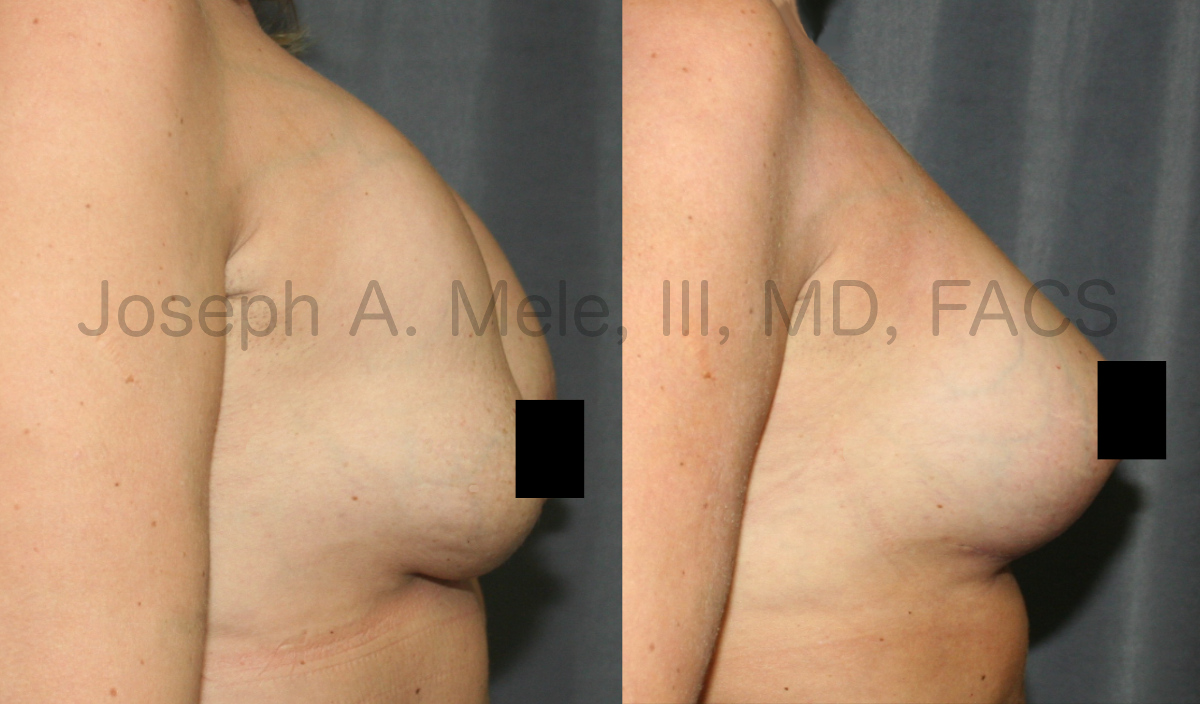
Before and After Pictures of Breast Augmentation Revision for a Breast Implant that is too low and a poorly formed inframammary fold (IMF)
Before and After Pictures of Breast Augmentation Revision for Grade III Capsular Contracture causing the Breast Implant to be too high (Capsulotomy/Capsulectomy)
Before and After Pictures of Breast Augmentation Revision for Grade IV Capsular Contracture causing the implant to ride up and appear significantly smaller
Before and After Pictures of Breast Augmentation Revision for Breast Implants that are too close (as seen in symmastia) and too far from the midline (often causing a large gap between the breast implants) and rippling on the inside of the breast (medial rippling)
Before and After Pictures of Breast Augmentation Revision for severe bottoming out with internal capsulorrhaphy (though a breast lift is the most frequently selected option)
Breast Augmentation and Breast Implants Revision Resources
You are viewing part two of four Breast Implants Revision Video segments from Dr. Mele’s recent Body Beautiful television appearance. Here are links to the additional segments:
Breast Augmentation remains one of the most popular cosmetic plastic surgery procedures. While often the procedure lasts a lifetime, breast augmentation revision is quite common. Breast Implant Revision has emerged as a specialty unto itself. While many of the tenants that lead to excellent Breast Augmentation results will also apply to Breast Augmentation Revision, new and specific techniques have evolved for the correction of the common problems that can occur with Breast Implants.
The most frequent reasons for Breast Augmentation Revision Surgery include the desire to change the size of the breast, breast implant deflation, problems with the position of the breast implants and tightening of the scar that normally forms around the breast. The last listed is called capsular contracture.
San Francisco Bay Area Breast Augmentation
What follows is a Breast Implant Revision Video segment from KRON4′s live Medical Monday show, Body Beautiful. The television broadcast allows viewers to call in and have their questions answered live. The (415) number shown in the video was only for the show, so if you have Breast Augmentation or Breast Implant Revision questions, please call our San Francisco Bay Area Plastic Surgery office directly at (925) 943-6353, or use the contact form on the left.
San Francisco Bay Area Breast Augmentation & Breast Implant Revision Video
San Francisco Bay Area Breast Implant Questions
This Breast Augmentation, Breast Augmentation Revision Surgery video includes:
What to consider before having Breast Augmentation
Is “routine maintenance” for Breast Implants required?
If my Breast Implants are too high, can they be lowered?
If my Breast Implants are too low, can they be raised?
If my Breast Implants are too wide, can they be moved towards the middle?
If my Breast Implants are too close together, can they be separated?
What causes Breast Implants to fail?
Can I maintain my body proportions and have Breast Augmentation?
What are the problems associated with Breast Implants which are too big?
Breast Augmentation and Breast Implants Revision Resources
You are viewing one of four Breast Implants Revision Video segments from Dr. Mele’s recent Body Beautiful television appearance. Here are links to the additional segments:
Breast Augmentation and Breast Implant Revision San Francisco Bay Area – 1 of 4 (You Are Here)
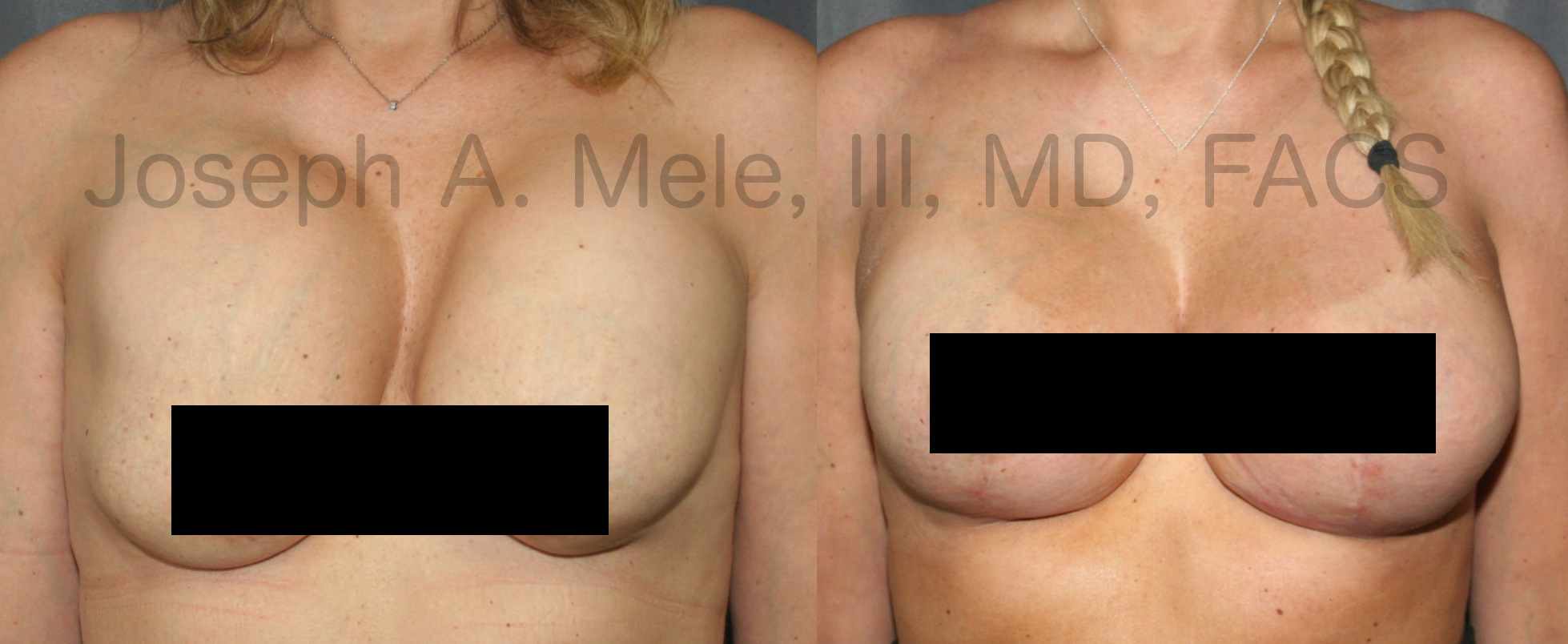
This patient had breast augmentation prior to becoming pregnant. Left: After pregnancy, the breast implant position remains unchanged; however, the breasts have dropped. Right: After breast augmentation revision, the breasts have been lifted and the breast implants exchanged, dramatically improving the breasts' shape and profile.
Pregnancy and Breast Augmentation
Pregnancy can change the volume and shape of breasts, and the result isn’t always positive. If you have been pregnant, you know firsthand. For the lucky few the changes are subtle, or even enhancing, but usually they are not. Many patients opt for breast augmentation after having children to restore what was lost. If you are trying to get pregnant, it is worth delaying your breast augmentation; however, if childbearing is not imminent, waiting may not be desirable.
Breast Implant Problems After Pregnancy
The breast augmentation revision before and after pictures above are of a woman who had breast augmentation at a young age, and enjoyed her breast implants for many years. After childbearing, her breast implants remained in a perky position, but the natural breast tissue sagged. Her breasts would have sagged and deflated whether she had breast implants or not, but with implants the result was normal elongated, deflated breasts, with the addition of disproportionate upper pole fullness from her breast implants.
The Breast Implant Revision Solution
The solution was a breast lift with breast implant exchange. The natural breast tissue was lifted to reduce the length of the breast and firm the natural breast tissue. The breast implant was exchanged to help with both shape and the post-partum changes in breast volume. Larger breast implants can be used to replace lost breast volume. Smaller implants, removal of the breast implants, or even breast reduction can help when the breast remain too large after lactation.
A desire to change breast implant size (larger or smaller)
Deflation of the breast implant
Firmness due to tightening on the breast implant capsule (capsular contracture)
Breast implant asymmetry or malposition like bottoming out, double bubble or symmastia (uniboob)
If you have one of these problems, a Board Certified Plastic Surgeon, like Walnut Creek Breast Implant Specialist Joseph Mele, MD, FACS, can help.
Tomorrow, Dr. Mele will be appearing on Body Beautiful. The show airs live on KRON, channel 4, September 12, 2011, at 11:00 AM. Breast augmentation and breast augmentation revision surgery will be discussed. If you have questions, call in to the KRON studios on Monday at 11:00AM, or send us your question through the contact form on the left. Every effort will be made to answer your questions during the show.
Breast Implant Revision Videos
Below are links to previous television appearances on KRON4 featuring Breast Augmentation Revision Videos and Breast Augmentation Revision Before and After Photos:
Breast Augmentation Scar Revision Before and After Pictures
Breast Augmentation Scar revision is another reason for Breast Implant Revision Surgery. Follow the link for a case presentation of breast augmentation scar revision for a wide-spread periareolar scar : Hypertrophic Breast Scar Revision
Saline Breast Implants or Silicone Breast Implants? The question is asked every day in my Walnut Creek Plastic Surgery Office, and it is often followed by, “Which is Safe?” The decision to have breast augmentation surgery is a personal one. While both saline breast implants and silicone breast implants are both safe, which is best will depend on you.
Why Choose Silicone Breast Implants?
The main reason women choose silicone gel breast implants is because they feel softer. If you are thin and have small breasts, a breast implant will be more palpable. A silicone breast implant tends to give a softer, less detectable result. A silicone breast implant will move more like breast tissue too. These advantages are less pronounced for larger breasts.
Why Choose Saline Breast Implants?
The main reason my patients choose saline breast implants is because they are afraid of silicone. Saline implants are a bit firmer and can provide some additional projection when this is desired. They can also be placed through smaller incisions, because saline breast implants can be inserted empty, and filled after they are inside. The peace-of-mind that saline breast implants offer comes into play when we discuss breast implant leaks.
What Happens if My Breast Implants Leak?
Both the currently approved saline breast implants and silicone breast implants can leak. If and when the FDA gets around to approving the form-stable, gummi-bear breast implants, board certified plastic surgeons will be able to offer an implant that doesn’t leak. For now, leakage rates are low, but account for about one third of all breast implant revision surgery.
When Saline Breast Implants Leak
When a saline breast implant leaks it is obvious. The implant goes flat, and the volume is lost. No special test is necessary to make the diagnosis. Since saline is water with a little salt added to match your body’s saltiness, it is quickly absorbed and leaves no trace. US breast implant manufactures offer lifetime breast implant warranties, so the breast implant will be supplied without a charge, and if a leak occurs within 10 years of your primary breast augmentation, they will also supply money to help defray the cost of surgery to replace the defective implant.
When Silicone Gel Breast Implants Leak
When a silicone gel breast implants leaks, it may not be so obvious. The silicone is a cohesive gel and does not run like water. This is good in that the capsule around the implant often prevents the gel from migrating; however, it also means that the size of the breast does not change. The FDA has recommended that all patients with silicone breast implants obtain an MRI every other year to look for these silent leaks beginning three years after the initial surgery. If the gel migrates outside the capsule, the body will often form additional scar to wall-off the free gel. This can cause a lump in the breast and may be the first clue that a silicon breast implants has leaked.
So … Saline Breast Implants or Silicone Breast Implants?
There is no “correct” answer. For most patients a good result will be obtained with either saline breast implants or silicone breast implants. Silicone breast implants tend to give a more aesthetic result when the breast tissue is small and when the implant is large. The bigger the breast implant, and the smaller the breast, the more obvious breast augmentation may be. The silicone implants feels and acts more like breast tissue, so it can often provide a superior result in this situation. The advantage is not as pronounced if you have more breast tissue and a smaller breast implant.
While information is available on-line, the best way to get an informed opinion is by visiting a Board Certified Plastic Surgeon. If you would like to schedule an appointment with Dr. Mele give us a call at (925) 943-6353 or use the contact form in the left column.
It has been an interesting summer in the San Francisco Bay Area. The rest of the country is trying out the West Coast’s favorite natural disaster – Earthquakes. Earlier this week a 5.5 earthquake hit Cokedale, Colorado and a 5.8 struck in Mineral, Virginia. We are not slacking on that department, as I was awakened Tuesday night by a mild 3.6 quake, one of 75-100 San Francisco Bay Area Earthquakes this week.
Maybe it’s Earthquake weather, but this summer’s weather has been a bit odd. While the rest of the country has been roasting, it has been a mild summer for San Francisco. Bay Area Breast Augmentation, on the other hand, remains hot. In office procedures such as Botox, Fillers and Chemical Peels are still the most frequently performed facial enhancements, but Breast Augmentation (Augmentation Mammoplasty) remains the most popular cosmetic plastic surgery procedure, with 300,000 breast augmentations performed in 2010 just in the US.
Breast Augmentation Before and After Pictures
Reasons for Breast Augmentation
Breast Augmentation is performed for many different reasons, and the choice to get Breast Implants is a personal one. The most common reasons include the correction of breasts that never fully developed, restoring volume lost after pregnancy or weight loss, congenital deformities and the loss of a breast due to breast cancer. Breast Implants help restore body proportions, enhancing the way clothing fits. Some commonly asked questions about Breast Augmentation are answered on my main web site, and links are provided below.
If you are interested in learning more about Breast Augmentation, or you have Breast Implants and are considering Breast Augmentation Revision, give one of San Francisco Bay Area’s premier Breast Implant Specialists a call at (925) 943-6353, or contact us through the contact form in the left column.
Capsular Contracture occurs when the scar that normally forms around a breast implant becomes too much scar. It is normal and desirable that a scar forms around the breast implant. The scar forms a pocket called the capsule. The capsule secures the breast implant and keeps it from migrating around under the skin. The capsule is very important to prevent malposition and bottoming-out of the breast implants. A normal capsule is soft and cannot usually be felt.
What is Capsular Contracture?
Capsular Contracture occurs when the capsule is too tight or too thick. While Wikipedia defines capsular contracture as an abnormal response of the immune system, it is more likely an exaggerated normal response. If the capsule is tight all around the breast implant, it can make the breasts feel hard and immobile. If the capsule is tight on just one side, it can push the implant. For example, when the scar is tight on the bottom, it moves the implant up. The result is the opposite of bottoming out.
Baker’s Grades of Capsular Contracture
Capsular Contracture is graded (Baker grades) as follows:
Grade I – Naturally soft. Not palpable
Grade II – Increased firmness. Scar is palpable. No visual distortion.
Grade III – Firm to touch. Immobile causing visual distortion.
Grade IV – Same as Grade III and painful.
Grades I and II are the most frequently seen capsular contractures and are not normally treated. Grades III and IV are less frequent, and are often treated with a Breast Augmentation Revision Surgery.
Capsular Contracture Treatment
Many non-operative treatments exist and none have been proven to be clinically effective. Massage, ultrasound, vitamin-E, antibiotics, steroids and the latest leukotriene inhibitors (Accolate) have been tried with occasional anecdotal improvement, but there are no large studies proving any of these techniques safe and effective for treating capsular contracture. They are frequently employed with grade II and early grade III capsular contracture in an attempt to reverse the progression to a tighter scar capsule.
The best method of treatment remains breast implant revision surgery. For grade III and IV capsular contractures, capsulotomy and capsulectomy are the mainstay of treatment. Capsulotomy is a surgical technique during which the capsule is incised to allow for expansion. This is most effective when the scar is thin and soft. Capsulectomy is the surgical removal of the scar. This is used when the scar is thick. There is a slightly greater risk of bleeding with the capsulectomy.
More Information about Capsular Contracture is Available Here
Additional articles about Capsular Contracture are available here on the San Francisco Plastic Surgery Blog. Just click these links:
Silicone gel filled breast implants were introduced to the US in 1962, and after 50 years of use, they remain among the most scrutinized medical devices currently available in the US. In June, 2011, the FDA released their Update on the Safety of Silicone Gel-Filled Breast Implants.
A Brief History of Breast Implants
1962 – Silicone gel-filled breast implants were introduced in the US. Prior to 1962, breast augmentation was performed with fat grafting or polyvinyl sponges.
1976 – US Congress passes the 1976 Medical Device Amendments to the Federal Food, Drug, and Cosmetic Act. Breast implants are classified as moderate risk (Class II) devices and required to comply with general controls and performance standards. The FDA reviews new breast implants through the 510(k) premarket notification process.
1980′s – Concerns are raised about associations between breast implants, particularly the silicone gel filled breast implants, and serious health issues such as breast cancer and systemic connective tissue disorders such as lupus, scleroderma and rheumatoid arthritis. The FDA reclassifies breast implants into Class III, higher-risk products needing premarket approval (PMA), and called for manufacturers to provide data demonstrating the devices were safe and effective.
1992 – The FDA decides that the manufacturers had not adequately addressed public concerns about certain complications. Rather than selecting the devices with a poor record, the FDA removes all silicone gel filled breast implants from the market, but only for elective cosmetic breast augmentation. The FDA continues to allow manufacturers to provide silicone gel filled implants for reconstruction after mastectomy, correction of congenital deformities, replacement of existing implants and for breast augmentation performed in conjunction with a breast lift. The Breast Implant Adjunct Studies were created, so that data could be collected about device performance and safety in these groups of women. In order to make breast implants again available for elective cosmetic breast augmentation, the FDA requires manufacturers to submit premarket approval applications that contained data on safety and effectiveness – like a new product. Europe follows the lead, but removes restrictions after 6 months, after reviewing the available literature and finding no links to serious systemic health issues.
1993 – The next generation of breast implants (Allergan Style 410 and Mentor Contour Profile Gel), textured, anatomic, highly cohesive (nearly form stable), silicone gel filled breast implants are complete, tested, and ready for submission for FDA studies in the United States and Europe … and Europe takes the lead.
1999 – The Institute of Medicine (IOM) releases a comprehensive report of the published literature and ongoing studies on breast implants, entitled Safety of Silicone Breast Implants. The study concludes that there is no evidence that silicone breast implants cause systemic health effects, such as cancer or autoimmune disease. Local complications (infection, bleeding, pain, deflation, capsular contracture, additional surgery) remain the primary safety issue with silicone breast implants.
2006 – The FDA approves Allergan’s Natrelle Silicone Gel Filled Breast Implants and Mentor’s MemoryGel Silicone Gel Filled Breast Implants. The FDA based its approvals on the manufacturers’ Core Studies. These clinical PMA studies followed hundreds of women with silicone gel filled breast implants for 4 years (Allergan) or 3 years (Mentor). The FDA determines that silicone filled breast implants are safe and effective and that the benefits and risks of breast implants were sufficiently well understood for women to make informed decisions about their use. As conditions of approval, the FDA requires both manufacturers to conduct six post-approval studies to investigate the long-term performance and safety of their silicone gel filled breast implants. From the FDA’s site these studies are:
Core Post-Approval Studies (Core Studies) – To assess long-term clinical performance of breast implants in women that enrolled in studies to support premarket approval applications. These studies were designed to follow women for 10 years after initial implantation.
Large Post-Approval Studies (Large Studies) – To assess long-term outcomes and identify rare adverse events by enrolling more than 40,000 silicone gel-filled breast implant patients and following them for 10-years.
Device Failure Studies (Failure Studies) – To further characterize the modes and causes of failure of explanted devices over a 10-year period.
Focus Group Studies – To improve the format and content of the patient labeling.
Annual Physician Informed Decision Survey (Informed Decision Study) – To monitor the process of how patient labeling is distributed to women considering silicone gel-filled breast implants.
Adjunct Studies – To provide performance and safety information about silicone gel-filled breast implants provided to U.S. women from 1992-2006, prior to approval, when implants could only be used for reconstruction and replacement of existing implants.
2011 – The FDA releases the Update on the Safety of Silicone Gel-Filled Breast Implants. The conclusion: breast implants, while not perfect, remain safe and effective. The most common problems associated with breast implants remain: capsular contracture, reoperation and implant removal (with or without replacement). Other frequent complications include: implant rupture, wrinkling, asymmetry, scarring, pain, and infection, among others. These observations are consistent with the local complications and adverse outcomes that were known at the time of approval, and there remains no apparent association between silicone gel filled breast implants and connective tissue disease, breast cancer, or reproductive problems.
What’s Next in US Breast Implants
A “new” breast implant has been available in Europe since 1993, and despite many years of experience, it continues to await US approval by the FDA. These from stable breast implants also are not perfect; however, they have a lower local complication rate than any breast implant currently available on the US market. San Francisco Bay Area Breast Augmentation patients and Plastic Surgeons alike, want to know, when will “gummi-bear” breast implants finally be approved? The date of approval remains anybody’s guess.
Stem Cells Facelifts, Stem Cell Breast Augmentation, Stem Cells in Plastic Surgery - Marketing Hype or Next Big Thing?
Stem Cells seem to be everywhere today: Stem Cell Breast Augmentation, Stem Cell Facelifts, Stem Cell Facial Creams, but what is it really worth? Does the marketing hype live up to the objective evidence? Are Stem Cells the panacea? First a little background.
The idea of a Stem Cell is exciting: a cell that has the potential to change into any cell type you would want, placed where you want it. Sounds too good to be true, but science is marching towards exactly that. Currently, these types of results are reproducible under laboratory conditions, but are currently not as predictable in the patient.
Stem Cells Grafts and Stem Cell Injections
The original “Stem Cell” grafts were done for years, without doctors realizing that’s what they where doing. San Francisco Plastic Surgeons have been removing fat and transplanting it into patients’ wrinkles to reduce folds long before there was Restylane®, Juvederm®, Perlane®, Radiesse® or any other currently available prepackaged wrinkle filler. Fat grafting predates even the Bay Area’s own contribution to fewer wrinkles and larger lips, Collagen, and it turns out that fat grafts also contain stem cells.
Fat has More Stem Cells than Bone Marrow
I remember attending a presentation at the California Society of Plastic Surgery in Napa in 1995, during which the discovery of numerous and varying stem cells in liposuction aspirate was being discussed. It was at that time, we plastic surgeons began to realize that fat transplants contain more than just fat cells. Whether the fat is surgically removed and replaced as fat grafts, or is removed with liposuction and injected, stem cells are present.
Stem Cell Breast Augmentation
The first documented breast augmentation was done with fat in 1895. Surgeon Vincenz Czerny used a benign lumbar lipoma (fatty growth), to repair the breast asymmetry caused by removing a tumor. Larger volumes of fat could be used for primary breast augmentation; however, then as today, larger transplantations can be problematic:
The volume of fat that lives can be variable leading to unpredictable amounts of augmentation.
The area grafted can become lumpy and irregular.
Nodules can develop.
Calcifications can develop making it difficult to properly screen for cancer on a mammogram.
As the patients ages and gains weight, so too do the grafts.
Stem Cell Facelifts
Part of the reason the face ages is that the fat on the face atrophies (goes away). Healthy babies have big fat round faces, and youthful faces maintain this padding. As we age, we lose the fat that adds volume to, and supports the skin. The result is a longer, narrower face, and skin that sags. Replacing this lost volume is one of the holy grails of plastic surgery. Facial implants, fillers, fat injections all have there place, and each can be helpful. Most stem cell facelifts are simply fat grafting to the face. While expensive machines are available to concentrate the stem cells in the graft, most practitioners do not use them, and there is simply no evidence that concentrating stem cells helps. This is one of the questions that the Stem Cell Task Form considered, and the answer still remains unclear.
ASPS and ASAPS Joint Stem Cell Task Force 2011
I was in Boston this week for the annual ASAPS meeting, and on Monday, the ASPS and ASAPS joint position paper on Stem Cells and Fat Grafting was released. While the data looks promising, there is nothing currently in the literature to support the marketing claims you are currently hearing, and there is concern that these unsubstantiated claims will harm patients and tarnish the reputation of Plastic Surgery. The following is from the above referenced paper:
Terms such as “stem cell therapy” or “stem cell procedure” should be reserved to describe those treatments or techniques where the collection, concentration, manipulation, and therapeutic action of the stem cells is the primary goal, rather than a passive result, of the treatment. For example, standard fat grafting procedures that do transfer some stem cells naturally present within the tissue should be described as fat grafting procedures, not stem cell procedures.
The marketing and promotion of stem cell procedures in aesthetic surgery is not adequately supported by clinical evidence at this time.
While stem cell therapies have the potential to be beneficial for a variety of medical applications, a substantial body of clinical data to assess plastic surgery applications still needs to be collected. Until further evidence is available, stem cell therapies in aesthetic and reconstructive surgery should be conducted within clinical studies under Institutional Review Board approval, including compliance with all guidelines for human medical studies.
The collection and reporting of data on outcomes and safety by any physician performing stem cell therapies is strongly encouraged in order to advance the knowledge and science of stem cells.
Stem cell based procedures should be performed in compliance with FDA regulatory guidelines. If devices are employed that are subject to regulation by the FDA, surgeons should use these devices with appropriate approval in place, especially when used for investigational purposes.
Patients are advised to seek consultation for aesthetic procedures by a surgeon certified by the American Board of Plastic Surgery. These physicians are able to properly evaluate a patient’s concerns and offer a wide range of safe solutions. Extreme caution should be exercised when a physician is promising results from any treatment that sound too good to be true.
Buyer Beware
I continue to follow the debate, and as much as I want stem cells to be the next greatest thing, I also don’t want my hopes to cloud my judgement. Even among the tight knit aesthetic plastic surgery community, there is vigorous disagreement about the methods, safety and efficacy of fat grafting and the use of stem cells. At least a frame work for discussion has been defined, and the research is under way.
For now, buyer beware is still the best advice I can give. We all know that when something sounds too good to be true, it is probably not true, but we want to believe. Just because something claims to be new, it does not mean it is new, and being new has nothing to do with being better. We all want the greatest improvement with the least down time and no scars; however, there is something to be said for the tried and true. The older the procedure is, the longer it has survived, the more it has stood the test of time as a safe and reliable option.
What follows is a video segment from my recent television appearance on the Bay Area’s Local News Station, KRON4. I was originally scheduled to talk about Tummy Tucks (Abdominoplasty), but we kicked off the show with this important late breaking news update for women with breast implants. The (415) phone number in the video was for the live broadcast only. If you have questions about abdominoplasty, feel free to call my office directly at (925) 943-6353, or use the contact format the bottom of the column to the left.
This ALCL (Anaplastic Large Cell Lymphoma) update video includes:
Information from the January 2011 FDA White Paper
Why is it called a lymphoma?
Why ALCL is not breast cancer?
What are the symptoms of ALCL?
How is the diagnosis of ALCL made?
How rare is ALCL (34 cases in 10 million breast augmentation patients)
How is ALCL treated?
Do my implants need to be removed?
The important points to keep in mind:
ALCL is very rare.
ALCL presents with symptoms.
increasing size
swelling
discomfort
fluid around the implant.
ALCL is not breast cancer.
ALCL treatment is available.
If you have concerns with your breast implants, seek advise from a Board Certified Plastic Surgeon in your area. If you have the symptoms above, don’t panic, it is still unlikely that ALCL is the cause, and your local Board Certified Plastic Surgeon can help.
I will get the rest of the show up shortly for all of you interested San Francisco Bay Area Tummy Tuck patients. Once the tummy tuck videos are uploaded, I will place links below. In the interim, if you have have questions, or would like to schedule a consultation, please give me a call at (925) 943-6353 or use the contact form on the left.