We continue the countdown of the Top 5 Cosmetic Plastic Surgery Procedures according the the American Society of Plastic Surgeons. Last week was cosmetic plastic surgery procedure number 5, a tie between the Facelift (Rhytidectomy) and the Tummy Tuck Abdominoplasty. This week, coming in at number 4 is Eyelid Surgery (Blepharoplasty), with 196,000 procedures last year in the United States.
Top 5 Plastic Surgery Videos – Number 4
Today’s Top 5 Plastic Surgery Video is from a recent Body Beautiful appearance on the Bay Area’s News Station KRON4. This video reveals, Blephaorplasty (Eyelid Surgery), as the fourth most popular procedure cosmetic surgery. The top three procedures are yet to come so stay tuned.
Curious About Blepharoplasty? (Eyelid Surgery)
If you have general questions about the Blephaorplasty (Eyelid Surgery) give us a call or use the contact form on the left. Dr. Mele has many happy San Francisco Bay Area Blepharoplasty patients. To schedule your private consultation just give us a call. The (415) number shown in this video was only for viewers to call in with questions during the live show, so please call (925) 943-6353 to make an appointment.
Live on KRON channel 4 next Monday, March 12, 2012, at 11:00 AM, I will be discussing the top 5 (or 6) cosmetic plastic surgery procedures. The show is live, so you can call in with any questions you might have.
The American Society of Plastic Surgeons 2011 Cosmetic Plastic Procedure Statistics are Released.
Every year the American Society of Plastic Surgeons (ASPS) and the American Society for Aesthetic Plastic Surgery (ASAPS) publish their Cosmetic Plastic Surgery Statistics. The 2011 statistics show a gradual increase in the number of cosmetic plastic surgery procedures.
Cosmetic Procedures on the Rise
Overall Americans had 13.8 million cosmetic procedures in 2011. The majority of these were minimally invasive procedures with the neuromodulators (Botox, Dysport) and dermal fillers (Restylane, Juvederm, Perlane and Radiesse) accounting for the majority of treatments.
The Top 5 Minimally Invasive Procedure
Top 5 Minimaly Invasive Cosmetic Procedures
12.2 million minimally invasive procedures were performed in 2011. Here is how the top 5 minimally invasive procedures rank:
1.6 million cosmetic surgery procedures were performed in 2011. Breast Augmentation remains the number one choice, while the Facelift and Tummy Tuck are essentially tied for fifth place. Here are the numbers:
To schedule a consultation appointment, please call my office at (925) 943-6353. You can click on names of any of cosmetic plastic surgery procedures listed above to visit the main website, or use may use the contact form in the side bar to send your questions to me. Thanks for visiting the San Francisco Plastic Surgery Blog.
Considering Eyelid Surgery? It is one of the most popular cosmetic plastic surgery procedures, but in some cases, an Eyelid Lift also improves peripheral vision, by removing the excess skin which blocks sight. This video discusses the Eyelid Lift, also know as Blepharoplasty.
I have included Blepharoplasty Before and After pictures, and a discussion of what can be helped; how the procedure is performed; and what sort of recovery period is involved.
This blog entry is part 2 of a recent appearance on KRON4‘s Body Beautiful with Vicki Liviakis discussing Eyelid Lift Surgery or Blepharoplasty. For part 1 click here: Eyelid Lift (Blepharoplasty) San Francisco – Part 1 of 2, The 800 number on the video was for the live show, to contact my office for additional information or to schedule a private consultation appointment, call (925) 943-6353.
This segment covers:
The difference between surgical Eyelid Rejuvenation and other complementary procedures both surgical (Brow Lift) and non-surgical (Laser, Chemical Peel, Dermabrasion, and Topicals)
How do dry eyes effect Blepharoplasty?
Can Upper Eyelid Lifts and Lower Eyelid Lifts be combined?
When should Upper Eyelid Lifts and Lower Eyelid Lifts be staged?
What is the Tear Film?
Can Eyelid Surgery be performed under Local Anesthesia?
What can I expect during Eyelid Surgery recovery?
Does an Eyelid Lift (Blepharoplasty) hurt?
How long does Blepharoplasty last?
More questions? Please let me know. I might add them to my next show. You can send your questions to me via the Contact Form on the left, or see if they are answered here: Blepharoplasty page on DrMele.com. Thanks for staying tuned.
Blepharoplasty remains one of the most popular cosmetic plastic surgery procedures. It reduces excess skin and bags around the eyes, and allows for a more rested and alert appearance. Although there are subtle differences, it works well for both men and women, and that helps keep the procedure in the top 5 year after year.
The Eyelid Lift is a quick, outpatient procedure that can be performed under local or general anesthesia. It has a short recovery period and a minimum of discomfort. I discuss Eyelid Lift Surgery in this video of a recent appearance on KRON4‘s Body Beautiful with Vicki Liviakis. The 800 number on the video was for the live show, to contact my office for additional information or to schedule a private consultation appointment, call (925) 943-6353.
This segment reviews:
What is done during an Eyelid Lift (Blepharoplasty)?
What can be improved with Eyelid Surgery?
What are the differences between Upper Eyelid Surgery and Lower Eyelid Surgery?
How do I to treat dry eyes around the time of Blepharoplasty?
Where are the incisions in Eyelid Rejuvenation?
Why get Eyelid Surgery?
Will insurance cover an Eyelid Lift?
Can my dog have Blepharoplasty?
Many other questions are also answered in this segment, and there is more to come. If you have additional questions, feel free use the Contact Form to the left, or check out the Blepharoplasty page on DrMele.com.
While the information here, and on my main website, DrMele.com, is provided to give you some general background information, no course of treatment can be recommended without a careful medical history, and targeted physical examination. If you are interested in rejuvenating your face, and would like to take the next step, scheduling a consultation appointment is as easy as calling (925) 943-6353. I am located in the San Francisco Bay Area, in the East Bay community of Walnut Creek.
Part 2 will follow shortly, and includes eyelid lift before and after pictures.
The Asian blepharoplasty (eyelid surgery) is modified, because the anatomy of the Asian eyelid is different when compared to the Caucasian eyelid. The Asian eyelid does not have the dense attachments that cause the single dominant fold seen in the Caucasian eyelid. These attachments also block the eyelid fat from dropping down inside the eyelid.
Without these “Caucasian” attachments, the skin fold of the Asian eyelid is less defined. There may be a dominant fold, but more commonly there are multiple incomplete folds. Alongside the nose an epicanthal fold of skin can cover the inner corner of the eye. There tends to be more fat in the Asian upper eyelid, as the lack of dense attachments allows gravity to bring the fat pads down lower in the lid.
Asian Eyelids
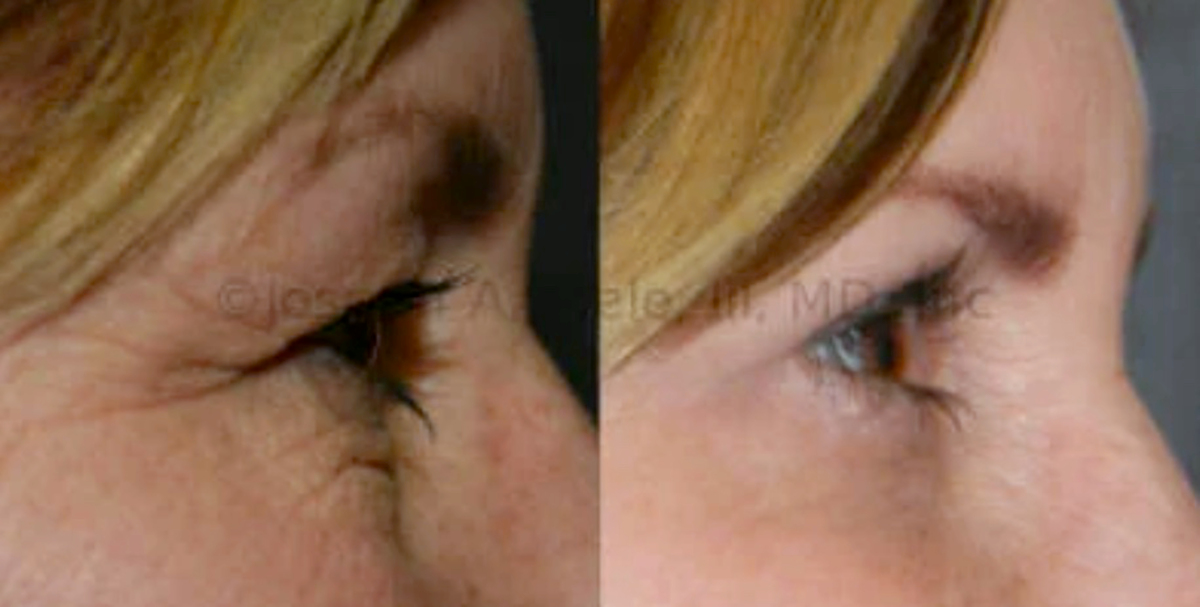
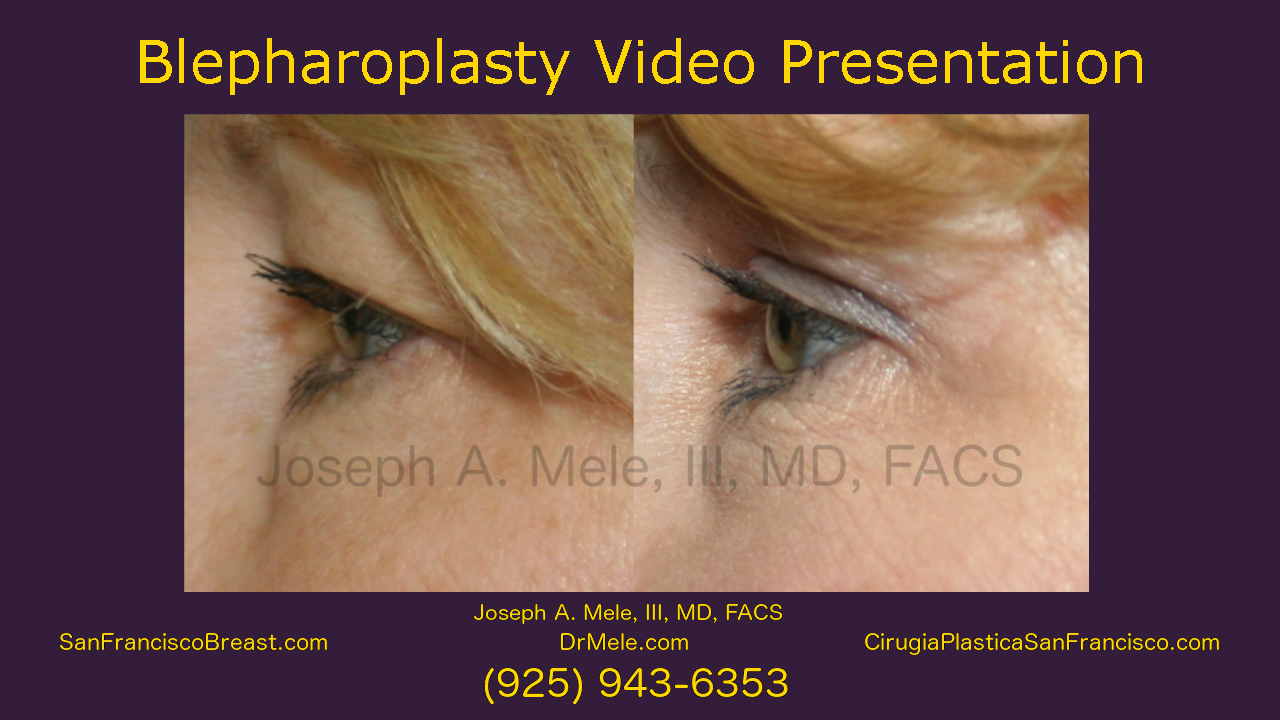
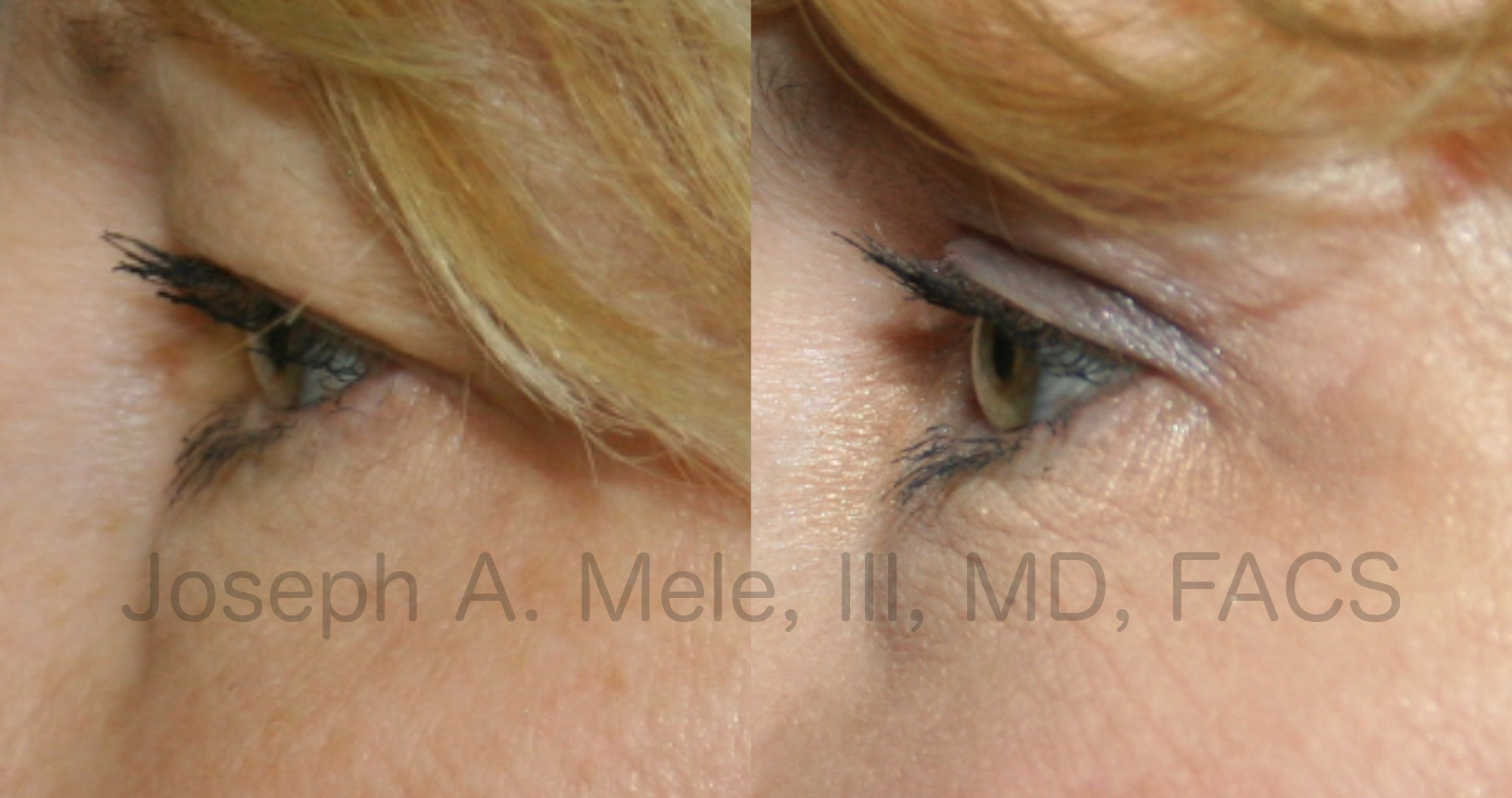
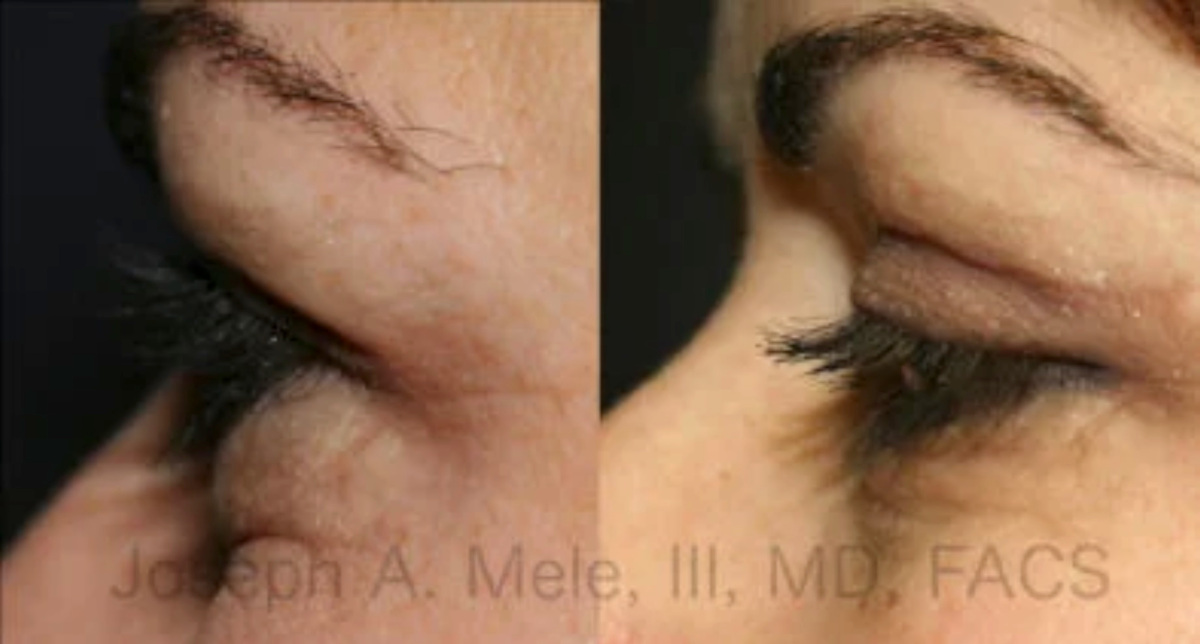
Before Upper Blepharoplasty: The upper eyelid skin is resting on the eyelashes.
After Upper Blepharoplasty: The fold above the eye remains smooth and discrete.
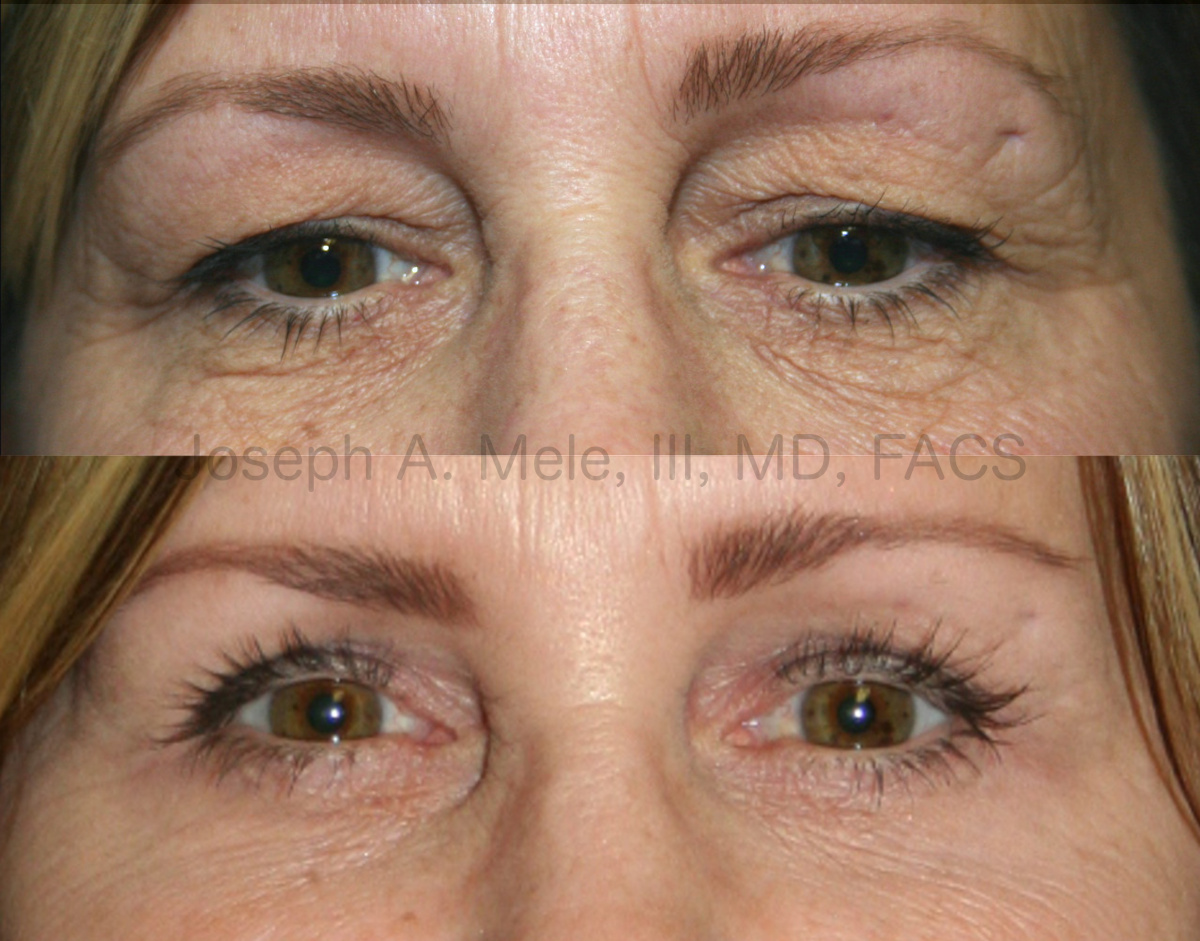
Before surgery, she has an indistinct eyelid fold. This allows the skin to migrate downwards and rest on her eyelashes, giving her a heavy sensation. As is often seen in people with heavy upper lids, she is unconsciously raising her eyebrows to unload her upper eyelids. After surgery, a smooth fold is formed. Even with her eyebrows relaxed, now one year after surgery in this picture, the skin is still off the eyelashes. Since the brow relaxes, the transverse lines on the forehead also decrease.
Sometimes the goal is to form a higher upper eyelid fold (a rounder eye opening), sometimes it isn’t. It is an individual decision. Whatever your goal, you will want to be clear about your desired result, as different techniques are required.
If you are interested in eyelid surgery, you may also be interested in these blog entries:
There are two types of lower blepharoplasty (lower eyelid surgery). The transconjunctival lower blepharoplasty has more limited versatility; however, it has the advantage of a hidden incision. Transconjunctival means through the conjunctiva (the tissue on the inside of the eyelid). This technique allows me to remove excess fat from the lower eyelid through the back door. The advantages include a completely hidden scar and less disruption of the normal anatomy that supports the lower lid.
The more traditional blepharoplasty involves making a small incision hidden just below the eyelashes, removing excess fat and tightening the skin. This scar is also well disguised, but since it is in the skin it allows excess skin to also be removed. A link to this more frequently performed type of lower blepharoplasty is located at the bottom of this post.
Transconjunctival (Internal) Approach to the Lower Eyelids
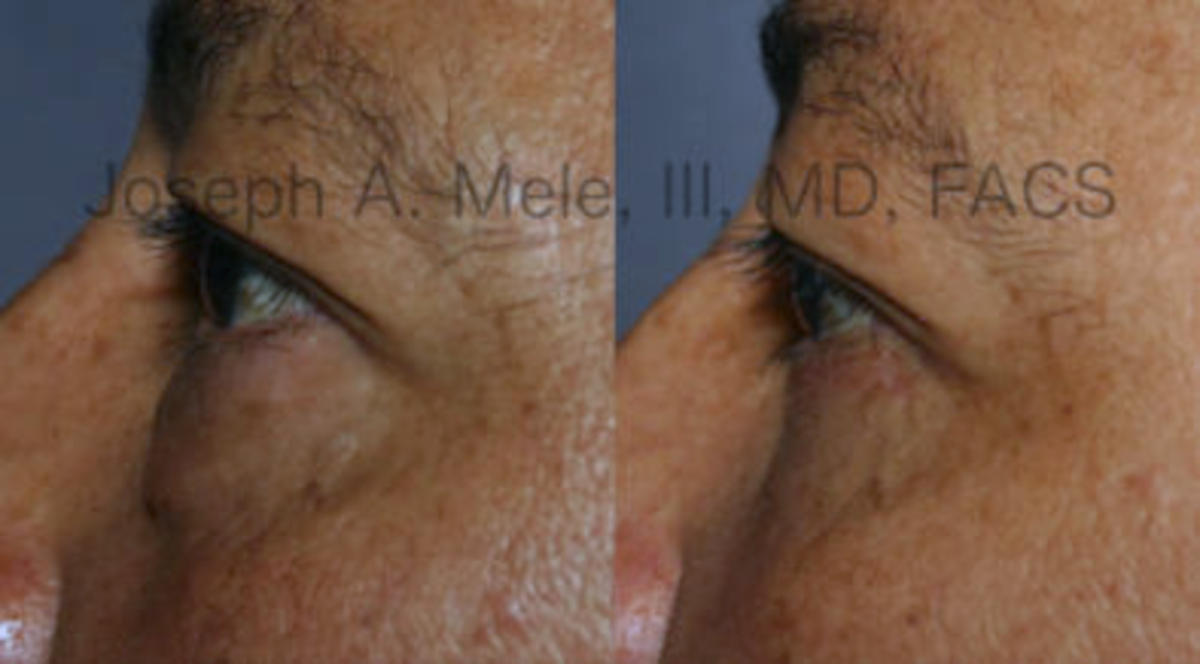
Before surgery, the skin is tight but excess fat beneath the eye causes a visible bulge. Shadowing from this bulge can enhance dark circles under the eyes.
After lower eyelid surgery with the internal approach (transconjunctival blepharoplasty), the fat bulge beneath the eye is removed and there is no external scar.
This procedure is more often performed on younger patients who have enlarged lower eyelid fat pads. Since the lower lid skin is already tight, no skin needs to be removed. The fat can be removed via an incision on the inside of the lid, removing the under eye bags and completely hiding the scar. This approach works very well for the properly selected candidate.
If you are interested in eyelid surgery, you may also be interested in these blog entries (the last one will be posted tomorrow):
The lower blepharoplasty (lower eyelid surgery) comes in two flavors. The most versatile, and the most frequently performed, is discussed here. It involves making a small incision hidden just below the eyelashes, removing excess fat and tightening the skin. The other type can take care of bags under the eyes when the skin is already tight and involves an incision inside the eyelid (transconjunctival lower blepharoplasty). A link to the transconjunctival approach is located at the bottom of this post.
Lower Eyelids
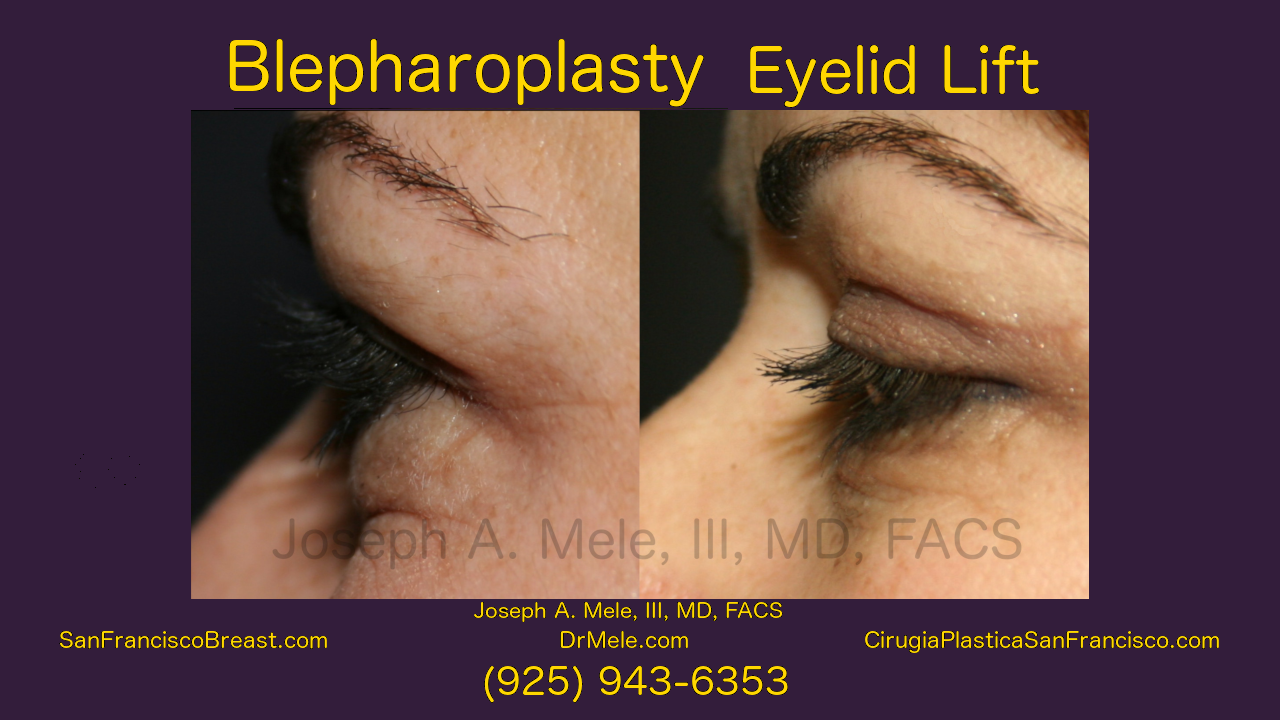
Before lower blepharoplasty, the large bags under the eyes are caused by pseudoherniated fat.
After lower blepharoplasty, the excess fat has been removed and the bags are gone.
Unlike the upper eyelids, the lower eyelids are similar anatomically, regardless of race. The primary problem is the prominence of the lower eyelid fat. If the skin is also loose, the incision is hidden just below the eyelashes. This externally placed incision allows both the removal of excess fat, and the tightening of the skin. The removal of excess skin on the lower eyelid needs to be conservative. Over resection the lower eyelid skin can pull the lower eyelid down.
If you are interested in eyelid surgery, you may also be interested in these blog entries (some are coming soon):
The upper eyelids are an important feature of the face. They protect, moisturize and are an important aesthetic feature for the eye. They are also frequently the first place the signs of aging appear. Aging of the upper eyelids manifests mainly in two areas: excess skin and excess fat.
The most important is excess skin, and this can be compounded by excess fat. An aging eyelid can give a tired, sleepy, heavy appearance. The lids may also feel heavy, and if you have upper eyelids that feel heavy, it can make you feel tired. As the skin excess increases, it can interfere with vision.
An upper blepharoplasty (upper eyelid surgery) removes excess skin and fat from the eyelid. Care must be taken to remove the excess; however, sufficient skin must remain so that the eyelid can close fully. Removing too much upper eyelid skin can give a startled appearance, or lead to chronically dry and irritated eyes. If you have dry eyes, and are considering eyelid surgery, be certain to inform your plastic surgeon so that the proper care can be given. It is very important to find a qualified plastic surgeon, with experience in this area.
Upper Eyelids
Before blepharoplasty, even with eyebrows unconsciously held up, the eyelid skin is resting on the eyelashes. Excess upper eyelid skin can progress to cover the lashes and block vision.
After blepharoplasty, the skin of the upper eyelid can now be seen above the eyelashes. The excess skin has been removed, and this patient can relax her brow.
In extreme cases, excess upper eyelid skin can interfere with your vision. Excess skin on the outer half of the eyelid obstructs peripheral vision, while excess skin centrally obstructs upward gaze. Occasionally, when vision is blocked, insurance will cover the cost of the procedure. You will need to check with your insurance to see if upper blepharoplasty is covered, as coverage varies from company to company.
While the primary goal is to remove the excess skin, excess fat can also be removed. Normally, excess fat of the upper eyelid is found medially (closest to the nose). Reducing the excess is an artistic endeavor. Just enough to smooth, but not enough to hollow. Removing too much will accelerate aging, rather than slowing or reversing it effects.
If you are interested in eyelid surgery, you may also be interested in these blog entries (some are coming soon):
Blepharoplasty (eyelid surgery) is a favorite cosmetic plastic surgery San Francisco. Over the last decade, the top three procedures have remained the same: Breast Augmentation, Liposuction and Blepharoplasty. Currently, Blepharoplasty, also called an eyelid lift, remains the third most popular cosmetic plastic surgery. Approximately 250,000 eyelid surgeries where performed last year in the United States.
Excess skin and bags around the eyes contribute to a tired look. The goal of a cosmetic blepharoplasty is to remove excess skin and fat around the eyes and give an alert rested appearance. It is one of the most meticulous surgeries, because millimeters can be the difference between rested and startled. It is a surgery that when done well, is noticed, but not noticeable.
The two main contributors to the aging eyelid are excess skin and excess fat. In the upper lid excess skin is the primary problem, with excess fat being secondary. For the lower eyelid it’s the opposite, excess skin can contribute, but excess fat is the primary contributor to the bags beneath the eyes. Since upper eyelid aging and lower eyelid aging have different causes, the solutions differ.
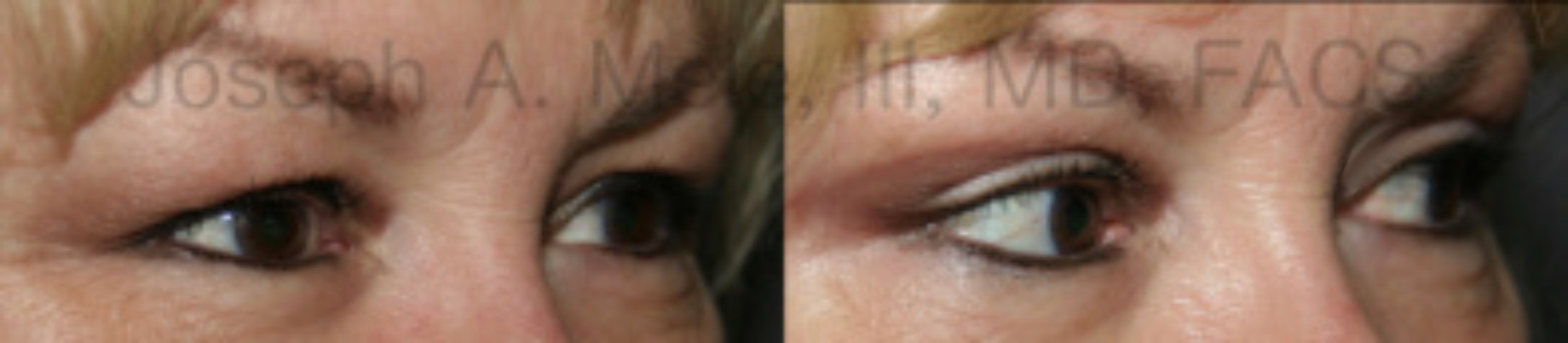
Before surgery, excess skin gives the upper eyelids a heavy appearance. This patient is unconsciously holding her eyebrows up in order to see better.
After upper eyelid surgery, the excess skin is removed, resulting in a more alert and friendly expression. Her eyebrows are now relaxed.
Whatever the goal of your blepharoplasty San Francisco, be certain to review all your options, and seek the guidance of a Board Certified expert. Doctors who are Board Certified by the American Board of Plastic Surgery and Board Certified by the American Board of Ophthalmology both receive specific training for the prevention and correction of a wide range of eyelid problems. As a Plastic Surgeon specializing in Cosmetic Plastic Surgery, I am Board Certified by the American Board of Plastic Surgery and the American Board of Surgery, and can provide expertise in Reconstructive and Cosmetic Plastic Surgery for the face and body.
If you are interested in eyelid surgery, you may also be interested in these additional blog entries: