Every plastic surgeon’s short list of hoped for advancements would include body Bondo, a skin shrinking ray and made-to-order body parts. Well, we may be getting a little closer to spare parts off-the-shelf.
Print your own parts.
Cornell is All Ears
Cornell bioengineers and physicians armed with a digitized image of an ear, a 3-D printer and a cellular Jell-O are able to produce structures as complex as the cartilage of the external ear. This is incredible news for anyone born without an external ear (1-4 per 10000 births) or who has lost their external ear due to trauma or cancer.
How to Reconstruct an Ear
Most ear reconstruction involves rearranging any available parts. When the entire structure is missing, the needed tissues must be borrowed from other parts of the body. While skin is readily available, cartilage for the complexly shaped frame work is not. Currently, it needs to be borrowed from the junction between the sternum and the ribs, and the structure needs to carved and assembled into the proper shape. It takes a fair amount of artistry to get the best results. When both ears need to be reconstructed, and one reconstruction fails, there may not be enough cartilage left for another attempt.
The Advantage of Printing Parts
There are many advantages to the availability of ears off-the-shelf. The most obvious is the potentially limitless supply, but there is also no donor site to heal. Since the new ears can be digitally designed, the shape can be easily modified. When the opposite ear is normal, it can be scanned, digitally flipped and manufactured for a perfect match.
What Else Can We Make?
Anything made of cartilage can be fashioned. Plastic surgeons are looking forward to ears and nasal tips. If the cells could be made firm enough, my Orthopedic colleges may be able to reline, rather then replace, joints. While hips and knees may be farther off, fingers with less weight bearing seem a hopeful candidate. Of course, the friction experienced in joint means the cartilage must be self repairing or it will quickly wear out.
In cases of severe bone loss, bone grafts are currently used. If the cartilage can be treated with a bone morphogenic protein, artificial bones are logical leap. In cases of severe trauma or bone cancer, new bones could replace metal hardware.
Not Your Father’s Otoplasty
Otoplasty is any procedure used to change the shape of the ear. The most common procedure is ear pinning, to reduce prominent ears. In these cases the cartilage is more than adequate, so 3-D printing is not necessary. Off-the-shelf ears are a help when there is not enough or a complete absence of ear cartilage. For more information, click the link to the Cornell Chronicle.
Since the invention of Reality(less) TV, plastic surgery has received its share of exposure over the last decade. The best known prime time incarnation, ABC’s Extreme Makeover, debuted in 2002. Unlike most its spawn, the show did obtain approval from the American Society of Plastic Surgery, but the emphasis was on the extreme end of the makeover. Plastic Surgery Reality TV peaked in 2004 with shows like: E!’s Dr. 90210, Fox’s The Swan, MTV’s I Want a Famous Face and Bravo’s Miami Slice. But reality TV’s infatuation with the fringes of plastic surgery has not died. As if brides were not stressed-out enough, in 2010 E! offered up Bridalplasty. Just this week, Toddlers and Tiara’s spin-off, Here Comes Honey Boo Boo, was followed by Plastic Wives.
Yep, they are in there.
More shock than substance, the pilot featured a woman who keeps her labia in a jar, and a former Extra host who seems to be considering it. While intellectually we all know that Reality TV is unreal, these types of shows feature real people, expressing real emotions in their own words, although edited for effect. The fantasy of it is seductive, but while for those featured it’s the truth, it is not the whole truth. A link to the Plastic Wives Preview is supplied; however, parental guidance is suggested.
There’s More to the Plastic Surgery Story
Plastic surgery is not all Boob Jobs. Don’t get me wrong, breast augmentation is an excellent procedure that improves the lives of hundreds of thousands of women every year in the US alone. One of the main reasons I enjoy practicing Plastic Surgery in the San Francisco Bay Area is the ability to provide a wide range of what plastic surgery has to offer. The range covers cosmetic surgery to congenital anomalies, and botox to breast reconstruction.
What do Plastic Surgeons do?
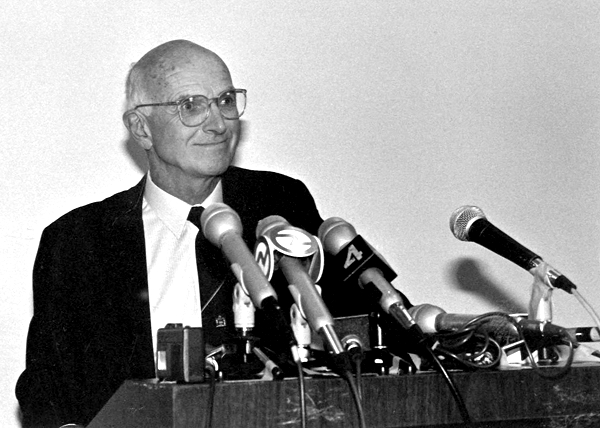
The yin and yang of Plastic Surgery are innate in the profession. Fifty years ago, American plastic surgeons Thomas Cronin and Frank Gerow invented the breast implant, and plastic surgeon, Joseph E. Murray performed the first cadaveric renal transplant. Granted, most people outside of medicine associate breast implants with plastic surgery; however, not too many know that the 1990 Nobel Prize in Medicine went to a plastic surgeon, Dr. Murray, and hematologist, E. Donnall Thomas, a fellow engineering major.
The 1990 Nobel Prize in Medicine was awarded to a Plastic Surgeon.
The two met at the Peter Bent Brigham Hospital in Boston, and remained friends and colleagues over the years because of their common interests in transplantation.
1990 Nobel Prize in Medicine
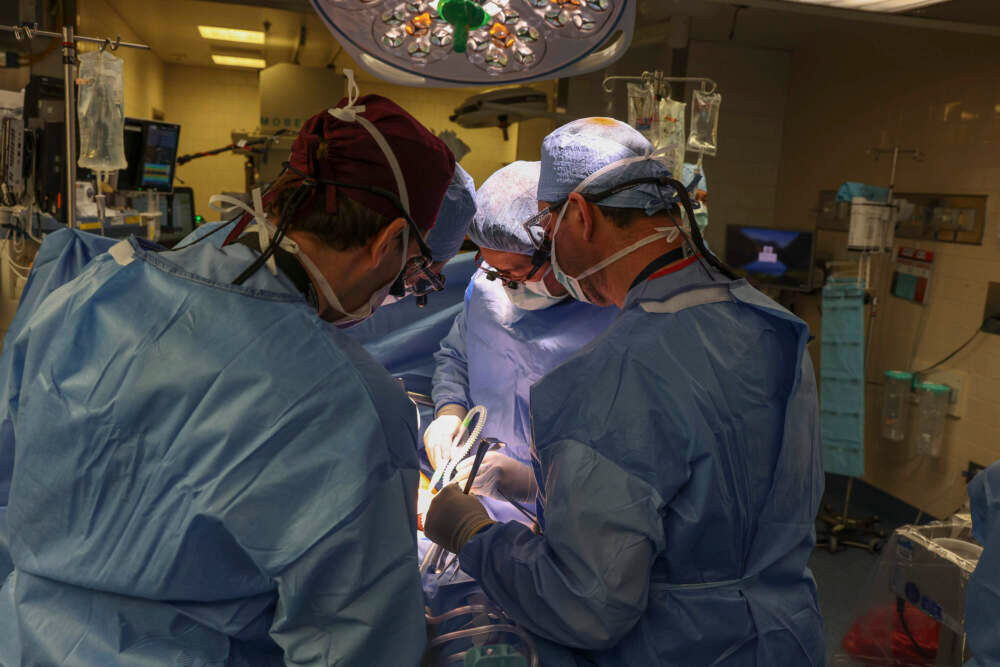
Dr. Murray refined many of the transplantation techniques and performed the first successful human kidney transplant on identical twins Richard and Ronald Herrick on December 23, 1954. The 1990 Nobel Prize was awarded for “discoveries that have enabled the development of organ and cell transplantation into a method for the treatment of human disease.” Transplant surgery has blossomed into a profession currently limited by donors rather than demand. New research into human tissue growth may soon remove this road block. While stem cell research and tissue engineering remain controversial, controversy seems to be an important governor of plastic surgery that improves, rather than hinders its outcomes.
Two is Better Than None
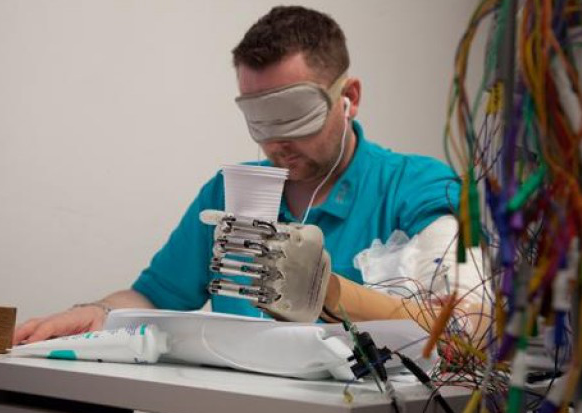
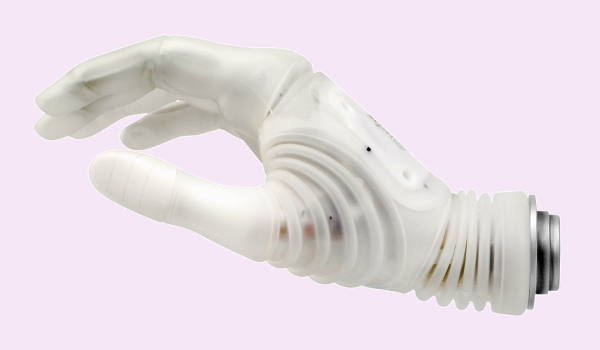
Dr. Murray and Dr. Thomas demonstrated how much we can accomplish when we work together. Both men passed away last fall, and they will be missed. A month after their passing, transplant surgery reached a new milestone. Iraq War veteran, Brendan Marrocco, became the first recipient of a dual arm transplant. Plastic and Orthopaedic Surgeon, Dr. Wei-Ping Andrew Lee, is carrying the transplantation torch over new ground, and Mr. Marrocco, who thrice had no pulse after loosing both arms and legs, is making unbelievable progress, back at home after his extensive surgery. It will be two more years before we will know if injured nerves in his shoulders will be able to reestablish a nerve supply, sensation and motion to the donor arms.
Opposites Attract
While Reality TV tends to put the spotlight on many of the most superficial aspects of our existence, there is much more beneath the surface.
Kiss nightclub fire in Santa Maria, Brazil.
Last week, Brazil suffered one of the worst accidents in its history. More than 200 young people died in a night club fire in Santa Maria, a university city located in southern Brazil. Dr. Carlos Uebel, president of the International Society of Aesthetic Plastic Surgery (ISAPS), lives about 150 miles away from the tragedy. He sent a personal account of the aftermath to me and the other ISAPS members:
1,500 boys and girls were in the private club to commemorate their graduation when suddenly a pyrotechnic show started the fire that burned all the walls and the ceiling material. Very toxic smoke spread over the people who could not exit quickly enough through the front door. Many of them were trampled and crushed on the floor. Only 10% suffered serious burns with about 16 patients being treated in ICU burn centers in Santa Maria and Porto Alegre; however, many more out patients are coming for treatment.
Our southern Brazil chapter of plastic surgery, coordinated by the president, Paulo Amaral, promptly engaged more than 50 plastic surgeons from the area to help in this uncommon accident. We have received emails expressing solidarity from all around the world. Eduardo Leão in Belo Horizonte has opened his burn center to the victims. Our colleagues in Buenos Aires sent a message offering artificial skin. Einstein Hospital in São Paulo is sending a Task Force on Lung Bioquimic Diseases. So many other centers from all around South America are demonstrating their charity.
Our “gaucho” families are suffering the second largest burn catastrophe in our country after the circus fire tragedy that occurred in Rio in 1961, and the third one to occur in worldwide night clubs. From this horrific tragedy, we have learned again that pyrotechnics inside a night club cannot be allowed; that building materials should be atoxic; that emergency exits are mandatory; and that occupancy laws must be obeyed.
Our plastic surgeon colleagues from South Brazil thank those who have sent so many messages of support and condolence from around the world in this moment of intense sorrow.
The Reality of Plastic Surgery
This too is the reality of Plastic Surgery. It’s not all boobs. There will always be a large gap between the extremes of what we need and what we want, or even where the line is drawn in the grey in-between. Plastic Surgery is a large tent, with more than its fair share of sideshows. Even we Plastic Surgeons bicker amongst ourselves about what a “real” plastic surgeon is, but the discussion remains healthy. The knowledge and creativity that drive the profession fuel the extremes, but also foster an environment that allows for explosive growth. There is a big difference between reality and reality TV, for plastic surgery there is no exception. Whether we are replacing arms or just tightening them up, we are still plastic surgeons. For better of for worse, it a profession that offers something for everyone. Whether it is a moment of need, or want, Dr. Gaspare Tagliacozzi summed it all up back in 1597:
We restore, repair and make whole, those parts which nature has given, but misfortune has taken away, not so much that they might delight the eyes of the beholder but that they may buoy up the spirit and help the mind of the afflicted.
Last week, I introduced the Tummy Tuck. This week, I discuss the Tummy Tuck in more detail including Mini Tummy Tucks, but that’s not all. A viewer asks about Liposuction of the thighs vs. a Thigh Lift, and Janelle asks about Arm Liposuction vs. and Arm Lift (Brachioplasty) and the very popular Mommy Makeover.
Tummy Tuck on San Francisco Bay Area Television
This is segment three of four from KRON4′s Body Beautiful. Janelle Marie and the San Francisco Bay Area Plastic Surgery audience have more questions. Links to previous segments are posted below. The (415) number that appears in this Tummy Tuck Video was provided for viewers to call in with their questions during the live show. If you are considering Liposuction, Tummy Tuck, Breast Augmentation, Mommy Makeovers or another Cosmetic Plastic Surgery procedure, information is available here on the San Francisco Plastic Surgery Blog, and my other websites listed above on the left under “Useful Links“.
Abdominoplasty (Tummy Tuck) Video with Before and After Pictures
Liposuction Frequently Asked Questions
The first segment of this television show reviewed Liposuction. The second segment discussed Tummy Tucks and Lower Body Lifts. This video covers many of the frequently asked questions about variations of the Abdominoplasty (Tummy Tuck) as well as the Arm Lift (Brachioplasty) and Thigh Lift. Topics covered in this Tummy Tuck Video include:
What is a Floating Belly Button Tummy Tuck?
What is a Mini Tummy Tuck?
Can Liposuction enhance the results of a Mini Tummy Tuck?
Can I keep my belly button after a Tummy Tuck?
What is a Fleur-de-Lis Abdominoplasty?
Who is usually a candidate for a Fleur-de-Lis Abdominoplasty?
How long does a Tummy Tuck last?
What is a Mommy Makeover?
When is the best time for a Mommy Makeover?
Viewer Francisco from Oakland asks,”Can Liposuction help loose skin on the inner thigh?”
What is involved with a Thigh Lift?
Can Liposuction be performed on the upper arm?
What is the difference between Liposuction and an Arm Lift (Brachioplasty)?
Can Liposuction alone help loose arm skin?
What are some of the most common Plastic Surgery procedures for men?
If you have questions about Liposuction, Tummy Tuck, Breast Augmentation, Mommy Makeovers or other Cosmetic Plastic Surgery procedures, call our San Francisco Bay Area Plastic Surgery office or use the contact form on the left to ask your questions. If you are considering cosmetic plastic surgery, call (925) 943-6353, and we will help you take the next step with a personalized consultation appointment.
There are four segments to the Liposuction and Tummy Tuck Series as seen on KRON4′s Body Beautiful.
If you’ve been considering smoothing the lines around the mouth, or enhancing the size of your lips, now is the time to do it. Right now, our Walnut Creek Plastic Surgery office is accepting Gilt City vouchers for Restylane and Perlane. If you are already familiar with facial wrinkle fillers, you can take advantage of this offer too. Here’s how it works…
Restylane and Perlane Discount Coupons
Go to Gilt City before August 16, 2012, and purchase a voucher good for $100 dollars off any 1 ml Restylane treatment for only $49. If you need more volume, $300 coupons, used for any 2 ml Restylane treatment, can be purchased for only $149. Vouchers are valid 24 hours after purchase, and must be used by September 30, 2012. Vouchers are transferable, and can be combined. Some restrictions apply, see Gilt City Restylane voucher’s web page for full details.
How to Redeem Your Restylane Vouchers
Your Restylane voucher will arrive via e-mail in 24 hours. Print your coupon, you will need to bring it with you to your appointment. Schedule your appointment with Dr. Mele by calling (925) 943-6353. You can use the voucher toward treatment on the day of your consultation.
What if I’ve never had Restylane, Perlane or other HA fillers (Juvederm)?
If you never had correction of facial rhytids or lip augmentation with an HA filler, you will need to be evaluated prior to your first treatment. An in-person consultation is required to determine if treatment is right for you. If you are eligible, treatment can be administered that day. Although uncommon, in the event that you are not eligible for treatment with Restylane or Perlane, Gilt City will provide a refund.
The next generation of breast implants is still searching for its generic name. They have been called cohesive gels, gummy bears, highly-cohesive gels, form-stable, memory-gels and the latest entry is, high-strength silicone gel. Whatever the final name, the main difference between these new silicone gel breast implants, and their predecessors is the stuff inside. While “new stuff inside” already sounds like marketing, it’s not very descriptive when compared to the current terminology. Let me see if I can explain how we got here.
The "New Stuff Inside" is Sientra's High-Strength Silicone Gel. Left - Implant is cut in half. Since the gel does not flow, there is no leaking. Center - Pressure on the shell causes the gel to evert, but it still acts like a solid. Right - Pressure is released and the implant returns to its original shape. Still no leaking.
Cohesive Silicone Gel Breast Implants
When the concept first hit the market they were termed cohesive silicone gel breast implants, with emphasis on the cohesive gel. Most silicone gel breast implants have two components: a solid outer shell, and a soft center.
The Breast Implant Shell
In the most basic terms, the shell of a breast implant is designed to contain the filler. The shell of saline filled breast implants and silicone gel filled breast implants are very similar. Both are made of tough, yet flexible, silicone elastomers. The main difference being that saline breast implant shells have a valve built into them to allow the plastic surgeon to fill them during surgery. Silicone gel filled breast implants are filled and sealed at the factory, so no valve is necessary.
Breast Implant Fillers
There are currently two FDA approved fillers for breast implants in the United States: Saline and Silicone. Until recently, the terms saline implants and silicone implants were the only two terms we needed to describe a woman’s options for breast implants.
Saline Breast Implants
The saline in saline breast implants has not changed. It remains a sterile, physiologic solution of 0.9% NaCl in water. This is ideal as it is about the same saltiness as our bodies. Under normal circumstances, the saline stays inside the implant. However, saline was chosen as a safe filler just in case a leak develops.
Saline is used intravenously to hydrate us in cases where we are unable to drink. The same saline is used, right out of the IV bag to fill breast implants. The fill volume can be adjusted during the surgery. If the saline ever leaks, it simply hydrates the body. The additional fluid is quickly absorbed and circulates just like we drank it. There is no reaction to saline, but unfortunately, the implant deflates and will need to be replaced.
Silicone Breast Implants
Silicone breast implants are filled with silicone gel, a clear viscous fluid. The modern medical grade silicone gel used to fill breast implants does not flow like water, but is still classified as a liquid. New silicone filled breast implants are more like solids in that they can be made in specific shapes and will hold these shapes. This is the property that makes them unique, and this is where the generic name games begin.
Cohesive Silicone Gel Breast Implants
The first attempt at differentiating the new breast implants was to add the word cohesive in front of silicone gel breast implants. Cohesive means to adhere or stick together, which describes the way the gel resists flow and even though soft, lacks the ability to flow associated with liquids. It was an excellent choice except for one thing. All silicone gel is cohesive, even liquid forms of silicone tends to stick to itself. Instead of this term being reserved for the next generation breast implants, every company making silicone breast implants started emphasizing that silicone is cohesive.
Highly-Cohesive Silicone Gel Breast Implants
The next attempt was to add the word highly in front of cohesive silicone gel breast implants. The point being that the gel in highly cohesive silicone gel breast implants was more than just sticky. It stuck together like a solid. Again, a good word, but hard to strictly apply to only the new breast implants without confusion.
Gummy Bear Breast Implants
Derived from the analogy of slicing a Gummi-Bear candy, the new implants have also been dubbed Gummy Bear Breast Implants. The implants are soft, like fresh Gummi-Bears, and when cut in half, they act like solids. It is a good analogy, because the comparison is familiar. While people do not have experience with gummy bear breast implants, most do have experience with Gummi-Bear candy. The term has proliferated on the Internet; however, the manufacturers do not like it. Probably, this is because their lawyers tell them they can’t use it. Instead, each manufacturer has come up with their own term that describes the Gummi-Bear phenomenon.
Form-Stable Silicone Breast Implants
I first heard the term Form-Stable Silicone Breast Implants in association with Allergan’s 410 series. The term form-stable is used to describe the ability of the breast implant to maintain its shape. Unlike liquid filled implants, form-stable breast implants resist being deformed. If a form-stable breast implant is compressed, it will change shape; however, when the pressure is released, the implant returns to it original form. An extreme example of this is illustrated above. Even without the shell, the contents of a form-stable breast implant will return to its original shape.
Memory Gel Breast Implants
Mentor markets their entire line of silicone breast implants as Memory Gel Breast Implants. This includes the original, more liquid like, silicone gel filled implants, as well as their contour profile gel (CPG) models. The idea being that the implants have memory. Not the type of memory associated with what happened during summer vacation, but the engineering term of shape memory associated with plastic deformation. Essentially, it’s the same thing as form-stable.
High-Strength Silicone Gel Breast Implants
The new kid on the block, Sientra, is taking a swing at it with the term High-Strength Silicone Gel Breast Implants. The emphasis here is not so much on shape, although they were the first US manufacturer to get FDA approval for their shaped breast implants. The emphasis is on the strength of the bonds inside the silicone that allow the gel to maintain its shape. The pictures above illustrate what happens to even the most severely damaged breast implant when it is compressed. The gel is liquid enough to deform to pressure, but it high strength silicone gel has memory, making it form-stable.
What’s in a Name?
In the words of Gertrude Stein, “A rose is a rose is a rose.” When is comes to breast implants, however, many names apply. If you are considering Breast Augmentation, it is important to understand these differences. While terms like form-stable, memory-gel, highly cohesive and high-strength silicone gel are helpful, gummy bear is still the most accessible word for most people.
Maybe you have a better word to describe these new breast implants? Hopefully, after reading this you have a better feel for what we Plastic Surgeons are saying. If you have questions about gummy-bear breast implants, be certain to tune in to KRON4 at 11:00 AM on Monday, June 11, 2012, for my live show and call in with your questions. I can also be reached at my office for consultations at (925) 943-6353.
It made headlines in 2004 when New Jersey, in a misguided effort to raise state taxes, levied a 6% excise tax on Cosmetic Surgery. Now the nip-tuck tax is getting the axe.
Read My Lips … No Cosmetic Taxes
Today, New Jersey Governor Chris Christie signed legislation calling for the elimination of the state’s 6 percent tax on cosmetic surgery procedures. Medical procedures, like food, have always been tax free, but in 2004, New Jersey enacted the New Jersey Cosmetic Medical Procedures Gross Receipts Tax. A 6% gross receipts tax was required on all cosmetic surgery, hair transplants, cosmetic injections, cosmetic soft tissue fillers, dermabrasion and chemical peels, laser hair removal, laser skin resurfacing, laser treatment of leg veins, sclerotherapy, and cosmetic dentistry. All providers were required to register, report gross receipts and pay the tax quarterly.
This type of tax is called an excise tax. Excise taxes are taxes paid when purchases are made on a specific good. Excise taxes are often included in the price of the product, such as gasoline, alcohol and tobacco. There are also excise taxes on certain activities, such as taxes on wagering or taxes on highway usage by trucks.
Inefficient Taxation
Excise taxes are indirect, because the government does not collect the tax. Instead, and intermediary, like the producer or the merchant, is charged and they in turn pay the government. These types of taxes are inefficient and costly to regulate, and this is likely the reason the tax is being withdrawn. In the case of New Jersey, the annual tax collected was half of what was expected, about 10 million dollars. Furthermore, this was more than offset by an annual loss to the state of about 34 million dollars. This, among other facts, lead Joseph Cryan, the sponsor of the 2004 bill, to lead the repeal.
Who Decides What is Cosmetic Surgery?
There is not always a clear division between cosmetic and reconstructive surgery, and this makes this type of tax arbitrary and difficult to administer. The decision of medical necessity was left to those collecting the tax. This led to the taxation of cosmetic surgeries like those used to improve appearance after disfiguring accidents, port wine stain removal and even keloid scar removal.
A Tax on the Middle Class
With cosmetic procedures becoming more acceptable, it is no longer the exclusive realm of the rich and famous. Research by the American Society of Plastic Surgery found that 71 percent of plastic surgeries were for individuals earning less than $60,000 a year; moreover, only 10 percent of respondents reported household income over $90,000.
A Tax on Women
Research from the American Society for Dermatologic Surgery finds that 83 percent of its members’ minimally invasive cosmetic medical procedure patients are women. The percentage of women accounting for cosmetic surgery procedures approaches 90% in the yearly surgical statistics published by the American Society of Plastic Surgery.
Connecticut’s Cosmetic Taxes
Six months ago, Connecticut passed a 6.35% sales tax on all cosmetic medical procedures. Time will tell if the state suffers the same fate as New Jersey. It seems likely. With Connecticut being a small state, it is estimated that as many as half of Connecticut’s cosmetic patients will seek their care out of state to avoid the tax. This will have a significant negative impact on the state’s corporate tax revenue.
California’s Cosmetic Taxes
California considered a cosmetic tax a few years back, but with a greater appreciation of the complexities involved, the bill was withdrawn and exchanged for a 10% tax on tanning salons. This tax revenue should be reduced a little more this year thanks to a bill signed by Governor Jerry Brown that went into effect on Jan. 1, that bans indoor tanning for anyone under 18.
This month twenty-two Navy SEALs died in Afghanistan when their CH-47 Chinook helicopter was shot down. The group was attempting to help Army Rangers pinned down in a firefight. This is a deep loss to the military, but a far more tragic one to the families and friends of these mighty soldiers of SEAL Team 6.
This may seem off topic for the San Francisco Plastic Surgery Blog; however, I have had the honor and privilege of working with many hard working military men and women and their families. My office in the San Francisco Bay Area city of Walnut Creek, California is near Travis Air Force Base. Travis Air Force base is home to the 60th Air Mobility Wing, the largest wing in the Air Force’s Air Mobility Command. The base is named Brigadier General Robert F. Travis, who also died in and aircraft crash.
In this time of loss, I would ask you to consider joining our practice in making a donation to the Navy SEAL Foundation.
There are many ways to help the families of our fallen Navy SEALs, please consider:
Texting “SEAL” to 90999 to donate $10 to the Navy SEAL Foundation
Donate over the phone by calling 757-763-5501
Making an online gift under program area, there is a drop down bar, so you can direct your giving if you choose: To support the families of the fallen Navy SEALS – Afghanistan 8/5/11
The Navy SEAL Foundation gives 95% of donations to the families of SEALs killed in action. The funds cover memorial services (the military covers funerals only), travel expenses for the families of SEALs to attend funerals, child care expenses for widows, and other necessities for these families. The SEAL fund is a 501c3 non-profit, so your donation is tax deductible.
The average salary of a military service member is $38k per year. The families of these SEALs killed in action need our help. The Naval SEAL foundation estimates that nearly $1M is needed to help these families with memorial services and other necessities to adjust to life without their hero. Please consider making a donation today.
The American College of Obstetricians and Gynecologists is Looking Out For You
Doctors are once again at odds with the government, but this time it has less to do with Obamacare, and everything to do with saving lives, possibly yours.
Mammograms Save Lives
We all know that Mammograms save lives. National Cancer Institute data show the US breast cancer death rate, previously unchanged for 50 years, has dropped 37 percent since mammograms became widespread in 1990. The US Preventive Services Task Force (USPST); however, doesn’t seem to get it.
Early Detection is Key
While a mammogram doesn’t treat breast cancer, it is the key to the early detection of breast cancer. Another key is routine monthly self-examinations. The combination is an effective way to detect breast cancer in its early stage. The earlier breast cancer is detected, the better the chance that treatment will lead to a cure.
Cure rates are greater than 90% for breast cancers detected early. Earlier detection means smaller tumors. Smaller breast cancers spread less often and are removed more easily. On the other hand, if breast cancer is discovery after it has left the breast, treatments rapidly become more complex and are dramatically less effective.
Doctors Fight Back For Their Patients
The American College of Obstetricians and Gynecologists (ACOG) recently issued new guidelines, joining a long list of physician lead professional societies strengthening the stand that early mammography saves lives. The new ACOG recommendations call for mammograms more frequently than the previous ACOG guidelines. The previous guidelines recommended mammography every one to two years beginning at age 40, and then annual mammograms after age 50. The new guidelines recommend:
Mammography yearly beginning at age 40
Monthly self-exams for women at high risk for breast cancer
US Preventive Services Task Force (USPST) Recommendations Deemed Unacceptable
When the USPST recommended against routine mammography for women younger than 50-years-old, it was in direct opposition to the current standard of care. The Major Medical Organizations in the US where at first shocked and then adamantly vocal in their opposition. The recommendation would mean less money spent on mammograms upfront; however, the “savings” would be lost later in trying to treat larger tumors that are more likely to have spread. The ultimate cost; however, would be measured in lives not saved.
Thank you ACOG
Thank you to the American College of Obstetricians and Gynecologists for joining the long list of professional medical organizations, including the American Society or Plastic Surgeons, who disagree with the government’s suggestion to wait until age 50.
USPST WT?
When the American College of Radiology and Society of Breast Imaging made it’s recommendation that mammography should start at age 40, they used the USPST’s own data against them. After careful review, the USPST’s data did not support the recommendation of delaying mammography until age 50. I applaud the efforts made by organized medicine to bring this information to light. How this remains outside the main stream media is puzzling. With major health care “reforms” underway, this is an excellent topic for an investigative report, and early mammography will certainly save more lives than knowing where Casey Anthony is hiding.
You Are Worth It
Mammography, while not pleasant, is an effective screening tool. With 80% of breast cancer occurring in women without a family history, it is important for every woman to have access to the exam. If the government recommends delaying mammography a decade, the next step will be to stop paying for it. If government programs stop paying for the service, all insurance companies will follow.
Mammography allows us to detect and control the spread of breast cancer. If we allow a guideline delaying mammography to become law, it will be much more difficult for your doctor to order this simple, lifesaving test. If the USPST gets its way, unless you are willing (and able) to pay for your own yearly mammograms, you won’t be getting them. Your government may not think it is worth the documented reduction in breast cancer deaths, but your doctors do.
Please support your doctors in their efforts. We strive to practice effective medicine and protect our patients. The Hippocratic Oath mandates that we doctors do no harm. The USPST mandate delaying mammography until after age 50 would do harm, and allowing the recommendation to go forward unchallenged, would be just as harmful.
Lafayette Hillside Memorial Crosses (Click for High Res Image)
Thank You Veterans
Tomorrow is Memorial Day. While it is the unofficial first weekend of summer, it is also our chance to celebrate those who have died in the service of our country. Memorial Day was originally celebrated as Decoration Day on April 25, 1866, in Columbus, Mississippi, to honor Confederate soldiers killed at the Battle of Shiloh. In 1868, Decoration Day was observed at Arlington Cemetery with flowers and small American flags placed on the graves of Union and Confederate soldiers. Since then, the honor has been extended to all those who died defending the United States, and Freedom, during World Wars I & II, The Korean Conflict, Vietnam, Iraq, Afghanistan and throughout the world.
Lafayette Hillside Memorial
The picture above is a section of the Lafayette Hillside Memorial. The memorial was established in 2006 for soldiers who gave their lives in the Iraq War. A vigil we be held in their honor tomorrow night at 7 PM.
Memorial Day Observances
If you are looking for someplace to observe Memorial Day and give your thanks, here is a listing of some of the activities that are happening in our area:
Antioch – VFW program, Oak View Memorial Park, 2500 E. 18th St., Antioch, 11:00 AM
Brentwood – VFW local 10789 program, Brentwood Union Cemetery District, 11545 Brentwood Blvd., Brentwood, 10:00 AM
Clayton – Annual Memorial Day Program by VFW Post 1525, Downtown Clayton Flagpole, Main and Oak Street, Clayton, 10:00 AM
Martinez – All Veterans Memorial – Corner of Alhambra Ave and Berrellesa St, Martinez, 10:00 AM
Pinole – VFW, Fernandez Park, 595 Tennent Ave. Pinole, 10:00 AM
Pittsburg – Pittsburg Veterans Memorial, Harbor Street, Pittsburg, 10:00 AM
Walnut Creek — Gazebo at Walnut Creek Civic Center, Corner of Civic Drive and North Broadway, Walnut Creek, 10:00 AM
Danville – Vietnam Veterans of Diablo Valley , Memorial Day Ceremony, Oak Hill Park, 3005 Stone Valley Road, Danville, 10:30 AM
Pleasant Hill – Contra Costa Veterans Monument, Corner of Boyd and Contra Costa, Pleasant Hill, 1:00 PM
Lafayette – Lafayette Crosses (pictured above), Corner of Deer Hill and Oak Hill Road, Lafayette, Across from Lafayette BART station, Vigil at 7:00 PM
The 2010 Plastic Surgery Statistics are out. The American Society of Plastic Surgeons released statistics on America’s consumption of what plastic surgeons had to offer. Here is the recap for 2010:
Americans spent 10.1 billion on 18.4 million plastic surgery procedures last year. Here is how it breaks down:
13.1 million cosmetic procedures were performed, up 5% from 2009. This includes:
1.6 million cosmetic surgical procedures (up 2%) and
11.6 million minimally-invasive procedures (up 5%).
5.3 million reconstructive plastic procedures were performed (up 2%).
While teen plastic surgery continues to make headlines, people aged 13-19 had the least plastic procedures (cosmetic and reconstructive) last year, accounting for 2% of the total. The largest age group continues to be 40 to 54 year-olds, who make up 48% of all plastic surgery procedures.
If you, or your loved ones, are considering plastic surgery, be certain to consult with a Board Certified Plastic Surgeon. All members of the American Society of Plastic Surgeons and the American Society for Aesthetic Plastic Surgery are required to be Board Certified. Certification can be easily checked on the American Board of Plastic Surgery web site. Check your Plastic Surgeon’s Certification here. Apologies for how bland the American Board of Plastic Surgery site is. I’ve been trying to get them to rejuvenate the site for years.