In the last few decades, plastic surgery has moved from a secretive, back door affair, to main street, and the Facelift (Rhytidectomy) is no exception. Mini-facelifts and “weekend facelifts” like the Lifestyle Lift®, QuickLift™ are household words, and nothing says mainstream more than a brand name, late night informercial, but has it gone too far?
I had never heard of astroturfing until the LifeStyle Lift came along. It illustrates the hazards of purchasing a procedure from a corporation with a large marketing budget, rather than from a Board Certified Plastic Surgeon. More importantly, is the one-size-fits-all facelift a good idea?
The One-Size-Fits-All Facelift
To my eye, facelifts are individualized procedures. Each face is different and every face ages differently. When I evaluate a new patient for a facelift, I evaluate many specific areas. I can tailor my approach to maximize the benefit to the areas that need it the most. The advantage of knowing how to do more than one type of facelift is that I can choose the method that is most likely to help your specific needs.
Sometimes a mini-facelift is enough. Sometimes the traditional full facelift is necessary. Sometimes a deeper plane also needs to be addressed. Should the facelift be en-block or bidirectional? Differences between the mini and full facelifts are explained in my post: Facelift (Rhytidectomy) v. Mini Facelift (Mini Rhytidectomy). Mini and full facelift before and after pictures are also included. Which approach to use is a decision I make after I see you. With mass marketed mini-facelifts, one-size-fits-all, the treatment is largely determined before the evaluation. It’s akin to selecting a tool, before knowing what you are supposed to do with it.
The Buck Stops Here
When I see you in my office for any procedure, I want all the information I can get before selecting a plan. I want to know:
Where are the problems?
What needs to be addressed?
Is it fixable?
Are the goals realistically achievable?
How best to proceed is determined after defining the goals, reviewing the options and building trust. My goal is to provide you with sufficient information so that there are no surprises. A good result takes communication and teamwork throughout the process. A good result takes careful planning and keeping all the options open until the best method is defined.
A facelift is not a one-size-fits-all commodity. Honest discussion beforehand, yields better results and higher satisfaction. If there was one, singular best way to do a facelift, every plastic surgeon would do the same procedure every time. The variety in approaches to the facelift, reflects the variety seen in the face.
Body Beautiful
The 800 number in the video below was only used for viewer questions during the live broadcast. If you have questions, or would like to schedule a consultation appointment for a facelift, please call my Walnut Creek Plastic Surgery office at (925) 943-6353.
Information in this video is provided for general informational purposes only. Specific recommendations can only be made after a careful history and physical examination are performed. Some of the topics covered include:
Brand name mini-facelifts (Lifestyle Lift®, QuickLift™, …)?
The importance of investigating your doctor before scheduling an appointment
Who will take care of you if there is a problem?
How to find a Board Certified Plastic Surgeon
Viewer questions are answered about Blepharoplasty (Eye Lid Surgery)
The other segments of this broadcast can be found here:
If you are looking for facial rejuvenation, but are not ready for a facelift, a mini-facelift might be the right procedure for you. Mild to moderate lines can be improved with dermal fillers (Restylane®, Juvederm®, Perlane® and Radiesse®), but loose skin needs something more. If fillers aren’t filling like they used to, it might be time to consider a little nip and tuck. For the right patient, a mini-facelift can provide big results in a mini package.
The Full Facelift
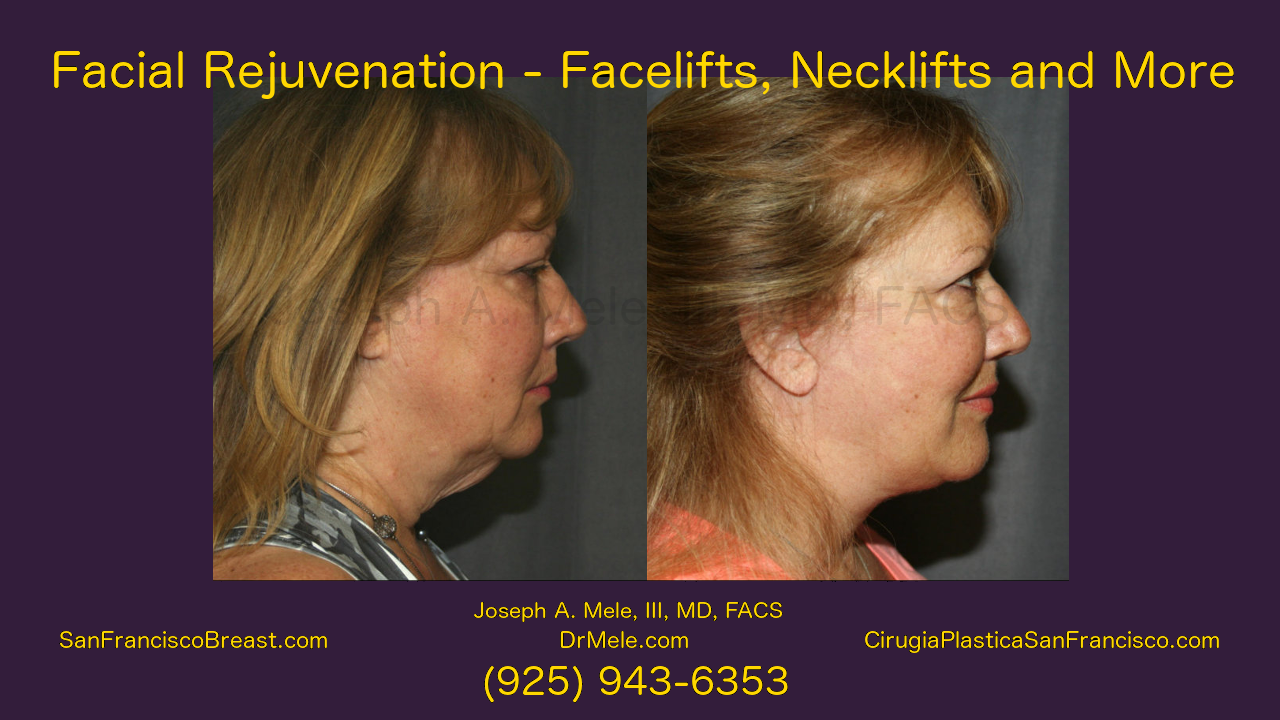
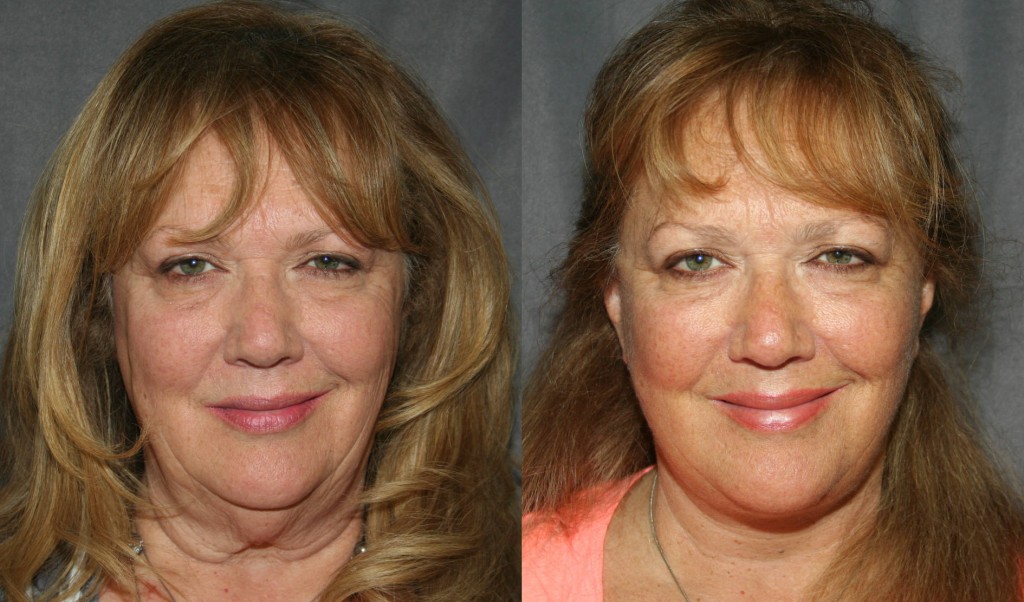
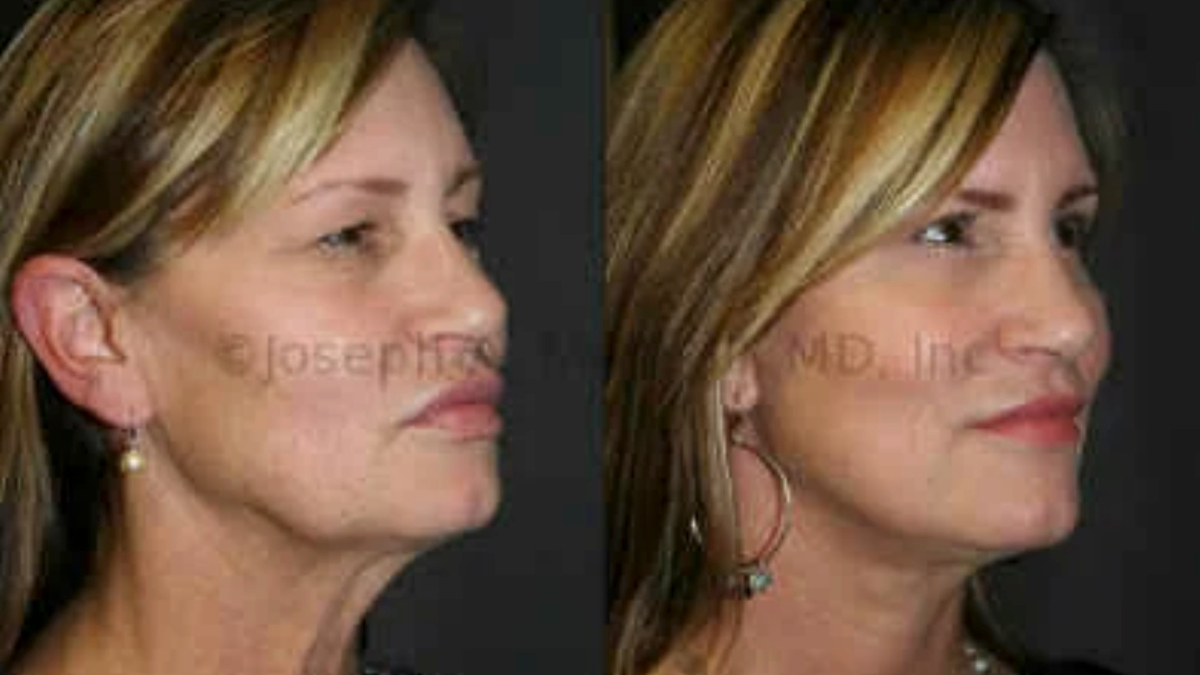
Before a Full Facelift - The skin of the lower face and neck is loose, and the anatomic definition between the face and neck is lost.
After a Full Facelift - The skin of the lower face and neck is firm, and the anatomic definition between the face and neck is restored.
The traditional facelift is the gold standard of facial rejuvenation. It can correct more aspects of the aging face, and can do so to a greater extent, than the mini-facelift. Severe skin laxity, platysmal banding and sagging of the cheek fat pads can be quickly and accurately improved with a facelift. While a facelift does more, and lasts longer, it requires more downtime for recovery. A facelift also takes longer, requires more anesthesia and accordingly costs more. The patient shown above had a full facelift with upper and lower eyelid surgery.
The Mini Facelift
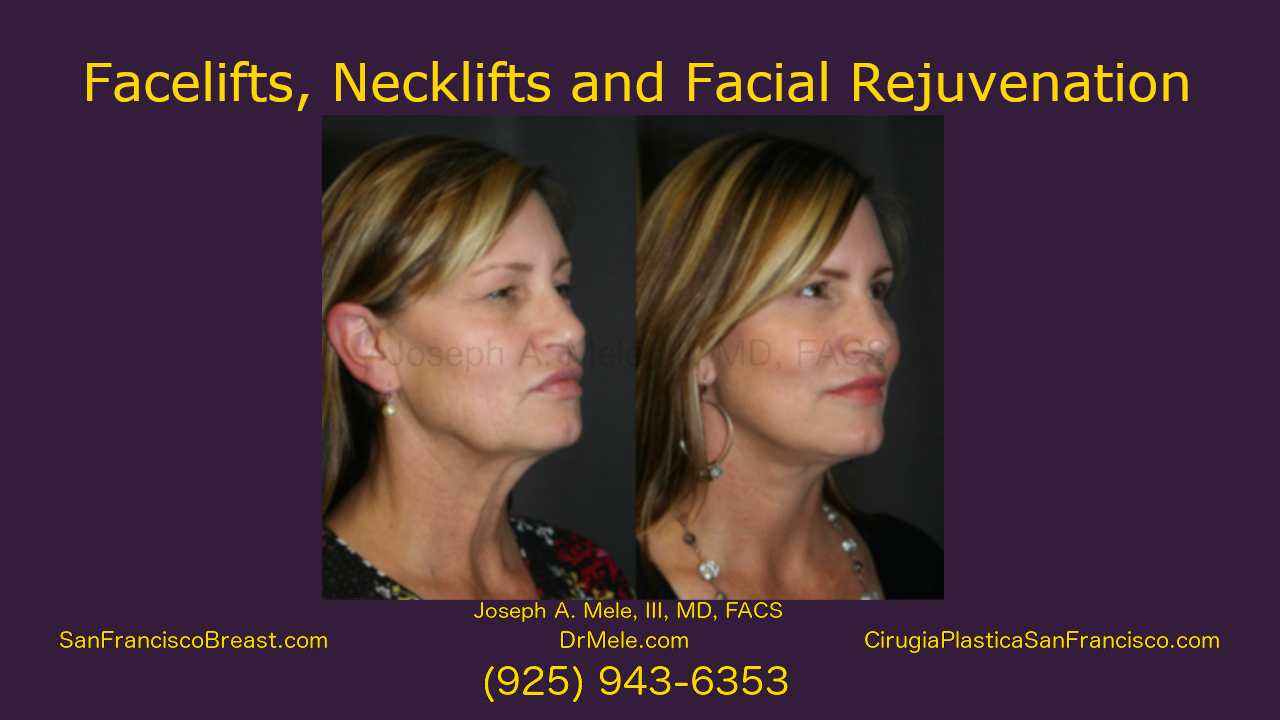
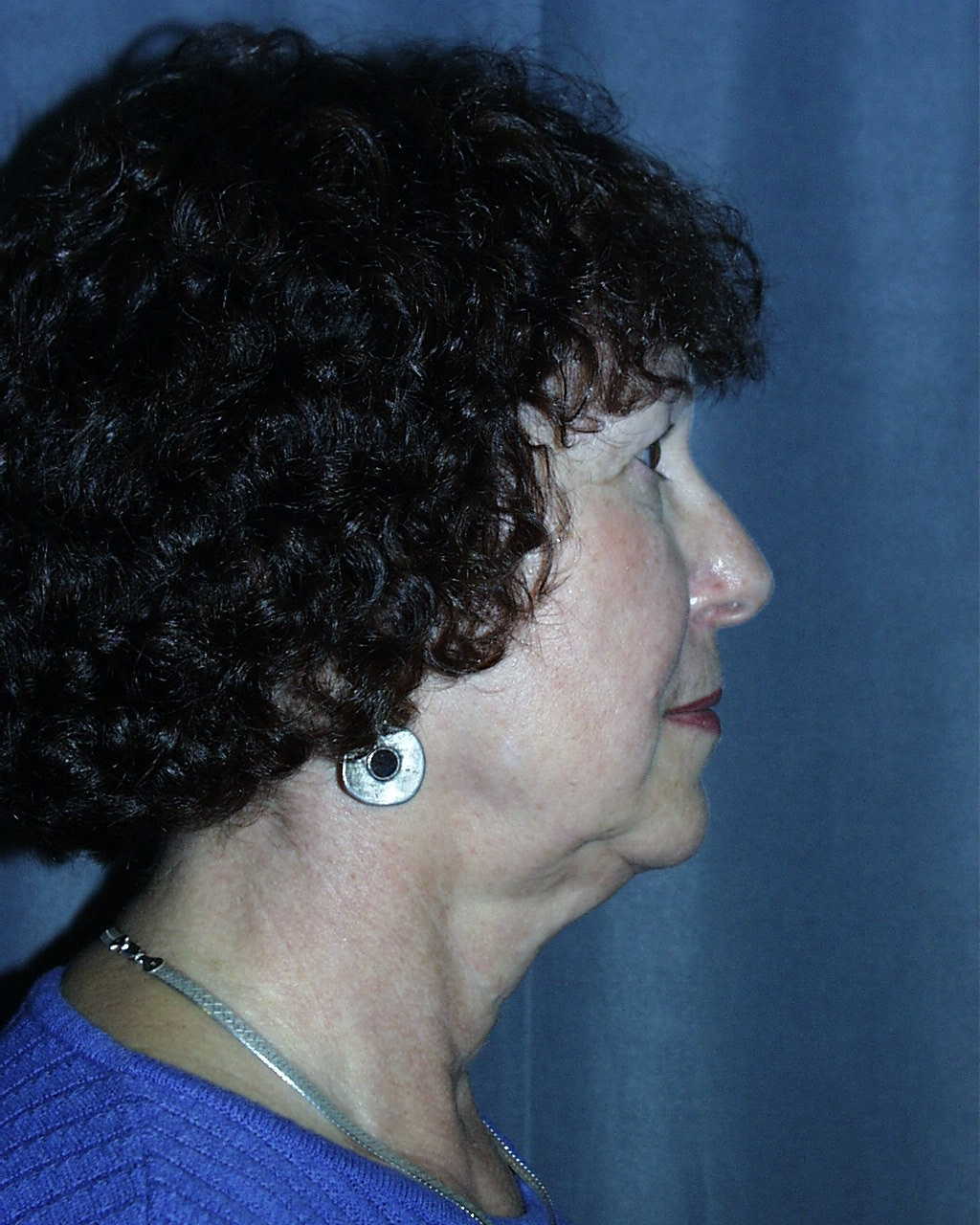
Mini Facelift Before - Loose skin on the lower face and neck obscures the jawline.
Mini Facelift After - The jawline is clean and the jowls are removed.
If your primary problem is mild to moderate skin laxity, and the structures underneath the skin are in good shape, a mini-facelift may be able to get you the younger, rested look you want. A mini-facelift is a shorter procedure, which can be done under local anesthesia, resulting in a quicker recovery and a lower cost. The mini-facelift is great for early intervention, and while it cannot replace a full facelift in terms of the amount it can do, or how long it will last, it can significantly delay the need for a full facelift. A mini-facelift can also be used to rejuvenate a previous facelift, with relatively less effort. The patient shown above had a mini-facelift with lower eyelid surgery.
Caveat Emptor
Many brand name mini-facelifts have recently emerged: The Lifestyle Lift™, QuickLift™ and NewLift™. They try to keep the techniques secret (even from their patients), but they are essentially mini-facelifts. The companies that market the lift will train a doctor to perform the procedure for a price. They have tried to carve out a niche in the Cosmetic Plastic Surgery Market with a gimmicky name and massive advertising, but buyer beware. When you are purchasing a mini-facelift you are not just purchasing a one-size-fits-all procedure; you are purchasing the skills of the individual physician performing your surgery. There is nothing magical about a Lifestyle Lift™, QuickLift™ or NewLift™. It is a mini-facelift, and at a minimum, you will want to check for yourself the ABMS Board that has certified your potential surgeon (see links at the bottom of this article).
You Deserve a Board Certified Plastic Surgeon
When you check, you will find, most Board Certified Plastic Surgeons do not perform brand name lifts. Most Board Certified Plastic Surgeons do, however, offer similar procedures at a competitive rate. The American Society of Plastic Surgeons (ASPS) and the American Society for Aesthetic Plastic Surgery (ASAPS), find it unethical for a plastic surgeon to patent a procedure. Instead, new techniques are freely shared and discussed at our professional society meetings. This is how we reinvest in our profession, and allow the practice of plastic surgery to grow.
Board Certified Plastic Surgeons learn how to do facelifts and mini-facelifts during years of training, and continue to refine their technique with practice, continuing medical education and instructional courses. I find that one facelift technique is not enough, and I would rather tailor your facelift to the specific needs of your face.