September 25th, 2011 Dr. Mele
The headline reads…
Anthem Plastic Surgeon Gets 25 Years for the Deaths of Three Patients
…but Dr. Peter J. Normann, MD, was never a Plastic Surgeon. He was never a Surgeon and is now, thankfully, no longer a Doctor. Today, Peter J. Normann is a convict, a prisoner of the State of Arizona, convicted of multiple murderers.
My deepest sympathies to the families and friends of these three patients, and to others who have come forward since these tragedies. I have written several posts on the San Francisco Plastic Surgery Blog about how to select a Plastic Surgeon. I’m certain the jaded view these as self serving; however, I view these as part of my duty as a physician to do no harm. While this is but one case, there are too many others, and saying nothing, and ignoring the problem, would be harmful.
No one is perfect. Everyone makes mistakes, even well trained, experienced Board Certified Plastic Surgeons. The reason I spent eight years in training after graduating from the University of California, Davis, School of Medicine, was to reduce the chances of mistakes, to gain as much knowledge and experience as possible, and to prevent poor decision making. To not only learn how to operate, but how to provide patients with the best environment in which to operate and maybe most importantly, to know when not to operate. In this light, I present the following information, and three simple links that can help you have the safest possible plastic surgery. In fact, two of these links can help you, no matter what type of elective surgery you are considering.
How to Check Your Doctors Credentials – As Easy As 1, 2, 3
There are three places every patient should check before having any plastic surgery.
Let’s use these simple online resources to check out Dr. Normann…
Dr. Normann – Didn’t Check Out
#1 – The American Board of Plastic Surgery
A quick check on the American Board of Plastic Surgery website reveals “No records found…” for Dr. Normann. This means he is not a Board Certified Plastic Surgeon.
#2 – The American Board of Medical Specialties (ABMS)
The ABMS website is the best way for you to determine what board has certified your doctor. Checking the American Board of Medical Specialties (ABMS) website currently reveals no certification by any board. According to healthgrades.com, he was Board Certified in Internal Medicine at some point in time, but this cannot be confirmed on the ABMS site. The reasons may be 1) He was never Board Certified in Internal Medicine; 2) He was Board Certified in Internal Medicine, but he did not pass recertification; or 3) His Board Certification was removed after his Arizona Medical License was revoked. The best case scenario here is that Dr. Normann was Certified by the American Board of Internal Medicine, but this not a Surgical Board.
#3 – The State Medical Board
A check of the Arizona Medical Board website reveals: one listing for Normann, Peter J. with a listed specialty of Emergency Medicine.
His detailed profile reveals that Peter J. Normann graduated Medical School on June 27, 1994, from St George’s University in St. Georges. The Caribbean Campus located in St. Georges, Grenada, West Indies, is perhaps best know from the October, 1983, invasion of Grenada. Part of President Reagan’s justification for the invasion was to rescue American medical students at St. George’s University endangered by the violent coup that had overthrown Grenada’s Prime Minister, Maurice Bishop.
The profile also states that Normann completed a three-year residency (06/24/1994 – 06/30/1997) in Internal Medicine at Roger Williams Medical Center in Providence, RI. At this time, it cannot be confirmed on the American Board of Medical Specialties (ABMS) website, and the ABMS website is the best way for you to determine what board has certified your doctor.
The Arizona Medical Board site also lists Normann’s License Status as Revoked. A revoked license means no license, and the practice of Medicine without a license is a crime. Call me Dr. Obvious, but this is worth knowing even if you are not having plastic surgery. For example, in November, 2004, Dr. Bach A McComb, DO, injected himself, his girlfriend and another couple with fake Botox leading to emergency room admissions for the resulting overdose and prolonged hospitalization for systemic paralysis. A simple check of Dr. McComb’s license prior to the incident, would have shown that his license was suspended for overprescribing painkillers. People convicted of bad judgement are likely to have recurrences. Dr. McComb couldn’t buy Botox without a license. His solution, additional bad judgement and the use of unregulated black market Botox.
Back to Normann. On the Arizona Medical Board’s Website, his areas of interest are listed as Emergency Medicine, Internal Medicine and Dermatology. His training however, was only in Internal Medicine, and at some point in time, he was ABMS Board Certified in Internal Medicine. While there is some overlap with Internal Medicine, Emergency Medicine and Dermatology are specialized branches of Internal Medicine with their own residencies, additional years of training and separate ABMS Board Certifications. Surgery is not a branch of Internal Medicine. After medical school, surgical training and medical training diverge. There is little overlap between Internal Medicine and Surgery, and even less overlap between Internal Medicine and the specialized procedures performed by Plastic Surgeons.
Too Many Red Flags
Normann’s credentials do not add up to excellent plastic surgery training. A quick Internet search reveals he was not a Board Certified Plastic Surgeon. He was an Internal Medicine doctor with no formal surgical training. He certainly did not complete a Plastic Surgery residency. During the course of the murder investigation, it was revealed that he had seven sessions of training in liposuction.
Your Federal and State Governments Cannot Protect You
Every state maintains a Medical Board. Their job is to check the training of all physicians and surgeons practicing in the state, and if qualified, the boards allows the qualified doctors to purchase a license to practice medicine. Each state has its own board, but the requirements are not widely varied. The federal government regulates prescription drug use, and licensed physicians can purchase a DEA certificate which allows them to prescribe drugs. Neither the state nor the federal government restrict the practice of medicine based on the type of training a doctor has completed. In fact, the MD degree is granted after completing Medical School, and a state license is granted in California after completing one year of internship and passing the required exams. With a state license, a DEA certificate can be obtained, before any specialized training is started.
Since a license is granted before specialized training is started, there are no restrictions on the type of medicine a license holder can perform. A doctor trained in Internal Medicine (diabetes, high blood pressure, lung disease…) can perform brain surgery, as long as they conform to the standard of care. This pushes the responsibility onto hospitals. Hospital medical staffs review qualifications within each specialty and grant privileges for specific procedures after a period of supervised proctoring. This peer review can help for hospital based disciplines like brain surgery, but most cosmetic surgery is outpatient surgery and is not performed in a hospital. The American Society of Plastic Surgery and the American Society for Aesthetic Plastic Surgery both require that all members have hospital privileges for all procedures they perform, even if they are normally performed outside the hospital.
Time for Restricted Medical Licenses
There has been much debate through the years for States to do more to protect their citizens from unqualified doctors practicing outside the scope of their training. Special interest money has made this is most impossible, and there is little interest in drafting this difficult legislation. While reviewing silicone breast implant leakage rates, the FDA noted that leaks occurred more often in the hands on non-Board Certified Plastic Surgeons, often in the operating room. Debate was had to restrict the use of breast implants to only physicians who are Board Certified Plastic Surgeons. It was decided that the FDA lacked the authority to enforce such a recommendation and, the subject was dropped. Until there is a public outcry for reform, it is unlikely that we are going to get this sort of assistance from our States.
Buyer Beware
So it is up to you to find the best doctor for the job. It is your body, your health and your life. Plastic surgery is elective surgery, and you have time to decide how to proceed and who to trust. Resources are available online to help you make the best possible decision. While the recommendations above cannot guarantee perfect results, they can certainly improve the odds.
Be certain to check the three resources above. If your surgeon is a member of the The American Society of Plastic Surgery and the American Society for Aesthetic Plastic Surgery, you can be assured that they are Board Certified Plastic Surgeons, with valid state licenses, who practice in Accredited facilities, and who maintain hospital privileges.
Bargain Basement Plastic Surgery
Bargain hunting is great, but not for Plastic Surgery. A low price might mean corners are being cut, and you may pay the ultimate price for it. I want the best possible outcomes for my patients, and this is reflected in everything I do. I completed eight years of residency after medical school, and maintain both the Board Certifications I have earned, one with the American Board of Plastic Surgery and the other with the American Board of Surgery. I operate only in accredited hospitals and surgery centers. I work with Board Certified anesthesiologists. I only use FDA approved products from reputable sources. I maintain membership in the most prestigious Plastic Surgery Societies. All of this costs more than cutting the corners, but it shows my patients that I take my responsibilities seriously, and that I am committed to achieving the best possible outcomes. A cut rate purse might look good, but low quality doesn’t last. You can always purchase another purse, but you cannot replace your face, your breasts, your tummy or any other part of your body. Why risk something irreplaceable? You are worth taking care of. While there can be no guarantee that you won’t meet a Dr. Normann, by taking a few precautions, you can increase your chances of walking away before the encounter ends badly. More details, and video coverage of the case, can be found here: ABC15 Phoenix, AZ.
Posted in Home, Patient Safety | No Comments »
September 18th, 2011 Dr. Mele
I find inspiration for my blog posts from the questions I hear every day in my Walnut Creek Plastic Surgery office. The question today is about using Liposuction for Weight Loss. The issue is brought up by patients looking to get rid of a stubborn bulge, and doctors looking to help their patients. With the advent of Bariatric Surgery, there finally is a true weight loss surgery. Liposuction is not weight loss surgery, but it can help to remove the fat that causes unsightly bulges. Liposuction can zero in on specific problem areas like nothing else can.
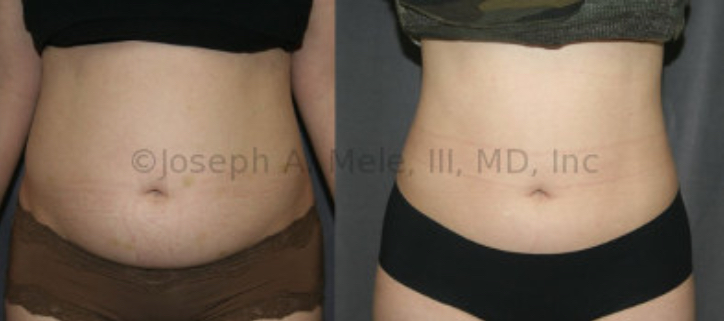
Liposuction Before and After Pictures
Liposculpture
The first time I heard the term Liposculpture my first reaction was: good flamboyant marketing term. However, the more I thought about what Liposculpture implies, the more appropriate the term seems. The procedure for removing fat by vacuuming away localized collections is more descriptively termed Liposuction or suction assisted lipectomy.
Direct Lipectomy
Lipectomy is the generic term for the removal of fat (lipo) not the lip. Lipectomy has a long “i” like liposuction. Direct lipectomy is what is done with Tummy Tucks (Abdominoplasty). During a Tummy Tuck excess fat is removed with any loose skin from the lower abdomen by direct excision. Liposuction can be used to decrease fullness in the hips and around back, and this can lead to a shorter scar in cases where the skin tone is good. Liposuction is not recommended on the tummy during a Tummy Tuck, as this can lead to complications. Direct lipectomy, on the other hand, is performed under direct vision and can safely remove the deep fat during a Abdominoplasty.
Suction Assisted Lipectomy (SAL) aka Liposuction
Liposuction also removes fat. A thin cannula, 2 to 4 millimeters in diameter, is used to vacuum away unwanted fat. The advantages of liposuction over direct lipectomy include smaller incisions and the ability to place the incisions away from the areas of disproportionate fat. This allows me to place the incisions in “hidden” areas, while removing the fat from areas that may be exposed.
The term liposuction is descriptive of the method, and it does allow for the permanent removal of the fat cells from selected areas. Unlike weight loss, your metabolism and genetic programming don’t pick the areas where the fat leaves, you do.
Liposculpture
Liposculpture is not a method of liposuction. It is another term used to describe the process Liposuction. By exchanging the suction for sculpture, the emphasis is placed more on the artistry than the process. The engineer in me likes Liposuction, because it is a precise description of the mechanism, but Liposculpture appeals to my artistic side and emphasizes the versatility of technique.
According to Wikipedia:
- Sculpture is three-dimensional artwork created by shaping or combining hard materials – typically stone such as marble – or metal, glass, or wood. Softer (“plastic”) materials can also be used, such as clay, textiles, plastics, polymers and softer metals. The term has been extended to works including sound, text and light.
Fat can be added to the softer (“plastic”) materials. In the hands of a Board Certified Plastic Surgeon, fat too can be contoured to more visually pleasing form. Disporportionate bulges can be reduced, and in some cases, indentations filled by Fat Grafting. The ability to reestablish normal proportions to the body is the real power of Liposculpture. Fat is a living medium, so the results are not written in stone, but there is no better way to remove stubborn deposits of fat when the genetic plan won’t cooperate.
Weight Loss
Weight loss and Lipo are complementary processes. While there is overlap, neither can substitute for the other. Weight loss by definition is the reduction of weight. When we burn more energy than we consume, we lose weight. Our bodies are extremely efficient, and this efficiency can cause health problems. Today, the number of calories that would have taken an entire day to hunt or gather can now be obtained in just a few minutes, a few feet away. Whether it’s a short walk to the kitchen or a ride to the drive-through, calories can be found quickly and with a minimum of energy spent.
When we lose weight, it leaves from whatever area is genetically next in line. We cannot diet or exercise a specific body zone away. Sit-ups do not target the fat of the abdomen. Sit-up strengthen abdominal muscles, and burn calories, but those calories come from wherever your genetics say they should come from. You can’t choose.
Liposuction is not the solution to overconsumption, but it can be a great way to get a disproportionate body back into shape. Unlike weight loss, Liposuction does allow you to selectively remove areas of disproportionate fat. Liposuction does not cause you to burn more or consume fewer calories, however. Your weight is set by your metabolism, not by liposuction.
Liposuction – Like a Fad Diet with a Big But…
Removing fat with Liposuction is like removing fat with a crash diet. Unless other changes are made, when the diet is over, the weight returns. However, there is a big difference. Remember the part about getting to choose where the fat is removed? Unlike a fad diet, your genetics don’t choose where the fat leaves. Liposuction allows disproportionate areas of fat to be removed preferentially. This means that weight gain after Liposuction tends to be more proportionate.
Your Weight After Liposuction
The best candidates for Liposuction are near their ideal weight. One reason for this, is that the upper limit of weight removed with liposuction is around ten pounds. If someone is 100 pounds overweight, removing ten pounds is not likely to make a dramatic visual impact.
If you are near your ideal weight, you are likely to stay near your ideal weight. Fewer areas are likely to be disproportionate, and removing five pounds from a localized area can be a big change (4.4 pounds of fat will fill a two liter beverage bottle). If the weight comes back, usually it does not all come back in the same place, so the results will last.
Combining Weight Loss With Liposculpture
The combination of weight loss and Liposculpture is unbeatable. For some, weight loss alone will give a well proportioned body, but most of us have specific areas that collect the fat first. Out of proportion fat is the Achille’s heel of weight loss; however, the removal of disproportionate fat is the forte of Liposculpture. Liposuction can serve as a positive kick start for further weight loss. We naturally want to protect our investment, and once we can see positive results, we are motivated to make them even better.
Posted in Home, Liposuction | 2 Comments »
September 11th, 2011 Dr. Mele

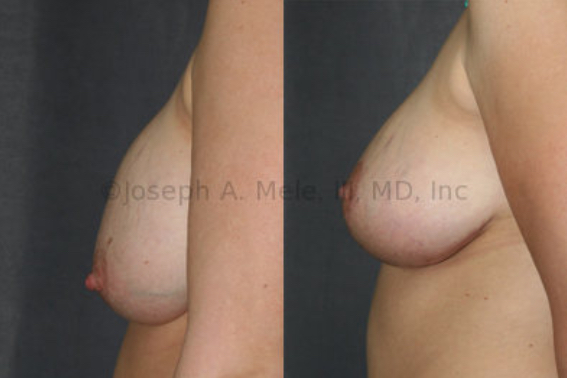
This patient had breast augmentation prior to becoming pregnant. Left: After pregnancy, the breast implant position remains unchanged; however, the breasts have dropped. Right: After breast augmentation revision, the breasts have been lifted and the breast implants exchanged, dramatically improving the breasts' shape and profile.
Pregnancy and Breast Augmentation
Pregnancy can change the volume and shape of breasts, and the result isn’t always positive. If you have been pregnant, you know firsthand. For the lucky few the changes are subtle, or even enhancing, but usually they are not. Many patients opt for breast augmentation after having children to restore what was lost. If you are trying to get pregnant, it is worth delaying your breast augmentation; however, if childbearing is not imminent, waiting may not be desirable.
Breast Implant Problems After Pregnancy
The breast augmentation revision before and after pictures above are of a woman who had breast augmentation at a young age, and enjoyed her breast implants for many years. After childbearing, her breast implants remained in a perky position, but the natural breast tissue sagged. Her breasts would have sagged and deflated whether she had breast implants or not, but with implants the result was normal elongated, deflated breasts, with the addition of disproportionate upper pole fullness from her breast implants.
The Breast Implant Revision Solution
The solution was a breast lift with breast implant exchange. The natural breast tissue was lifted to reduce the length of the breast and firm the natural breast tissue. The breast implant was exchanged to help with both shape and the post-partum changes in breast volume. Larger breast implants can be used to replace lost breast volume. Smaller implants, removal of the breast implants, or even breast reduction can help when the breast remain too large after lactation.
Why Is Breast Augmentation Revision Performed?
The case above is one specific example. The most common reasons for Breast Augmentation Revision Surgery are:
- A desire to change breast implant size (larger or smaller)
- Deflation of the breast implant
- Firmness due to tightening on the breast implant capsule (capsular contracture)
- Breast implant asymmetry or malposition like bottoming out, double bubble or symmastia (uniboob)
If you have one of these problems, a Board Certified Plastic Surgeon, like Walnut Creek Breast Implant Specialist Joseph Mele, MD, FACS, can help.
Tomorrow, Dr. Mele will be appearing on Body Beautiful. The show airs live on KRON, channel 4, September 12, 2011, at 11:00 AM. Breast augmentation and breast augmentation revision surgery will be discussed. If you have questions, call in to the KRON studios on Monday at 11:00AM, or send us your question through the contact form on the left. Every effort will be made to answer your questions during the show.
Breast Implant Revision Videos
Below are links to previous television appearances on KRON4 featuring Breast Augmentation Revision Videos and Breast Augmentation Revision Before and After Photos:
Breast Augmentation Scar Revision Before and After Pictures
Breast Augmentation Scar revision is another reason for Breast Implant Revision Surgery. Follow the link for a case presentation of breast augmentation scar revision for a wide-spread periareolar scar : Hypertrophic Breast Scar Revision
Posted in Breast Augmentation, Breast Implant Revision Surgery, Breast Lift (Mastopexy), Home | No Comments »
September 9th, 2011 Dr. Mele
Dr. Mele is Board Certified by the American Board of Plastic Surgery
How to Choose a Plastic Surgeon
The need for appropriate Board Certification has become increasingly important to educated consumers. Because of the confusion caused by Boards that sound the same, the state of California requires any physician advertising that they are Board Certified to explicitly state the Board they are certified by. While the term “Board Certified” applies to all physicians and surgeons, nowhere is the concept of Board Certification more confusing than in the field of Plastic Surgery.
The American Board of Medical Subspecialties (ABMS)
Any group can create an independent Board and define their own criteria for “Board Certification” without any outside intervention. To provide continuity within medical boards in the United States, the American Board of Medical Subspecialties (ABMS) was created. For over 75 years the ABMS has provided oversight for the certification of physician specialists in the United States. It is the recognized Certifying Body for Board Certification in the United States.
The ABMS provides valuable resources for consumers and physicians, including free online search that lets you check if you doctor is certified by a recognized board. To check your doctor click here -> Is Your Doctor Certified?
ABMS Recognized Boards
Board Certification means that your doctor has taken the appropriate training and passed both the qualifying and certifying exams. In the past, this was a one time deal. Once Board Certified, always Board Certified, but as the speed of advancement in medicine has changed, so has Board Certification. To maintain Board Certification, a doctor must also complete ongoing evidence of training yearly, including periodic recertification exams. This is termed Maintenance of Certification or ABMS MOC.
I am proud to maintain Board Certification by two ABMS Boards: The American Board of Plastic Surgery and the American Board of Surgery.
Here is a listing of all ABMS recognized boards:
The American Board of Plastic Surgery (ABPS)
The American Board of Plastic Surgery (ABPS) also maintains a free online search. If you are considering Plastic Surgery, check if your doctor is a Board Certified Plastic Surgeon. To check if your doctor is a Board Certified Plastic Surgeon, click here -> Certified by the American Board of Plastic Surgery.
Plastic Surgery Professional Societies
The American Society for Aesthetic Plastic Surgery and the American Society of Plastic Surgeons require current ABMS Board Certification for membership. They also require that all members operate in only Certified Centers and adhere to a strict Code of Ethics. This is why ASPS and ASAPS members can’t give away Breast Augmentations as a raffle prize. Offering a procedure without a good faith medical history and physical examination is unethical. If the winner turns out to be a poor candidate for Breast Augmentation, this would be a problem.
These professional society memberships help ensure that your Board Certified Plastic Surgeon is held to the highest standards. I maintain active membership in multiple Plastic Surgery Societies including the American Society of Plastic Surgery (ASPS), one of the largest and most respected plastic surgery professional organizations in the world, and the American Society for Aesthetic Plastic Surgery, a subgroup of ASPS members dedicated to enhancing the cosmetic aspects of plastic surgery.
For more about my training click “Meet Doctor Mele” here or at the top of any San Francisco Plastic Surgery Blog page. Click here for more about my -> American Board of Plastic Surgery Maintenance of Certification.
Posted in Board Certification, Home, Patient Safety | No Comments »
September 1st, 2011 Dr. Mele

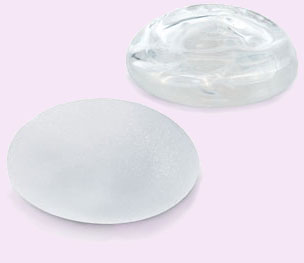
Saline Breast Implants or Silicone Breast Implants? The question is asked every day in my Walnut Creek Plastic Surgery Office, and it is often followed by, “Which is Safe?” The decision to have breast augmentation surgery is a personal one. While both saline breast implants and silicone breast implants are both safe, which is best will depend on you.
Why Choose Silicone Breast Implants?
The main reason women choose silicone gel breast implants is because they feel softer. If you are thin and have small breasts, a breast implant will be more palpable. A silicone breast implant tends to give a softer, less detectable result. A silicone breast implant will move more like breast tissue too. These advantages are less pronounced for larger breasts.
Why Choose Saline Breast Implants?
The main reason my patients choose saline breast implants is because they are afraid of silicone. Saline implants are a bit firmer and can provide some additional projection when this is desired. They can also be placed through smaller incisions, because saline breast implants can be inserted empty, and filled after they are inside. The peace-of-mind that saline breast implants offer comes into play when we discuss breast implant leaks.
What Happens if My Breast Implants Leak?
Both the currently approved saline breast implants and silicone breast implants can leak. If and when the FDA gets around to approving the form-stable, gummi-bear breast implants, board certified plastic surgeons will be able to offer an implant that doesn’t leak. For now, leakage rates are low, but account for about one third of all breast implant revision surgery.
When Saline Breast Implants Leak
When a saline breast implant leaks it is obvious. The implant goes flat, and the volume is lost. No special test is necessary to make the diagnosis. Since saline is water with a little salt added to match your body’s saltiness, it is quickly absorbed and leaves no trace. US breast implant manufactures offer lifetime breast implant warranties, so the breast implant will be supplied without a charge, and if a leak occurs within 10 years of your primary breast augmentation, they will also supply money to help defray the cost of surgery to replace the defective implant.
When Silicone Gel Breast Implants Leak
When a silicone gel breast implants leaks, it may not be so obvious. The silicone is a cohesive gel and does not run like water. This is good in that the capsule around the implant often prevents the gel from migrating; however, it also means that the size of the breast does not change. The FDA has recommended that all patients with silicone breast implants obtain an MRI every other year to look for these silent leaks beginning three years after the initial surgery. If the gel migrates outside the capsule, the body will often form additional scar to wall-off the free gel. This can cause a lump in the breast and may be the first clue that a silicon breast implants has leaked.
So … Saline Breast Implants or Silicone Breast Implants?
There is no “correct” answer. For most patients a good result will be obtained with either saline breast implants or silicone breast implants. Silicone breast implants tend to give a more aesthetic result when the breast tissue is small and when the implant is large. The bigger the breast implant, and the smaller the breast, the more obvious breast augmentation may be. The silicone implants feels and acts more like breast tissue, so it can often provide a superior result in this situation. The advantage is not as pronounced if you have more breast tissue and a smaller breast implant.
While information is available on-line, the best way to get an informed opinion is by visiting a Board Certified Plastic Surgeon. If you would like to schedule an appointment with Dr. Mele give us a call at (925) 943-6353 or use the contact form in the left column.
Posted in Breast Augmentation, Home | No Comments »