August 25th, 2011 Dr. Mele
It has been an interesting summer in the San Francisco Bay Area. The rest of the country is trying out the West Coast’s favorite natural disaster – Earthquakes. Earlier this week a 5.5 earthquake hit Cokedale, Colorado and a 5.8 struck in Mineral, Virginia. We are not slacking on that department, as I was awakened Tuesday night by a mild 3.6 quake, one of 75-100 San Francisco Bay Area Earthquakes this week.
Maybe it’s Earthquake weather, but this summer’s weather has been a bit odd. While the rest of the country has been roasting, it has been a mild summer for San Francisco. Bay Area Breast Augmentation, on the other hand, remains hot. In office procedures such as Botox, Fillers and Chemical Peels are still the most frequently performed facial enhancements, but Breast Augmentation (Augmentation Mammoplasty) remains the most popular cosmetic plastic surgery procedure, with 300,000 breast augmentations performed in 2010 just in the US.
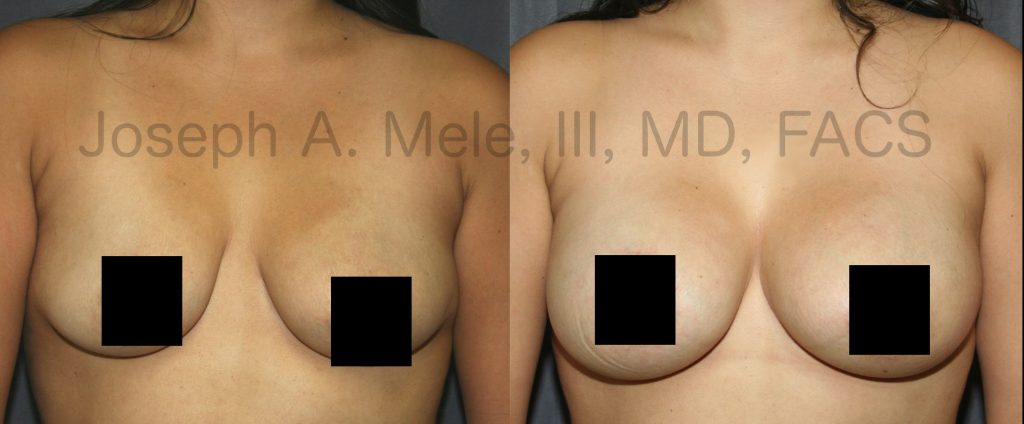
Breast Augmentation Before and After Pictures
Reasons for Breast Augmentation
Breast Augmentation is performed for many different reasons, and the choice to get Breast Implants is a personal one. The most common reasons include the correction of breasts that never fully developed, restoring volume lost after pregnancy or weight loss, congenital deformities and the loss of a breast due to breast cancer. Breast Implants help restore body proportions, enhancing the way clothing fits. Some commonly asked questions about Breast Augmentation are answered on my main web site, and links are provided below.
Frequently Asked Breast Augmentation Questions
Considering Breast Augmentation?
If you are interested in learning more about Breast Augmentation, or you have Breast Implants and are considering Breast Augmentation Revision, give one of San Francisco Bay Area’s premier Breast Implant Specialists a call at (925) 943-6353, or contact us through the contact form in the left column.
Posted in Breast Augmentation, Breast Implant Revision Surgery, Home | No Comments »
August 18th, 2011 Dr. Mele
The Tummy Tuck remains one of the most satisfying procedures I perform. There is something very rewarding about being able to restore a stomach to its firm, youthful form. Most patients are in good shape. Many are working hard at improving the look of their abdomen; however, exercise alone does not always provide the desired results. Exercise can reduce weight and strengthen muscles, but it cannot shrink skin or tighten an abdominal wall that has been over stretched.
Tummy Tuck Before and After Pictures
Who Gets Tummy Tucks (Abdominoplasty)?
Many of my tummy tuck patients have had children. Their abdomens have stretched due to pregnancy, especially with multiple pregnancies. The baby, like weight gain, stretches the abdominal wall causing both muscle and skin laxity. This can occur even when physically fit. Abdominal wall stretching is compounded by even mild weight gain, as the fat seems to be stored preferentially in the lower abdomen.
Why is the Abdomen More Full at the Bottom?
Extra skin tends to fold over at the belly-button and at the belt line. This happens because most the attachments between the skin and abdominal muscles are loose, allowing gravity to slide the skin down over the muscles when we stand. Dense attachments between the skin and the muscle at the belly button and along the belt line keep the skin from sliding. Redundant skin above these areas accumulates and may fold over itself. The lower abdominal skin folding is accentuated by lower abdominal scars, like the scar from a C-section. The C-section scar firmly glues the skin to the underlying muscle, and gravity pulls any loose skin over the scar enhancing the pooch.
Another reason the abdomen is more full at the bottom has to do with the abdominal wall muscles. Pregnancy and weight gain increase the volume inside the abdominal cavity. This stretches not only the skin but also the tough fascial layers that support the abdominal muscles. When the fascia layers are stretched, the guts can push forward, causing a rounder belly. Tightening the muscles voluntarily can help, but when overstretched, it may not be possible to suck the guts in completely.
Fat retained inside the abdominal cavity can also cause a firm round belly that cannot be sucked in. Fat in this interior location cannot be removed with a tummy tuck or liposuction, and must be lost through diet and exercise. This is part of the reason it is best to be close to your goal weight before having your tummy tuck.
What Can be Done to Flatten the Belly After Pregnancy or Weight Loss?
- Tummy Tuck Before and After Pictures

Tummy Tuck - Before and After Photos
Tummy Tuck: The Tummy Tuck, or Abdominoplasty, was created to tighten the abdominal wall muscles and to remove excess skin. A tummy tuck also removes excess fat more completely than liposuction. This three pronged approach addresses excess skin, excess fat and lax abdominal muscles. It is the most effective way to rejuvenate the shape of the abdomen. Abdominoplasty smoothes the skin, removes the fat and tightens the abdominal muscles.
- Liposuction Before and After Pictures

Liposuction Before and After Pictures
Liposuction: If the skin tone and muscle wall are already in good shape, Liposuction alone may be sufficient. However, if liposuction is performed with loose skin or muscles, the results will not be optimal. The muscle is not tightened with liposuction, and the skin may lose support from the fat removal and become more irregular.
- Mini Tummy Tuck Before and After Pictures

Mini Tummy Tuck Before and After Pictures
Mini-Tummy Tuck: The Mini Tummy Tuck, or Mini Abdominoplasty, can help when the muscle and skin laxity is isolated to below the belly button. It does everything a tummy tuck can do below the belly button, and can be combined with liposuction to address disproportionate fat above the belly button or on the sides. For laxity above the belly button, a tummy tuck is still the best choice.
Tummy Tuck Information
More information about tummy tucks is available on my main web site DrMele.com. If you would like specific information regarding what can be done for your tummy, schedule a consultation in our San Francisco Bay Area Plastic Surgery Office in Walnut Creek, California. Call (925) 943-6353 or use the contact form in the column on to the left.
Posted in Home, Liposuction, Mini Tummy Tuck (Mini Abdominoplasty), Tummy Tuck (Abdominoplasty) | No Comments »
August 15th, 2011 Dr. Mele

The Navy SEAL Foundation
This month twenty-two Navy SEALs died in Afghanistan when their CH-47 Chinook helicopter was shot down. The group was attempting to help Army Rangers pinned down in a firefight. This is a deep loss to the military, but a far more tragic one to the families and friends of these mighty soldiers of SEAL Team 6.
This may seem off topic for the San Francisco Plastic Surgery Blog; however, I have had the honor and privilege of working with many hard working military men and women and their families. My office in the San Francisco Bay Area city of Walnut Creek, California is near Travis Air Force Base. Travis Air Force base is home to the 60th Air Mobility Wing, the largest wing in the Air Force’s Air Mobility Command. The base is named Brigadier General Robert F. Travis, who also died in and aircraft crash.
In this time of loss, I would ask you to consider joining our practice in making a donation to the Navy SEAL Foundation.
There are many ways to help the families of our fallen Navy SEALs, please consider:
- Texting “SEAL” to 90999 to donate $10 to the Navy SEAL Foundation
- Donate over the phone by calling 757-763-5501
- Making an online gift under program area, there is a drop down bar, so you can direct your giving if you choose: To support the families of the fallen Navy SEALS – Afghanistan 8/5/11
- Joining the Navy SEAL Foundation Facebook page
- Other options for contributing can be found on the Navy SEAL Foundation donation page
The Navy SEAL Foundation gives 95% of donations to the families of SEALs killed in action. The funds cover memorial services (the military covers funerals only), travel expenses for the families of SEALs to attend funerals, child care expenses for widows, and other necessities for these families. The SEAL fund is a 501c3 non-profit, so your donation is tax deductible.
The average salary of a military service member is $38k per year. The families of these SEALs killed in action need our help. The Naval SEAL foundation estimates that nearly $1M is needed to help these families with memorial services and other necessities to adjust to life without their hero. Please consider making a donation today.
Posted in Home, Uncategorized | No Comments »
August 12th, 2011 Dr. Mele

The American College of Obstetricians and Gynecologists is Looking Out For You
Doctors are once again at odds with the government, but this time it has less to do with Obamacare, and everything to do with saving lives, possibly yours.
Mammograms Save Lives
We all know that Mammograms save lives. National Cancer Institute data show the US breast cancer death rate, previously unchanged for 50 years, has dropped 37 percent since mammograms became widespread in 1990. The US Preventive Services Task Force (USPST); however, doesn’t seem to get it.
Early Detection is Key
While a mammogram doesn’t treat breast cancer, it is the key to the early detection of breast cancer. Another key is routine monthly self-examinations. The combination is an effective way to detect breast cancer in its early stage. The earlier breast cancer is detected, the better the chance that treatment will lead to a cure.
Cure rates are greater than 90% for breast cancers detected early. Earlier detection means smaller tumors. Smaller breast cancers spread less often and are removed more easily. On the other hand, if breast cancer is discovery after it has left the breast, treatments rapidly become more complex and are dramatically less effective.
Doctors Fight Back For Their Patients
The American College of Obstetricians and Gynecologists (ACOG) recently issued new guidelines, joining a long list of physician lead professional societies strengthening the stand that early mammography saves lives. The new ACOG recommendations call for mammograms more frequently than the previous ACOG guidelines. The previous guidelines recommended mammography every one to two years beginning at age 40, and then annual mammograms after age 50. The new guidelines recommend:
- Mammography yearly beginning at age 40
- Monthly self-exams for women at high risk for breast cancer
The ACOG recommendations are in alignment with the American College of Radiology and Society of Breast Imaging recommendations, and both conflict with the government’s USPST recommendations of delaying mammography until age 50.
US Preventive Services Task Force (USPST) Recommendations Deemed Unacceptable
When the USPST recommended against routine mammography for women younger than 50-years-old, it was in direct opposition to the current standard of care. The Major Medical Organizations in the US where at first shocked and then adamantly vocal in their opposition. The recommendation would mean less money spent on mammograms upfront; however, the “savings” would be lost later in trying to treat larger tumors that are more likely to have spread. The ultimate cost; however, would be measured in lives not saved.
Thank you ACOG
Thank you to the American College of Obstetricians and Gynecologists for joining the long list of professional medical organizations, including the American Society or Plastic Surgeons, who disagree with the government’s suggestion to wait until age 50.
USPST WT?
When the American College of Radiology and Society of Breast Imaging made it’s recommendation that mammography should start at age 40, they used the USPST’s own data against them. After careful review, the USPST’s data did not support the recommendation of delaying mammography until age 50. I applaud the efforts made by organized medicine to bring this information to light. How this remains outside the main stream media is puzzling. With major health care “reforms” underway, this is an excellent topic for an investigative report, and early mammography will certainly save more lives than knowing where Casey Anthony is hiding.
You Are Worth It
Mammography, while not pleasant, is an effective screening tool. With 80% of breast cancer occurring in women without a family history, it is important for every woman to have access to the exam. If the government recommends delaying mammography a decade, the next step will be to stop paying for it. If government programs stop paying for the service, all insurance companies will follow.
Mammography allows us to detect and control the spread of breast cancer. If we allow a guideline delaying mammography to become law, it will be much more difficult for your doctor to order this simple, lifesaving test. If the USPST gets its way, unless you are willing (and able) to pay for your own yearly mammograms, you won’t be getting them. Your government may not think it is worth the documented reduction in breast cancer deaths, but your doctors do.
Please support your doctors in their efforts. We strive to practice effective medicine and protect our patients. The Hippocratic Oath mandates that we doctors do no harm. The USPST mandate delaying mammography until after age 50 would do harm, and allowing the recommendation to go forward unchallenged, would be just as harmful.
Posted in Home, Patient Safety, Uncategorized | No Comments »
August 4th, 2011 Dr. Mele
BOTOX Cosmetic and Dysport have established their niche in wrinkle reduction, but new drugs are on the way. Xeomin will be here in 2012 and PurTox is staged to launch right behind it.
Botulinum Toxin

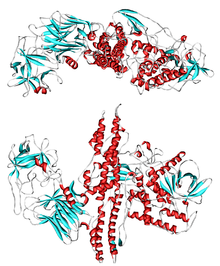
Botulinum toxin - Chemical Formula: C6760H10447N1743O2010S32 Hard to believe that this reduces wrinkles!
The first standardized Botulinum Toxin was prepared for therapeutic use by Alan Scott, MD, a San Francisco Ophthalmologist, and Edward Schantz in the 1960′s. In 1980, Dr. Scott was the first to use botulinum toxin type a (BTX-A) to treat strabismus (crossed eyes) and blepharospasm (involuntary forceful squinting). He successfully treated many patients until 1986, when the inability to purchase liability insurance caused his US source to end production.
In December 1989, Allergan was the first company to receive FDA approval for the use of BTX-A for the treatment of strabismus, blepharospasm, and hemifacial spasm in patients over 12 years old. Thus Botox was born.
Botox was not approved for cosmetic uses until 2002; however, the cosmetic effect of BTX-A on wrinkles was published in the Journal Plastic and Reconstructive Surgery in 1989, by a plastic surgeon from Sacramento, California, Dr. Richard Clark
BOTOX Cosmetic® (onabotulinumtoxinA)

BOTOX Cosmetic was the First to Market for Wrinkle Reduction in the US.
BOTOX Cosmetic is manufactured and distributed by Allergan (Ireland, US, Costa Rica). Plastic surgeons have been using Botox “off-label” for years to treat wrinkles. BOTOX Cosmetic received FDA approval on April 12, 2002, to “temporarily improve the appearance of moderate-to-severe frown lines between the eyebrows” (glabellar frown lines or the elevens). The name for the wrinkle reducer was changed to BOTOX Cosmetic to provide legal “separation” from the Botox used for the treatment of other medical problems. To this day, Botox and all other forms of botulinum toxin, are only FDA approved for the reduction of the glabellar frown lines. Reduction of other wrinkles remains an “off-label” use
Dysport® (abobotulinumtoxinA)

Dysport (abobotulinumtoxinA) was the first Botulinum Toxin A introduced in the European Market, but Second to the US Market.
Dysport is manufactured by Ipsen (Paris), marketed by Medicis (Scotsdale) and distributed by McKesson (San Francisco). Dysport received FDA approval in late April 2009, and began shipping June 15, 2009.
Dysport has been a worthy competitor since its launch, and continues to offer efficacy at a reduced cost. Back by popular demand, the Dysport Challenge of 2010 has been extended, and the ante has been upped. The latest challenge is named “Think Outside the Bo**x” with the following details:
- Try Dysport by September 30, 2011 and get $50 back.
- If you have received BOTOX Cosmetic between 3 and 12 months before your Dysport treatment, get another $50 for making the switch.
Click here for a detailed comparison of -> BOTOX vs. Dysport.
Click here for more details about the -> Think Outside the Bo**x Offer.
Xeomin® (incobotulinumtoxinA)

Xeomin has finished its Phase III Trials and received FDA approval. It is expected to be available in the Spring of 2012
Xeomin is the latest arrival in the botulinum toxin business. It is manufactured by Merz, and has just received FDA approval for wrinkle reduction of the glabellar frown lines. Like its predecessors, Xeomin had previously been FDA approved for the treatment of blepharospasm and cervical dystonia (painful contraction of the neck muscles causing abnormal head position). It is expected to hit the cosmetic market in Spring of 2012.
PurTox (anotherbotulinumtoxinA)
Other brands of BTX-A are certain to come, but PurTox will likely be the next. Manufactured by Mentor Corporation, a division of Johnson and Johnson, PurTox has completed all Phase III trials and is currently awaiting FDA approval.
So Which BTX-A is Best?
It remains to be seen how head-to-head consumer comparisons between Botox, Dysport, Xeomin and PurTox will play out. Will one prove itself supreme? Time will tell, and I will be here to let you know.
Posted in Home, Wrinkle Reduction (Non-surgical) | No Comments »