March 26th, 2011 Dr. Mele

The 2010 Plastic Surgery Statistics are out. The American Society of Plastic Surgeons released statistics on America’s consumption of what plastic surgeons had to offer. Here is the recap for 2010:
Americans spent 10.1 billion on 18.4 million plastic surgery procedures last year. Here is how it breaks down:
- 13.1 million cosmetic procedures were performed, up 5% from 2009. This includes:
- 1.6 million cosmetic surgical procedures (up 2%) and
- 11.6 million minimally-invasive procedures (up 5%).
- 5.3 million reconstructive plastic procedures were performed (up 2%).
While teen plastic surgery continues to make headlines, people aged 13-19 had the least plastic procedures (cosmetic and reconstructive) last year, accounting for 2% of the total. The largest age group continues to be 40 to 54 year-olds, who make up 48% of all plastic surgery procedures.
2010 Top 5 Cosmetic Plastic Surgery Procedures
2010 Top 5 Cosmetic Minimally Invasive Plastic Surgery Procedures
- Botulinum Toxin Type A (Botox, Dysport) 5,400,000 (up 12%)
- Soft Tissue FIllers (Dermal Fillers – Restylane, Juvederm, Perlane, Radiesse) 1,800,000 (up 3%)
- Chemical Peel (Glycolic, TCA, Phenol)) 1,100,000 (unchanged)
- Laser Hair Removal 203,000 (up 2%)
- Microdermabrasion 116,000 (up 1%)
2010 Top 5 Reconstructive Plastic Surgery Procedures
If you, or your loved ones, are considering plastic surgery, be certain to consult with a Board Certified Plastic Surgeon. All members of the American Society of Plastic Surgeons and the American Society for Aesthetic Plastic Surgery are required to be Board Certified. Certification can be easily checked on the American Board of Plastic Surgery web site. Check your Plastic Surgeon’s Certification here. Apologies for how bland the American Board of Plastic Surgery site is. I’ve been trying to get them to rejuvenate the site for years.
Posted in Home, Patient Safety, Uncategorized | No Comments »
March 19th, 2011 Dr. Mele
In the San Francisco Bay Area, Liposuction remains one of the most popular cosmetic plastic surgery procedures. It is the most effective method of spot removing fat ever devised. Unlike weight loss, liposuction allows you to select where on your body the fat should be reduced.

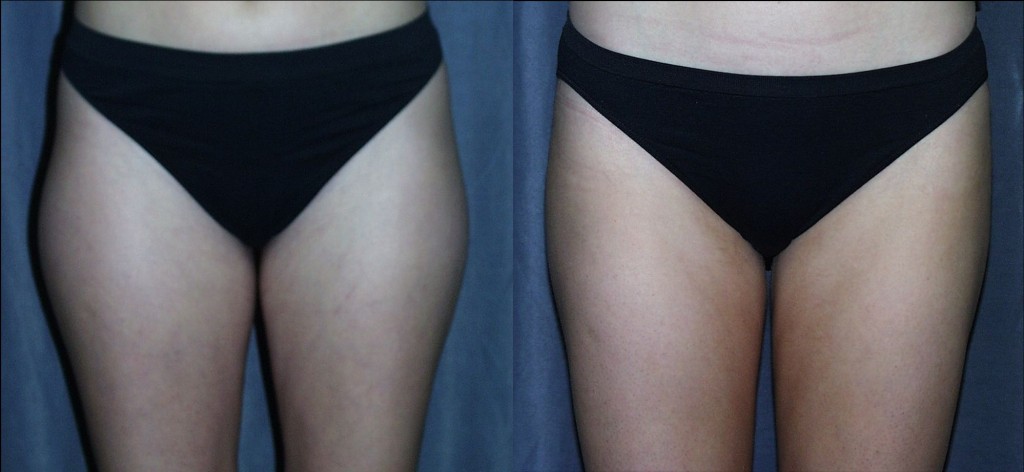
Liposuction before and after pictures - Left: Before disproportionate fat pockets on the outer and inner thigh were interfering with the fit of clothing. Left: After liposuction of the thighs, clothing fits better and bulges have been replaced with smooth beautiful curves.
Areas Commonly Contoured with Liposuction
The trunk and thighs are the most common areas treated with liposuction. The lower abdomen, flanks (sides) and lower back encompass the “muffin top” and are the most common areas of disproportionate fat for both men and women. Women also frequently have disproportionate fat on the inner and outer thighs. The outer thigh region is often called the saddlebags. The posterior thigh, below the buttocks (the muffin bottom?) can also preferentially take up extra fat. This area is also called the banana roll, due to its shape. Other areas where liposuction can help are fat collections under the chin, on the upper arms and on the chest for men.

Liposuction Before and After Pictures - Left: Before disproportionate fat of the lower abdomen & sides (flanks). Right: After liposuction of the abdomen & flanks improves appearance in and out of clothing.
Who is a Good Candidate for Liposuction?
Liposuction is great way to remove stubborn fat, but it is not an effective method of weight loss. For liposuction to be maximally effective, you need to be close to your desired weight, and willing to maintain it. Successful liposuction is truly a partnership between you and your Board Certified Plastic Surgeon. A good candidate for liposuction has collections of disproportionate fat, a stable weight and a plan to maintain that weight. This is how to protect your investment, and get maximum results from your body sculpting.
Schedule a Liposuction Consultation
If you are interested in learning more about how liposuction can be specifically tailored to your needs, call (925) 943-6353, and schedule a consultation appointment with Dr. Mele. Dr. Mele is a Board Certified Plastic Surgeon who has been assisting Walnut Creek Plastic Surgery patients with Liposuction, Breast Augmentation and other Cosmetic Plastic Surgery procedures since 1997.
Posted in Home, Liposuction | 2 Comments »
March 11th, 2011 Dr. Mele
The Tummy Tuck (Abdominoplasty) remains one of the most frequently performed cosmetic plastic surgery procedures. After blogging about the extreme tummy tuck last week, the fleur-de-lis tummy tuck, I received a lot of questions about when I would use that technique instead of a traditional abdominoplasty. Bay Area residents want to know, so let me start small and work my way through the time-tested techniques for tucking your tummy — from liposuction to the fleur-de-lis abdominoplasty.

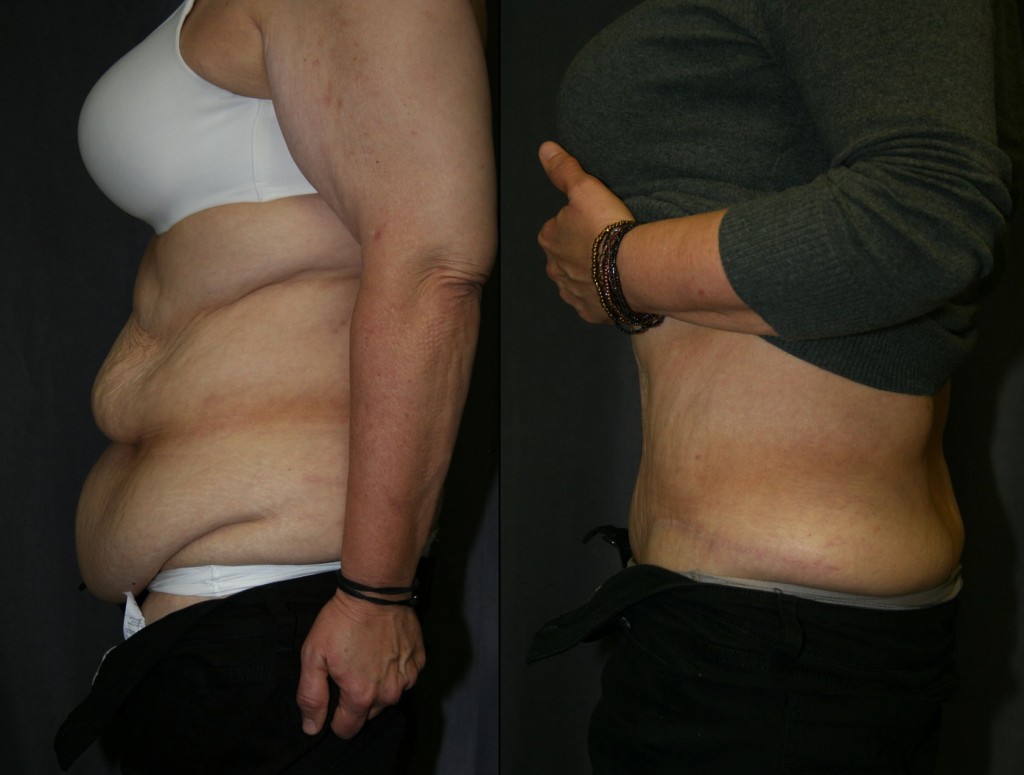
Abdominoplasty - Left (before): Multiple rolls of redundant skin are seen after massive weight loss. Right (after): The loose abdominal skin is removed and the muscle wall is tightened, making finding clothes that fit much easier.
Tumescent Liposuction (Liposculpture, Suction Assisted Lipectomy or SAL)
Diet and exercise are always the first line of defense. No plastic surgery can eliminate the need for a proper diet and exercise plan. However, there are some problems that diet and exercise cannot fix. Localized accumulations of fat, which are disproportionate, are discussed in the previous post about Tumescent Liposuction. For bellies with small amounts of excess fat, that have good muscle and skin tone, tumescent liposuction provides a simpler and faster alternative to tummy tucks. Liposuction (SAL) cannot tighten loose skin. Even laser liposuction (LAL) and ultrasonic liposuction (UAL) cannot tighten skin that has lost its tone. If fact, liposuction can make loose skin look worse by further deflating the skin. By removing the fat, the support for the skin is removed, and the skin will fold over itself. The tummy tuck was designed specifically to address this problem.
Mini Tummy Tuck (Mini-Abdominoplasty)
When the abdominal skin and muscle laxity is isolated to the area below the belly-button (umbilicus), a mini tummy tuck may be the best option. For a mini tummy tuck, liposuction is often used in the upper abdomen and the sides to reduce unwanted fat, and a low abdominal incision is used to tighten the skin and muscles of the lower abdomen.
Tummy Tuck (Abdominoplasty) With a “Floating” Belly-Button
In situations where the abdominal skin and muscle laxity is isolated to the area below the belly-button, but there is a small amount of loose skin just above the belly-button a “floating” belly-button technique is used. This is not the normal way to do a tummy tuck, and patients for this technique need to be carefully selected by an experienced, Board Certified Plastic Surgeon. If you are a candidate, however, it usually means more improvement with the same scar as a mini tummy tuck.

Tummy Tuck - Top (before): Excess skin, muscle laxity and disproportionate lower abdominal fat contribute to a flabby appearance. Bottom (after): Excess skin and fat have been removed, and the abdominal muscles tightened. The sides of the rectus abdominus muscle are closer to the midline after the repair.
Tummy Tuck (Abdominoplasty)
The tummy tuck or abdominoplasty is the work horse of abdominal rejuvenation, and the gold standard to which every other abdominal tightening procedure is compared. It requires and incision low on the abdomen, and one around the umbilicus. The procedure allows not only for tightening the abdominal skin, but the removal of excess fat and tightening of the muscles of the abdominal wall. This muscle tightening provides a tighter foundation on which to build your new tummy.
Fleur-De-Lis Tummy Tuck (Fleur-De-Lis Abdominoplasty)
The fleur-de-lis tummy tuck is used when the amount and laxity of the abdominal skin is massive. This is most often seen after bariatric surgery or weight loss of greater then 75 pounds. The fleur-de-lis abdominoplasty incorporates all the features of a tummy-tuck with an additional incision running down the middle of the abdomen to remove excess skin from the midline. It is the biggest operation available, designed to reduce the most extreme amounts of excess abdominal skin.
The Lower Body Lift (Belt Lipectomy)
The lower body lift is a tummy tuck that extends all the way around to body. It is almost exclusively performed in post-bariatric surgery patients. The combination of extreme weight gain stretching out the skin, followed by loss of this weight, leaves a skirt of loose skin that can extend all the way around the back. In these cases, additional weight loss will not improve the appearance. The lower body lift is also called a belt lipectomy because a belt of excess skin and fat is removed. The abdominal muscles can also be tightened to enhance the abdominal contours, like in a traditional tummy tuck.
Body Beautiful on KRON4
Next Monday, March 14th, at 11:00 AM, I will be on KRON4′s Body Beautiful discussing Tummy Tucks. Feel free to call in and have your questions answered live, on the air. For a less public response, use the contact form on the left. While I do my best to provide you with accurate general information about all aspects of cosmetic plastic surgery on the San Francisco Plastic Surgery Blog, the only way to get information specific to your needs is with a personalized consultation appointment. Give me a call at (925) 943-6353 to schedule your consultation today.
Posted in Home, Liposuction, Lower Body Lift (Belt Lipectomy), Mini Tummy Tuck (Mini Abdominoplasty), Post-Bariatric Surgery (After Weight Loss), Tummy Tuck (Abdominoplasty) | No Comments »
March 5th, 2011 Dr. Mele
Liposuction remains one of the most frequently performed cosmetic plastic surgery procedures in the San Francisco Bay Area, California and the US in general. It is an effective method of selectively removing fat from problem areas.

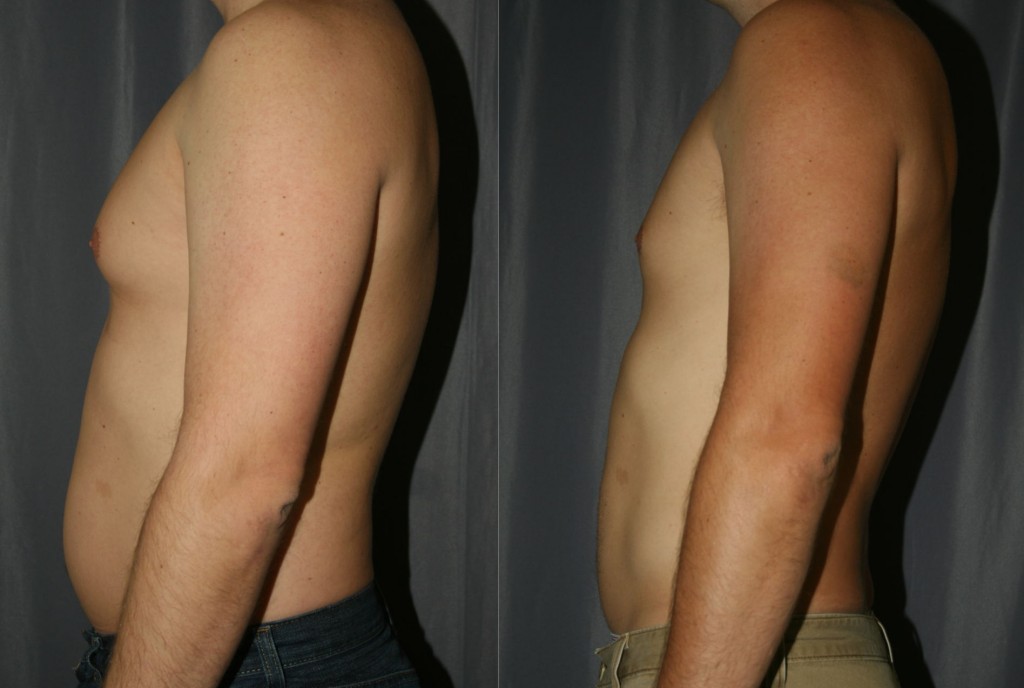
Before (Left) shows localized fat of the chest (gynecomastia) and abdomen. After (right) reveals improved contours and better muscle definition with tumescent liposuction.
How Much Fat Can be Removed With Liposuction?
To improve patient safety, the American Society of Plastic Surgeons and the American Society for Aesthetic Plastic Surgery released a joint statement recommending an upper limit on the volume of fat removed of 5 liters. This is not to say that more fat cannot be removed safely. This recommendation was made for patients undergoing elective outpatient liposuction, on a come-and-go basis. In others words, if you are having liposuction and going home that same day.
Five liters is about 10 pounds, so you can see that liposuction is not a good method of weight control. Liposuction is best if you are near your ideal weight, and have localized, disproportionate accumulations of fat. Unlike weight loss, liposuction can remove fat from the areas you choose, this makes it ideal for stubborn areas that won’t leave. The selective nature of liposuction has lead some to use the term liposculpture.
Over the last few years, as the demand for liposuction increased, a large number of different liposuction techniques sprung up like weeds. All claim to better than every other technique, and most have no or an insignificant amount of proof to back their claims. The best technique remains the tumescent technique, under the guidance of a well trained professional. Ultrasound Liposuction (VASER, Liposelect) and Laser Liposuction (SmartLipo) both piggy back onto Tumescent Liposuction. As a result they get the same benefits of Tumescent Liposuction, but with increased cost and the chance of getting burned.

Before (left) localized fat collections of the inner and out thighs. After (right) tumescent liposuction provides smoothed contours, improved appearance and enhanced fit of clothes.
Can Liposuction Tighten My Loose Skin?
Loose skin is a contraindication for liposuction. While all techniques claim to shrink skin, none can significantly tighten loose skin. Studies comparing tumescent liposuction and other liposuction techniques have been done. In a well controlled study, in which tumescent liposuction was performed on one side of a patient, and laser liposuction was done on the other side, neither patients, nor surgeons, could not tell which side was which. Significant skin tightening remains a problem from all liposuction. You will find examples where the skin seems to dramatically tighten, but these lucky people would tighten with any modern technique. Unfortunately, they are the exception rather than the rule.
Liposuction Safety
The most important aspect of any elective cosmetic surgery is safety. It is surgery, and should be performed by a qualified surgeon in an accredited facility, with proper monitors, excellent anesthesia, meticulous sterile technique and with proper equipment.
How to Choose a Liposuction Specialist
As a Board Certified Plastic Surgeon trained in a program well known for cosmetic plastic surgery, I am biased, and with good reason. As a group, plastic surgeons receive the best surgical training available specific to plastic surgery. The San Francisco Bay Area has been home to three world class training programs, and as a result, you have many excellent professionals from which to choose. While there are some unique individuals, trained in other disciplines, who can get good results, if you are considering Cosmetic Plastic Surgery, considering seeing a Board Certified Plastic Surgeon.
At a minimum, your surgeon should be a member of the American Society of Plastic Surgeons (ASPS), and even better, a member of the American Society for Aesthetic Plastic Surgery (ASAPS). ASAPS members are plastic surgeons who specialize in cosmetic plastic surgery. ASAPS members are required to be Board Certified Plastic Surgeons, members in good standing of their local societies, operate only in certified facilities and allow periodic review of their results. More about these organizations can be found by clicking on their names.
Posted in Home, Liposuction, Patient Safety | No Comments »