February 24th, 2011 Dr. Mele
Variety is the spice of life, and it is the single most important aspect of plastic surgery that makes my job both rewarding and challenging. Abdominal rejuvenation provides a simple example of what I mean.
From tight bodied bikini models looking to remove that last little area of disproportionate fat, to patients who have lost massive amounts of weight and who are left with rolls of redundant skin, patients looking to smooth out their abdomen come in all shapes an sizes. While a little liposuction may be the perfect fix for small areas of disproportionate fat, it will not remove excess skin. Larger problems usually require larger solutions.
When skin is loose and redundant, liposuction, even laser liposuction and ultrasonic liposuction, will not significantly tighten the skin. Small amounts of skin excess, isolated to below the belly button, can be removed with a mini tummy tuck. However, as the skin laxity becomes a problem above the belly button, the full tummy tuck takes over as the procedure of choice. A full tummy tuck allows for removal of excess skin and fat, and also allows for tightening of the abdominal muscles beneath the skin, all along the midline, from the ribs to the pubis.

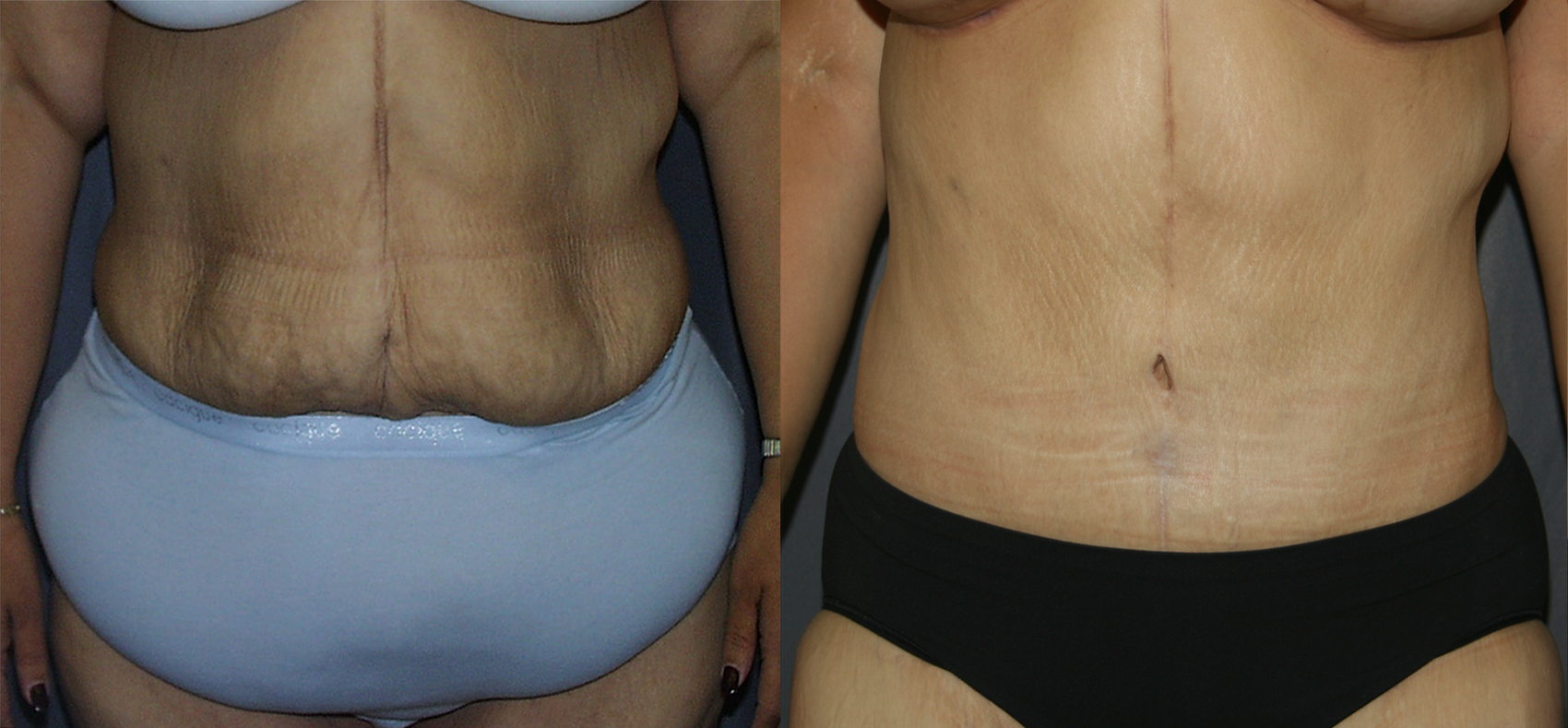
Left - Before Fleur De Lis Tummy Tuck after massive weight loss. Notice the abdominal skin is wider than the thighs. The excess skin makes is very difficult to find clothes that fit well.
Right - After Fleur De Lis Tummy Tuck with removal of lower and mid abdominal skin excesses, reveals
a smooth, well proportioned abdomen after massive weight loss. The decision
to use a Fleur De Lis Tummy Tuck was simplified by a preexisting vertical scar.
For the most redundant abdominal skin, even a full tummy tuck may not be enough. Enter the Fleur De Lis Tummy Tuck. The Fleur De Lis Tummy Tuck is more than the full tummy tuck. Like a full tummy tuck, the Fleur De Lis Tummy Tuck incorporates removal of skin and fat from the lower abdomen, and tightening of the abdominal muscles. In addition, the Fleur De Lis Tummy Tuck allows for removal of excess skin from the center of the abdominal wall from the ribs to the pubic region.
A Fleur De Lis Tummy Tuck is reserved for patients with massive amounts of abdominal wall skin. Most commonly this is seen in patients who have lost a significant amount of weight, like that seen after bariatric surgery or after remarkable changes in diet and exercise. If you have seen NBC’s the Biggest Loser, you have seen what happens when massive weight is lost, and the excess skin remains. The Fleur De Lis Tummy Tuck’s additional removal of the excess skin centrally, allows for horizontal tightening, and an overall firmer result.
If you are a San Francisco Bay Area Plastic Surgery patient, looking for abdominal rejuvenation from a Board Certified Plastic Surgeon offering the entire range of treatment options, call today, (925) 943-6353, to arrange your private personalized consultation.
Posted in Home, Post-Bariatric Surgery (After Weight Loss), Tummy Tuck (Abdominoplasty) | 1 Comment »
February 16th, 2011 Dr. Mele
Tubular breast deformity is a common, congenital breast abnormality found in both women and men. In men, the treatment is straight forward (see the bottom of this article). In women, however, additional aesthetic norms come into play, making the repair more complex.
Tubular Breast Deformity in Women
Tubular breast deformity is known by many names:
- Tubular breast deformity
- Tuberous breast deformity
- Snoopy Nose or Snoopy’s Nose deformity
- Constricted breast deformity
Women with mild constriction often come to see me to simply increase the size of their breast, not aware of the diagnosis. Women with more severe deformity, however, are often reluctant to show their breasts to others, and want to improve the size and the shape of their breasts. Correcting these types of problems is more challenging, but at the same time, quite rewarding.

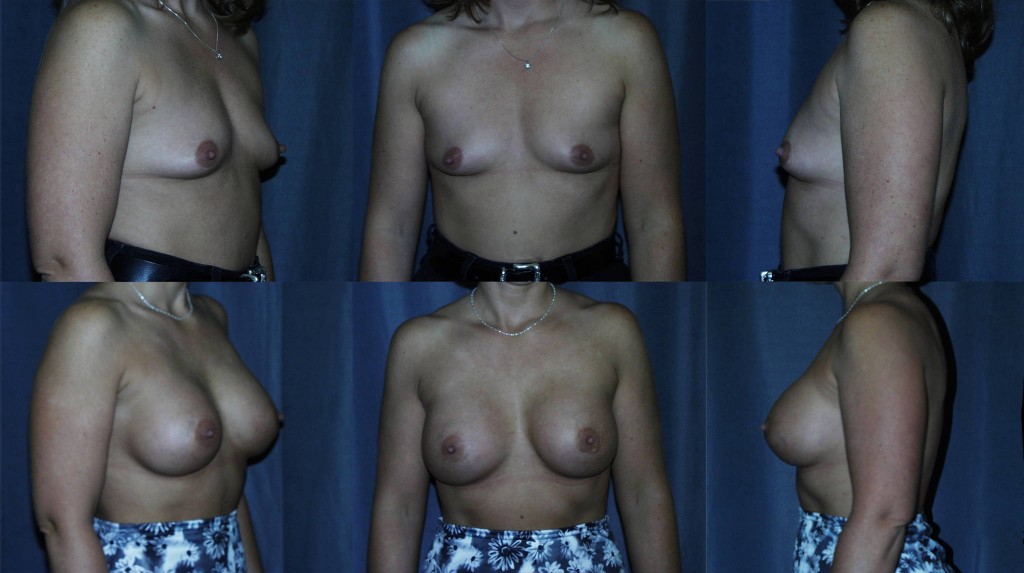
Mild tubular breast deformity with constricted base was corrected with sub-pectoral breast augmentation (behind the muscle) and internal release (no lift needed)
Tubular Breast Abnormality is a Congenital Breast Deformity
While present at birth, the full extent of the tubular breast deformity is often not appreciated until puberty. This is when the breasts normally develop, and the full extend of abnormalities are revealed. While women with tubular breasts have smaller than average sized breasts, not all small breasts are tubular breasts. While the extent to which the deformities manifest can vary widely, several specific abnormalities are present.
Signs and Presentation of Tubular Breast Abnormality
Besides smaller size, the main components of the tubular breast are a constricted base and a tubular shape to the breast. This can be exacerbated by herniation of the breast tissue into the areola, causing “puffy nipples”. Technically, the nipple is not affected, but the areola, the colored skin around the nipple, may project out from the breast mound. The overall effect is an elongated or tubular shape to the breast. The true tubular shape is most noticeable in more severe cases.
The colloquial name for tuberous breasts is the Snoopy Nose or Snoopy’s Nose deformity. Snoopy is Charlie Brown’s white beagle of Peanuts fame. Picture the front of Snoopy’s muzzle. If you are not familiar with Snoopy click the link above. His white face represents the breast mound, his black nose sits like a ball on the end, and represents the herniated breast tissue filling the areola.
Treatment of the Tuberous Breasts
As mentioned above, tubular breasts tend to not fully develop. Often patients with tubular breasts desire breast augmentation to increase the size of their breasts. For mild tubular breast deformity, a breast implant may be sufficient treatment. When the breasts are more tubular, additional maneuvers are necessary to provide an enhanced result.
If the areola is overly full, a periareolar lift can reduce the puffy nipples, and prevent the breast tissue from herniating. Unlike for men, the breast tissue is not usually removed, just pushed back into its normal anatomical position. The constricted base seen with tuberous breasts also tends to shorten the distance between the areola and the base of the breast. The lift has the additional benefit of moving the areola higher on the breast, helping to center the nipple on the breast mound.

Moderate tubular breast deformity with constricted base, elongated breast and mild areolar breast tissue herniation, best seen in right breast (your left). Both size and shape were corrected with breast augmentation and peri-areolar lifts.
Traditionally, tubular breast were treated with breast implants placed in front of the muscle. With a periareolar lift, it usually possible to place the implant behind the muscle. This gives a more natural appearing breast mound, and makes it easier to perform mammography in the future. While silicone and saline breast implants can both give good looking results, for smaller breast, a silicone gel implant may give a better feeling result. It is important to discuss the pro’s and con’s of each option with your Board Certified Plastic Surgeon.
Tubular Breast Deformity in Men
In men, tubular breast deformity presents as an overly full areola or “puffy nipples”. Since men like flat chests, tuberous breasts are easily treated in with resection of the excess tissue. The procedure is similar to that used for Gynecomastia. A small “smiley-face” incision is made from 4 to 8 o’clock around the lower edge of the areola, and the excess glandular tissue is removed. The procedure provides a smoother contour, and a quick recovery.
Information on Tubular Breasts
More information on tubular breasts is available on the breast abnormalities page of my specialty breast site under Congenital Abnormalities – Tuberous or Tubular Breasts, and the Snoopy Nose Deformity. Tubular Breast Augmentation Before and After Pictures are also available in my main web site. The best information, however, is only available in person. If you would like to schedule a consultation appointment in my Walnut Creek Cosmetic Surgery office, please give me a call at (925) 943-6353, or use the contact form in the column to the left.
Posted in Areolar Reduction, Breast Asymmetry, Breast Augmentation, Breast Lift (Mastopexy), Home, Tubular Breasts | No Comments »
February 9th, 2011 Dr. Mele

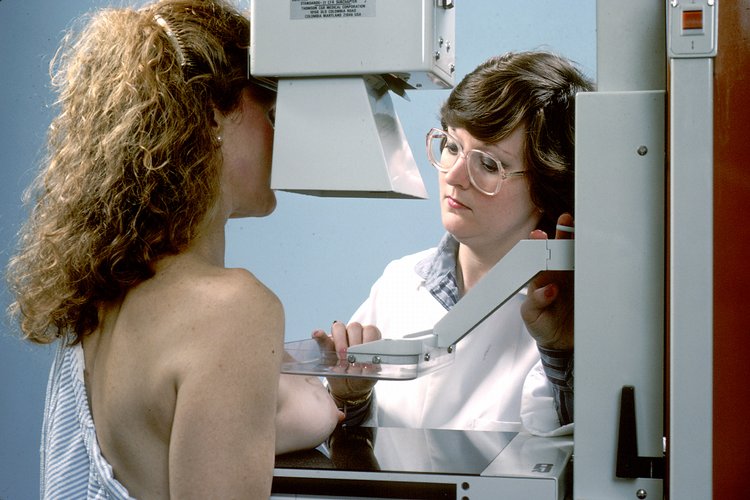
Screening mammography, an important part of breast cancer diagnosis.
Remember when the revised US Preventative Service Task Force (USPSTF) recommendations for breast cancer screening were released in November 2009? Like the recent FDA White Paper and Advisory Statement on Anaplastic Large Cell Lymphoma (ALCL) in women with breast implants, the USPSTF caused quite a stir. A the heart of the controversy was the USPSTF’s advice against the long time recommendation for routine screening mammograms for women beginning at age 40. The USPSTF recommended delaying routine screening until age 50.
Immediately, cash strapped county health organizations and large HMO organizations alike, debated cutting dollars to fund screening mammograms for women under 50. Meanwhile, a large number of US health care organizations, including the American Society of Plastic Surgeons (ASPS), the American Cancer Society (ACS), the American College of Radiology (ACR), and the American College of Obstetricians and Gynecologists (ACOG), recommended that physicians and patients continue to follow earlier guidelines. They recommended to continue screening mammography for patients aged 40 to 49, despite the government committee’s recommendation to start at age 50. The recommendation to continue screening at 40 was based on all previous studies showing a benefit to finding early breast cancer.
40 is Still the Right Age for a Screening Mammogram
Two years later, the advice to continue screening mammograms at age 40 seems to have been right on the mark. I don’t think this comes as a surprise to anyone who cares for women with breast cancer; however, a study published in the American Journal of Radiology, which analyzed the same data as the USPSTF concurs with the earlier guidelines. According to the analysis, women who receive annual mammograms starting at age 40 can significantly reduce the risk of dying from breast cancer by 71 percent. This is in stark contrast to women who follow the USPSTF recommendations, who had only a 23.2-percent reduction in mortality.
What Have We Learned?
The lesson here is not that government is bad, but that science is good. The practice of medicine is based on the odds of something helping more than it hurts. While studies may at times seem to offer conflicting advice, carefully analyzing the details can often resolve the issue. In this case, the data used in the USPSTF study was used to prove the point. So ladies, if you are 40, it is time to get your mammogram.
How Does Science Work?
The best scientific tool we have is the prospective, randomized, controlled, blinded study. But what does that mean?
- Prospective: the study is planned before the data is collected. In this way, data known to be conflicting can be accounted for, and will be less likely to distort the results. The opposite of a prospective study is a retrospective study, where data from the past, often not collected in the best way possible, is used to evaluate a treatment plan.
- Randomized: patients are randomly selected to enter the treatment groups. This is very important. This allows for equity in the treated and untreated groups. For example, patients with a family history of breast cancer tend to have a higher incidence of breast cancer. If all patients with a family history of breast cancer elected to have early mammograms, as one would expect them to, the incidence of breast cancer would be higher in the group that received early mammograms. Without additional information, it would be assumed that mammograms caused more breast cancer. This would not be true, but the data would support it, because of the way the study was designed.
If patients are randomly assigned to the early and late mammogram groups, patients with a family history would be randomly (evenly) distributed between the two groups. The net effect would be the same expected incidence of breast cancer in both groups. In a randomized study, if the group with early mammograms had more breast cancer, it would indicate that the mammograms may be causing the problem. This is not what randomized studies show. We know that mammograms require radiation, and radiation can cause cancer; however, for all studies done, mammograms find and cure more breast cancer than they cause for women over 40.
- Controlled: A control group is a group that is compared to treatment under study. If you have a new treatment, and you want to prove that is provides a benefit, you need to compare a group of patients receiving the new treatment to a group receiving the current treatment. The current treatment group serves as the control group. Comparing a new treatment to no treatment, may show that the new treatment is better than nothing, but it will not prove that is better than the currently accepted treatment without the head-to-head comparison.
- Blinded: Blinded studies are designed so that the patients do not know which treatment they are receiving. Sometimes the doctors and health professional conducting the study are kept in the dark too. This is to prevent investigator bias, and to help randomize the placebo effect.
The Ideal Study for Screening Mammograms at Age 40

The mammogram on left is of normal glandular breast tissue. The white circle in the mammogram on the right is breast cancer.
So, the ideal test to prove the benefit of mammograms to screen for breast cancer between ages 40 to 49 would need the following under each of the categories described above:
- Prospective: Before the study is started, protocol is established. This would include who would be studied (women age 40) and what conditions would be excluded (men, women who already have breast cancer, women with other severe health problems). The number of women needed to prove statistical significance. Reasons for dropping out, and how to handle the data collected for those dropping out. It might be good to estimate the number expected to drop out, so that the remaining groups could still show statistical significance.
- Randomized: How women are selected to be in each group. Toss of a coin, even or odd days of birth, anything unrelated to the mammograms or breast cancer, so that the two groups will be as equal as possible in all the variables that are not being controlled.
- Controlled: A definition of the control group is established. In this case, the control group needs to be matched for age, family history of breast cancer, smoking, weight and all other variables known to contribute to breast cancer. This way the study group receiving the mammograms, and the control group not receiving the mammograms, will be as equal as humanly possible.
- Blinded: While not likely in this type of study, the best control group would do everything the study group does except get mammograms. A clever sham for the control group, would be to use mammogram machine, have it make a noise like a mammogram was done, but not use any radiation. No mammogram would be taken, but it would not be possible for the patient, and in some cases, even the mammogram technologist to know if a real mammogram was done. This way, if there was some other factor in the mammogram room that caused breast cancer, like the paint on the wall, that increased the risk of breast cancer, the exposure would be the same. Blinding can also prevent investigator bias. For example, if an investigator was truly convinced that there was a benefit to treatment, they would be less likely to allow someone with a family history of breast cancer to go into the control group and not receive treatment.
So the above study would have to run ten years to provide mammograms for the women from age 40 to 49, and to provide no mammograms for the control group. Then data will need to continue to be collected throughout every participants life to see if there was a benefit. Were tumors found sooner? Smaller? Once the diagnosis was made was the treatment for breast cancer easier? More effective? How many had recurrences? Were recurrences local, or were the recurrences to other organs like the lungs, liver, brain or bone? Did patients live longer in the screened group? The main question is, did fewer women in the screened group die of breast cancer?
Unfortunately, Compromise is Necessary
It might take 50 or 60 years to get the final results, and it would be very expensive to run this test. As a result, this type of testing, even though ideal, is never done. Often, new treatment protocols are unblinded early for ethical reasons. A separate group of investigators may be asked to review the unblinded results. This prevents bad treatments from doing more harm, and prevents good treatments from being withheld from the control group.
It is very important to keep the above principles in mind when reviewing data. Unblinded results can be dangerous if the investigator has a bias. Recent developments in the vaccine and autism controversy come to mind. It is important to remember that risk is always relative. Risks that occur often, but cause small problems may be acceptable. A cream that causes temporary burning, but clears a rash is acceptable. Even terrible consequences may be acceptable if they are very rare. An antibiotic that clears a particularly difficult and dangerous infection 99% of the time, but can lead to liver failure and death in 1 in a million treated with it, would be acceptable if they had a better chance of dying without the antibiotic.
Medicine and the Evening News
The evening news is not the best place to get medical information. While many reports are fair, most are sensationalized. Increased drama equals increased viewership, and that leads to more advertising dollars. The motivation to inform is in all reporters and producers, but if the story is not interesting, it will never air.
So in 2011, doctors are still recommending screening mammograms, beginning at age 40. For women with a family history of breast cancer developing at a young age, earlier screening may be recommended. The study by the American College of Radiology (ACR), is much more thoughtful, and certainly more objective, than the US Preventative Service Task Force (USPSTF) recommendations. But you won’t see the same prime time news coverage tonight for the ACR paper that we did in 2009 when the USPSTF made their announcement. The results are not as … interesting.
Posted in Home, Patient Safety | No Comments »