September 29th, 2010 Dr. Mele
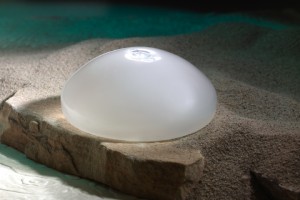
Saline Filled High Profile Breast Implant
The rule of thumb is that breast implants should be changed every ten years, but is this really true? Should breast implants be replaced at their tenth anniversary? If your breast implants are ten years old, is it time to change them? The question comes up every day in my Walnut Creek breast augmentation practice, so here are the current recommendations on the San Francisco plastic surgery blog.
Why are Breast Implants Removed?
According to the FDA, breast implants are not considered lifetime devices. In order of occurrence, the most common reasons for breast implant removal are:
1) the patient’s desire to change implant size or style, 2) deflation and 3) capsular contracture. These three reasons account for about 90% of all the breast implants that are removed. Sheyla Hershey had her implants removed due to infection, and possibly exposure. This is not a common reason for breast implant removal, and she is not the ordinary breast augmentation patient. Excess breast implant size is associated with a higher reoperation rate. Other less common reasons for implant removal and replacement include: implant malposition, wrinkling, palpability, breast pain and iatrogenic injury (inadvertently broken by a doctor). Not on the list: breast implants are ten years old.
The Older the Breast Implant the More Likely it is to Fail
If you are happy with your size, there is no indication of leakage, your breast remain soft and are not painful, the fact that your breast implants are ten years old is not a reason to have your implants removed or exchanged. The older the implant, the more likely it is to wear out, but most breast implants last longer than ten years.
For saline implants, leaks are pretty easy to determine. If saline filled breast implants leak, they flatten, and it is obvious that there is a leak. For silicone gel filled breast implants, the shell of the implant can be damaged without any outward sign of leakage. This is termed a silent rupture. If you have silicone gel filled breast implants, the FDA recommends obtaining an MRI of your breasts at three years, and then every two years after surgery to check for a silent leak. If a leak is discovered, the implant should be removed, or replaced, to prevent gel migration and additional scar formation.
Breast Implant Warranties
The two US based breast implant manufacturers offer warranties on their breast implants. Both offer similar warranties, although the details vary by manufacturer and implant (saline vs. gel).
At the time of this post, both companies will replace a defective implant for free. Both companies will allow you to change style with the cost based on the differential between the current implant and the new style selected. If the new style costs more, you are charged only the difference in price in most cases. Financial support is also available during the first ten years to reduce the cost of the replacement surgery.
Details can be found on your breast implant manufacturer’s web site. For the United States in 2010, it will be either Allergan or Mentor. Click here for the Allergan (Natrelle) Breast Implant Warranty or here for the Mentor Breast Implant Warranty. If you do not know the manufacturer, please contact your plastic surgeon. They should keep a record of your implant manufacturer, catalogue number and size.
So What Are the Odds of Needing My Implants Changed 10 Years After Surgery?
The best numbers currently available come from the post-approval studies available online from the manufactures. Reoperation rates for any reason, varied from 25% to 50% at ten years, and about half involved removal or replacement of the breast implants. This means as many as 25% of women undergoing breast augmentation had their implants removed or replaced at the ten year mark. It also means that 75% of women followed did not need their implants changed at 10 years. Unfortunately, almost half the patients originally enrolled in the studies were unavailable at ten years. It is unclear how to extrapolate to include those that are missing from the data. Are they having surgery at the same rate, or have they dropped out because they are fine and don’t have any problems?
If I Have a Problem With My Breast Implants, Can They be Replaced Immediately?
While some women do elect to have their breast implants removed and not replaced, the majority have them exchanged, usually for larger breast implants. The numbers vary from study to study. Both Allergan and Mentor have ongoing ten year saline and silicone breast implant follow-up studies to try to obtain the highest quality data with the newest implants available. Hopefully, compliance will be enhanced since study questionnaires can now be completed by patients on-line. If you are participating in one of the breast implant follow-up studies, I encourage you to complete your surveys and make your follow-up appointments to enhance the study’s accuracy.
Breast Implant Revision Surgery
The bottom line is that most breast implants do not need to be replaced at ten years. If you have breast implant surgery, it is reasonable to expect to need another surgery at some point in the future. The chances of having breast augmentation revision surgery within ten years of your initial breast augmentation is somewhere between 25% and 50%, and only about half of these breast augmentation revision surgeries involve replacing the breast implants. Reoperation rates are higher for breast reconstruction after a mastectomy. If your breast implant has deflated, be certain to check your warranty. Most deflated implants will be replaced at no cost, and you many be eligible for assistance to defray the cost of surgery if the replacement occurs within ten years of your primary breast augmentation.
Posted in Breast Augmentation, Breast Implant Revision Surgery, Home | 1 Comment »
September 21st, 2010 Dr. Mele

Dr. Joseph Mele appears on the Bay Area's News Channel, KRON4's Body Beautiful
Thank You
Thank you Bay Area plastic surgery patients, for a great show yesterday. We discussed breast augmentation, breast lifts, breast reduction and combinations of all the above. For anyone who missed the show, and is interested in seeing the broadcast, I will be posting it here in the San Francisco Plastic Surgery Blog very soon.
KRON4′s Body Beautiful
Body Beautiful is a live show that allows you to call in with your questions. Unfortunately, it was not possible to answer everyone’s questions in half an hour. However, you can always send me your question by using the contact form found in the lower left corner of this page.
Breast Lift Before and After Pictures
Several pictures where used to illustrate the results possible with Breast Augmentation (Mammaplasty) , Breast Lift (Mastopexy) and Breast Augmentation Lift (Augmentation Mastopexy). While censored for television, the breast augmentation before and after pictures demonstrated the natural fullness that can be achieved with a breast implant. The breast lift before and after pictures showed how the breast and nipple are lifted with the mastopexy. The two procedures can also be combined and the breast augmentation mastopexy, or breast augmentation lift. The breast augmentation mastopexy before and after pictures show what the procedures can achieve when performed together.
Breast Lifts not only lift the breast, but also reposition the nipple. Since the nipple and areola on the before and after pictures have to be censored for the breast lift video segment shown on network television, some of the details are lost. I will show you here, what I cannot broadcast on television.
 Before Breast Lift with Breast Reduction: Notice the nipple position. When the nipple is located at the bottom of the breast, this is classified as Grade III ptosis. The breast mound is below the inframammary fold (IMF), and overlies the upper abdomen |
 After Breast Lift with Breast Reduction: The nipple and breast are now perky. The breast has been moved up onto the chest, and the nipple has been moved up on the breast. Can you find the freckle just above the nipple over in the before picture? |
What Can a Breast Lift Do?
The above, breast lift with breast reduction before and after pictures, show what a lift can achieve. The breast has been lifted off the upper abdomen and placed back onto the chest. Since breast reduction was also performed, some breast volume was reduced. Reducing breast volume is not required to achieve a breast lift. A breast lift can be done with breast augmentation to add volume, with breast reduction to reduce volume or by itself when the breast volume is fine.
The pictures show that the nipple has been lifted from its dependent position at the bottom of the breast, to the point that is most anterior. The nipple was at elbow level before the lift, afterward the nipple is at the midpoint of the upper arm. Before the mastopexy the breast look old, sad and tired, afterward, the breasts appear young and perky.
Another measure of how for the nipple has moved is demonstrated by the freckle that is just above the nipple after the lift. The same freckle can be seen (more faintly) in the before picture, near the center of the chest, on the upper breast mound, about half way between the nipple and the collar bone. This shows not only how far the nipple has moved, but also how much breast tissue has been moved up under the skin. Even the cleavage has been moved up on the chest, and this is with volume reduction. Upper pole fullness can be further enhanced with the use of a breast implant.
Many Types of Breast Lifts are Available
The lift used above is an inverted-T mastopexy. This is also called the keyhole lift or anchor lift, and is the biggest lift performed. In the after picture the scar can be seen. It runs around in a circle around the nipple, from the nipple down to the base of the breast, and along the bottom of the breast in the inframammary fold (IMF). The vertical incision and the incision around the areola allow for the repositioning of the nipple higher on the breast. The periareolar (around the areola) incision also allows for reduction of the areola’s diameter if desired. The horizontal incision, in the IMF at the base of the breast, allows the breast mound to be moved upwards and reduces the skin in the lower breast to help support the breast tissue up.
Many types of breast lifts are available. My goal is to always choose the smallest lift that will give us the results we desire. In this case, this is the biggest lift available. While there is more scar length, the quality of the lift, and the control achieved, makes the result worthwhile. Not only is the breast rejuvenated in appearance, but the reduction of breast skin also firms the breasts, resulting in less pendulous breast movement and more patient comfort when physically active.
More Information on Breast Augmentation, Breast Lifts and Breast Reduction
Click on any of the following links for more information on the topic covered in this post courtesy of DrMele.com:
Breast Augmentation
Breast Lift
Breast Augmentation Lift
Breast Reduction
Areola Reduction
Posted in Areolar Reduction, Breast Lift (Mastopexy), Breast Reduction (Women), Home | No Comments »
September 18th, 2010 Dr. Mele

Dr. Joseph Mele appears on KRON4's Body Beautiful.
Write down all your questions about Breast Lift San Francisco and Breast Augmentation Bay Area. Board Certified Plastic Surgeon, and breast enhancement expert, Dr. Joseph Mele, will be answering questions regarding cosmetic breast enhancement, live, on Channel 4, this Monday.
Back by popular demand, Dr. Joseph Mele will be the guest on San Francisco KRON4′s Body Beautiful. Hosted by Vicki Liviakis, Body Beautiful shows you the latest trends and treatments in cosmetic surgery. Bay Area residents can call in, and have their questions answered live, on Monday, September 20, 2010, between 11:00 and 11:30 AM.
A special 800 number will be displayed during the program. If you have plastic surgery questions, call in and ask Dr. Mele. If you are not available Monday at 11 AM, email your question and TiVo the answer. (EDIT: This show has aired, but you can still ask me questions by using the contact form on the lower left of this page, click here, or call (925) 943-6353.)
Please join us. This week’s show will focus on the most popular breast enhancing procedures: Breast Augmentation, Breast Lifts and the combination Breast Augmentation Mastopexy. Questions can also be submitted off air, at any time, by using the contact form on this page (in the lower left corner).
Posted in About Dr. Mele, Breast Augmentation, Breast Lift (Mastopexy), Home | 1 Comment »
September 12th, 2010 Dr. Mele

Sheyla Hershey - Big Implants, Big Problems
Sheyla Hershey is a Brazilian born, Houston resident, who is most famous for the size of her breasts. She made national headlines early in 2009, when she wanted to increase her bust from 38FFF to 38KKK and ran into a Texas sized roadblock. Apparently, “Everything is bigger in Texas,” has its limits when it comes to breast implants. Unable to have larger implants placed in Texas, she returned to her native Brazil for the surgery.
Sheyla is again making headlines. Sadly, this time it is for complications of her breast augmentation. Earlier this summer she developed an infection around her implants, necessitating their temporary removal. On her blog this morning, Sheyla shares that she is doing well at home recovering from her surgery last Thursday. She also plans to have her implants replaced. This is usually done after the infection has cleared and the injury has healed — three to six months after surgery, and sometimes longer.
Breast Implant Infection
Breast implant infections are one of the complications covered on all breast augmentation informed consent forms. While rare, infections after breast augmentation can occur. Most are superficial infections that clear with oral antibiotics; however, deep infections can also occur. These are more serious and may require intravenous antibiotics and even hospitalization. When the infection is deep, around the implant, sometimes the only way to clear the infection is to remove the breast implants and leave them out for several months while the body heals.
Bigger is not always better. Larger breast implants put more strain on the body’s systems. The stretch and compression of a large breast implant decreases the circulation in the surrounding soft tissues. Less circulation means decreased oxygen delivered, fewer white blood cells, and lower levels of antibiotic delivery to the breasts. Larger implants also create a larger potential space in which the bacteria, usually staph, can hide. All these factors make it harder for the infection to clear.
Breast implant infections are much more common after breast reconstruction than after cosmetic breast augmentation. The additional insult to circulation that results from the mastectomy is just one contributing factor. Tissue expansion is often used to stretch the skin which remains on the chest. This is done to compensate for the skin removed during the mastectomy. Chemotherapy reduces the bodies ability to fight infections, though this is usually temporary. Radiation causes injury to the skin and chest wall. One effect is scarring of the blood vessels. This causes a long term decrease in circulation that gets worse with time.
Implants which are placed behind the muscle have better protection from infection. The circulation in the muscle is a major contributor. Unlike the breast gland proper, the space behind the muscle is sterile. The breast is a gland, and is open to the outside world at the nipple. This increases the likelihood of bacteria being under the skin, and closer to breast implants placed in front of the muscle. This leads to a slightly increase the risk of infection when breast implants are not behind the muscle.
What are the Chances of Breast Implant Infections?
Infections can occur any time the skin is cut. Most surgical infections appear within a few days to weeks after an operation. The risks of getting an infection after any “clean” surgery, like breast augmentation surgery, is 1%. If you have an infection anywhere in your body at the time of surgery, your risk of a breast implant infection will dramatically increase. This is one reason I sometimes have to postpone elective cosmetic surgery. It is better to be inconvenienced than to take the risk of getting a postoperative infection and losing your breast implants.
For cosmetic breast augmentation, infection is rarely the reason breast implants are removed. For all implants removed within ten years of breast augmentation surgery, infection was the reason in only 2% of cases. The most common reasons breast implants are removed are the desire to change the breast implant’s size (usually larger), deflation of the breast implant or capsular contracture.
For breast reconstruction, the chances of infection are increased 2 to 4 fold. While breast reconstruction is similar to cosmetic breast augmentation, the patients and their breasts are different. For all implants removed within ten years of breast reconstruction surgery, infection was the reason in 12% of cases. For breast reconstruction, placing the implant behind the muscle has been shown to prevent complications.
While no one likes dwelling on everything that can go wrong in life, if you are considering elective cosmetic surgery, like breast augmentation surgery, it is important to review the risks and well as the benefits. While complications like infection are rare, remember, the more the limits are pushed, the greater the risk.
Posted in Breast Implant Revision Surgery, Home | 1 Comment »
September 5th, 2010 Dr. Mele

Every now and then, a State Bill comes along that just makes sense. AB 583 is such a bill. It has no hidden agenda, it is easy for health care practitioners to comply with and it provides meaningful objective information for patients.
AB 583 (Hayashi) requires health care practitioners to disclose their name, license type (RN, MD, DO, etc), highest level of academic degree received and for physicians, their board certification. This information must be placed on the health care practitioner’s website, and is also required to be given to the patient in writing at the initial patient encounter or must be prominently displayed in their office.
As simple as this sounds, it has taken over three years of work by many members of the California Medical Association and the California Society of Plastic Surgeons to get this bill on Governor Arnold Schwarzenegger‘s desk.
AB 583 is not yet a law. There is some debate, mostly from practitioners who are not Board Certified, to withhold any type of disclosure requirement. As a Board Certified Plastic Surgeon, I fully support this disclosure. As a Walnut Creek Plastic Surgeon, I have many well educated patients. I have had to care for patients who have seen less qualified practitioners, and who have received questionable treatment and results. Often they are surprised and embarrassed to find out the “Plastic Surgeon” they had entrusted with their health, was not a Board Certified Plastic Surgeon, and in some cases, was not even a doctor.
Critics will say that even the best Board Certified Plastic Surgeons can have poor results. While this is true, when the correct approach is instituted from the start, the chances of a poor result are significantly decreased, and the chances of recovery from a poor result are significantly enhanced.
The more you know as a patient, the safer you can be. In California, anyone with a Physicians and Surgeons License can perform plastic surgery. Non-MD oral surgeons are allowed to do facial plastic surgery. AB 583 helps patients by requiring your health care provider to inform you about the type and duration of training they have received. This will not protect you from the truly unscrupulous, but it will help you to know the type of training any ethical health care practitioner has received.
I encourage you to support passage of AB 583. Letters can be sent to the Governor here:
The Honorable Arnold Schwarzenegger
Governor of California
State Capitol Building
Sacramento, CA 95814
or you may fax your letter to 916 558-3160.
Your opinion is important. Please act before September 17th (the earlier the better) to let your viewpoint be heard.
Posted in Patient Safety | No Comments »