June 28th, 2010 Dr. Mele
Facial augmentation procedures include:
- Lip Augmentation
- Cheek Augmentation
- Chin Augmentation
- Nasal Augmentation
Facial enhancement can be accomplished with a filler or an implant. Fillers (Restylane®, Perlane®, Juvederm®, Radiesse®) are by far, the most common means of providing enhanced fullness. They provide almost instant results, with minimal recovery. With fillers, results need to be maintained with periodic treatments. Implants, on the other hand, require a recovery period, but can provide long lasting enhancement.
Facial Implants
Chin implants are the most frequently used facial implants. Over 11,000 chin implants were inserted last year alone. The implant shape, size and material can be varied to help achieve the desired result. Even chin implants with clefts are available. The chin implant may be inserted through a small incision under the chin or inside the mouth.
Chin Augmentation – Before and After

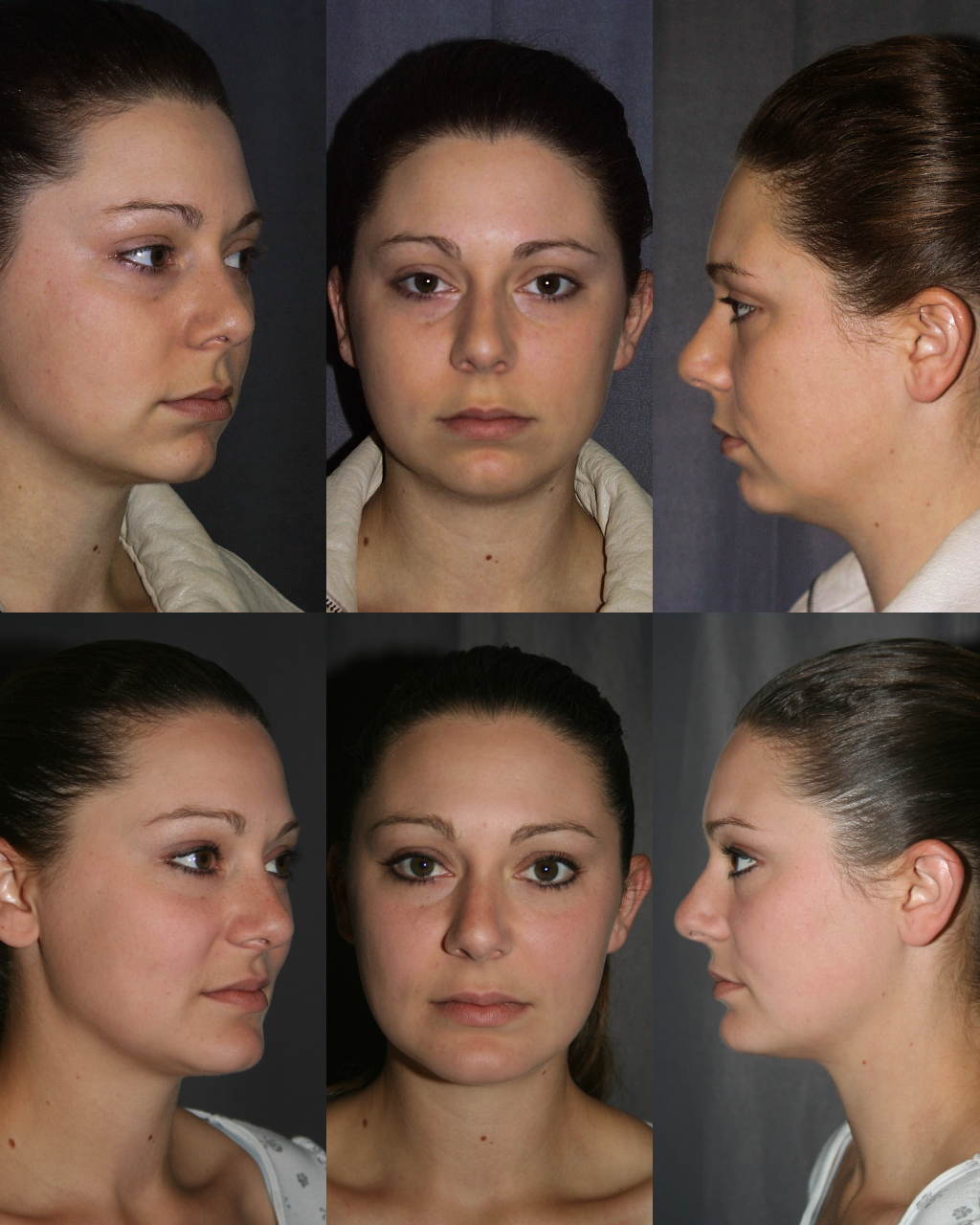
Chin Augmentation with Chin Implant. Before (Top Row) & After (Bottom Row)
The woman above presented with a desire for a stronger chin. The before pictures (top row) show that the most prominent aspect of her chin is well behind her lips. This relationship is most often seen in children. In an adult, the weak chin is not necessarily youthful, instead it gives a meek or timid look. Before surgery, the jaw line is also not well defined.
After chin augmentation (bottom row), the chin implant moves the chin profile anterior, and in line with the lip prominences. A strong jaw, with a well defined jawline is the result. More youthful appearance, and a more beautiful balance between the middle and lower face is the result.
How Much Chin is Enough?
On the profile view, the ideal chin extends as far forward as the lips. When the chin is shorter than the lips, this is called microgenia; literally “small chin” in latin. Computer imaging can help decide how much chin augmentation is enough. A digital photo of your profile can be modified to provide just the right amount of chin augmentation. This is used to guide implant selection, and helps provide you with a predictable result. To find out is if chin augmentation is right for you, schedule a consultation appointment today. Give me a call at (925) 943-6353.
Posted in Chin Implants/Augmentation, Home | 4 Comments »
June 24th, 2010 Dr. Mele
Rhinoplasty, nasal surgery, or if you prefer, the nose job, is one of the top five cosmetic plastic surgery procedures. In 2009, rhinoplasty was the fourth most popular cosmetic plastic surgery procedure, and the second most popular for men. Overall, last year, 138,258 rhinoplasty procedures were performed.

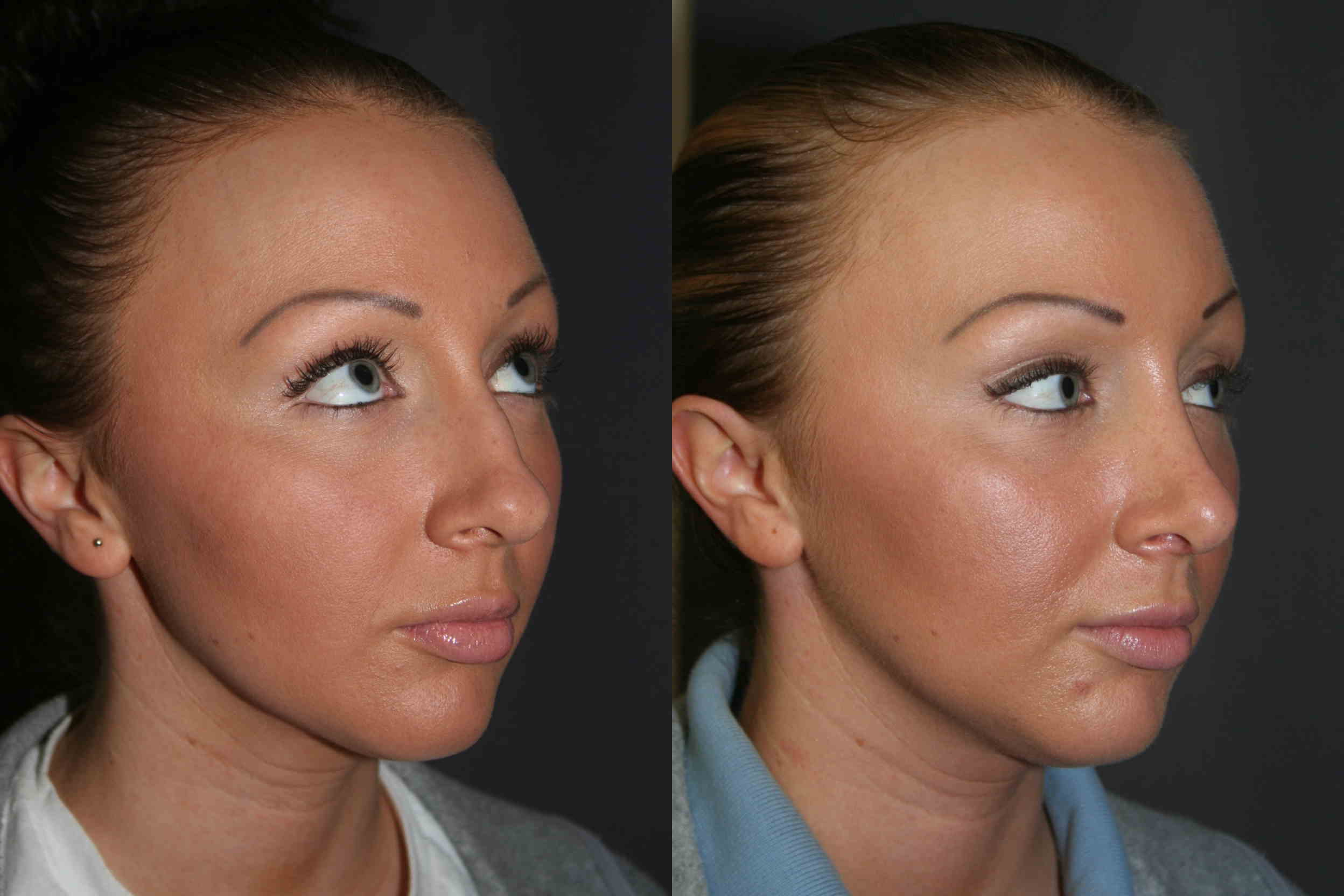
Rhinoplasty was performed to remove the dorsal hump and refine a boxy tip.
With the advent of computer imaging, the ability to communicate what can (and can’t) be done to the nose has been greatly enhanced. Polaroid film and hand sketches have been replaced with digital images that can be modified directly on the computer screen. While limitations remain, computer imaging transforms the consultation, and the flow of information, in both directions.
Computer imaging enhances my ability to both glean what my patients are seeking, and relay what I am hearing back visually, as a picture. While computer simulation cannot be a guarantee of results, improved explanations, and resulting expectations, make the process and outcome more predictable. Since it is your picture, it is easier to see what changes will look like on your face, rather than looking at someone else’s before and after pictures.
One of the most common nasal deformities (for lack of a better word) that I fix is the dorsal hump. A dorsal hump is the bump on the nose, best seen in profile. It is often a part of ones ethnicity, and how much modification is desired becomes critical. Computer imaging allows us to try out several approaches:
- 1) Reducing the bump
- 2) Removing the bump
- 3) Overresecting the bump
While these words may give you an idea of what the approaches are, modified pictures showing your nose with a smaller bump, a straight nasal profile or a slight scoop, makes the planned outcome much more tangible.
Computer imaging works well for tip modification also. The width, height and projection of the nasal tip can be modified on the screen. By knowing your options, you can be confident that the best decisions are being made.
For the patient show above, both areas (the nasal dorsum and tip) were modified. She had a dorsal hump and a wide boxy tip that she wanted refined. Both changes were demonstrated, before surgery, during her initial consultation appointment. This allowed me to determine the range of modification desired in both areas. The changes made served as my guide during surgery.
Since the surgery has to be completed with a scalpel (and not photoshop) there are some limitations to what can be done physically, but computer imaging for nasal surgery is a great tool that really helps me make my patients happy. It adds predictability to a surgery where small changes go a long way. If you are considering nasal surgery, and want to schedule a consultation appointment with computer imaging, give me a call at (925) 943-6353.
Posted in Home, Rhinoplasty (Nasal Surgery) | No Comments »
June 22nd, 2010 Dr. Mele

Dr. Mele is a Active Member of the International Confederation for Plastic Reconstructiive and Aesthetic Surgery (IPRAS)
The International Confederation for Plastic, Reconstructive and Aesthetic Surgery (ICPRAS) is the largest plastic surgery society on Earth. Since 1955, meetings have been held around the world to foster the advancement of Plastic Surgery. Previous sites include:
- Stockholm (1955)
- London (1959)
- Washington (1963)
- Rome (1967)
- Melbourne (1971)
- Paris (1975)
- Rio de Janiero (1979)
- Montreal (1983)
- New Delhi (1987)
- Madrid (1992)
- Yokohama (1995)
- San Francisco (1999)
- Sydney (2003)
- Berlin (2007)
- Vancouver (2011)
I was fortunate to have attended the last Quadrennial congress held in San Francisco (1999). While it was 11 years ago, almost 90 National Societies were represented, more than twice the founding 39 National Societies.
The IPRAS has four Chapters, each with its own International Society.
- Reconstructive Microsurgery
- Hand Surgery
- Aesthetic Plastic Surgery
- Craniofacial Surgery
These cover the main areas of subspecialization in Plastic Surgery. Aesthetic Plastic Surgery is represented by the International Society for Aesthetic Plastic Surgery (ISAPS) which will be having its meeting here, in San Francisco, this August.
Practicing Plastic Surgery in the San Francisco Bay Area has advantages. San Francisco is a nice place to visit, so we attract many state, national and international plastic surgery meetings. This certainly makes it convenient to attend the best Plastic Surgery Conferences in the World.
As plastic surgery advances and expands, international societies like the IPRAS and the ISAPS will continue to provide a wide range of experience and perspective.
Posted in About Dr. Mele, Home, Patient Safety, Plastic Surgery Societies | 1 Comment »
June 20th, 2010 Dr. Mele

Dr. Mele is an Active Member of the California Society of Plastic Surgeons (CSPS).
The California Society of Plastic Surgeons (CSPS) is celebrating its 60th Anniversary this year. The CSPS is the largest State Plastic Surgery Society in the US with 450 members. It is the third largest American plastic surgery society after the two National Societies: The American Society of Plastic Surgeons (ASPS) and The American Society for Aesthetic Plastic Surgery (ASAPS). Every member is Board Certified by the American Board of Plastic Surgery.
The mission of the California Society of Plastic Surgeons is to:
- Advance the profession of plastic surgery through continuing educational activities
- Advise the public through direct patient education
- Act as patient advocates, protecting the welfare of the people of California with respect to cosmetic and reconstructive plastic surgery
As part of its mission, the California Society of Plastic Surgeons monitors legislation that effects the practice of medicine, especially as pertains to plastic surgery. To extend its expertise, the CSPS maintains delegates to the California Medical Association (CMA). In 2000, I was the CSPS delegate to the Young Physicians Section, at the California Medical Association’s Annual Meeting held in Reno, Nevada.
The society includes plastic surgeons specializing in both cosmetic plastic surgery and reconstructive plastic surgery. Most members of our state society are also members of the ASPS. Members who specialize in aesthetic (cosmetic) plastic surgery, are often also members of the ASAPS. I am proud to belong to all three groups, each of which promotes the practice of plastic surgery with the highest ethical standards and the foremost professional training and qualifications.
Posted in About Dr. Mele, Home, Patient Safety, Plastic Surgery Societies | No Comments »
June 18th, 2010 Dr. Mele

Dr. Mele is a member of the American Society of Bariatric Plastic Surgeons
The American Society of Bariatric Plastic Surgeons (ASBPS), was established by Board Certified Plastic Surgeons with a special interest the facial and body contouring procedures used after massive weight loss. Its mission is the care of patients who have lost significant amounts or weight through diet, exercise, bariatric surgery or any combination of the three. The ASBPS facilitates the exchange of ideas and techniques of post-bariatric plastic surgery among experienced board certified plastic surgeons and provides information for patients seeking relief from the burden of the excess skin that can remain after weight loss.
What are the Most Common Post-Bariatric Plastic Surgery Procedures?
The post bariatric plastic surgery procedures performed are similar to the traditional techniques. Some require modifications to allow more skin to be removed. The more common procedures are:
Posted in About Dr. Mele, Home, Patient Safety, Plastic Surgery Societies | No Comments »
June 16th, 2010 Dr. Mele

Dr. Mele is an active member of The American Society of Plastic Surgeons
Who is the American Society of Plastic Surgeons?
Perhaps you are familiar with the cyan circle above. It is the symbol of The American Society of Plastic Surgeons (ASPS). The ASPS was established in 1931, by two European immigrants: Jacques Maliniac (Warsaw, Poland) and Gustave Aufricht (Budapest, Hungary), and has become the largest plastic surgery specialty organization in the world. With over 6000 members, the ASPS has become a world wide partner in plastic surgery education, innovation and patient care.
The American Society of Plastic Surgeons Membership
Membership in the American Society of Plastic Surgeons means your Plastic Surgeon is Board Certified and uniquely qualified to take care of a wide range of Plastic and Reconstructive Surgery needs. To demonstrate our eligibility for membership, plastic surgeons have to:
- Be Board Certified (In the US by the American Board of Plastic Surgery)
- Be sponsored by current active or life members of the ASPS
- Meet specific Continuing Medical Education requirements in Plastic Surgery and Patient Safety
- Abide by the ASPS Bylaws and Code of Ethics
- Operate only in Accredited Hospitals and Outpatient Surgical Facilities (Surgery Centers)
- Maintain hospital admitting privileges in Plastic Surgery
Why not the American Society of Cosmetic Surgeons?
Plastic surgery encompasses more than cosmetic surgery. It includes a wide array of reconstructive procedures too. Did you know the first kidney transplant was performed by a plastic surgeon? ASPS member, Joseph Murray, MD, of Boston, received the 1990 Noble Prize in Medicine for his work with organ transplantation.
The society changed its name to The American Society of Plastic Surgeons from The American Society of Plastic and Reconstructive Surgeons (ASPRS) a few years back. The move was made to both simplify and unify the divergent aspects of the discipline.
The word “plastic” in plastic surgery comes from the Greek root plastikos. The word plastikos means to mold or give form, which is what we do to the body. Whether this is done for cosmetic or reconstructive reasons, it is still plastic surgery.
Why do we do Plastic Surgery?
Dr. Gaspare Tagliacozzi (1597) said it best. “We restore, repair and make whole, those parts which nature has given, but misfortune has taken away, not so much that they might delight the eyes of the beholder but that they may buoy up the spirit and help the mind of the afflicted.” In other words, we do it for you.
Posted in About Dr. Mele, Home, Plastic Surgery Societies | No Comments »
June 12th, 2010 Dr. Mele
If you are looking for facial rejuvenation, but are not ready for a facelift, a mini-facelift might be the right procedure for you. Mild to moderate lines can be improved with dermal fillers (Restylane®, Juvederm®, Perlane® and Radiesse®), but loose skin needs something more. If fillers aren’t filling like they used to, it might be time to consider a little nip and tuck. For the right patient, a mini-facelift can provide big results in a mini package.
The Full Facelift
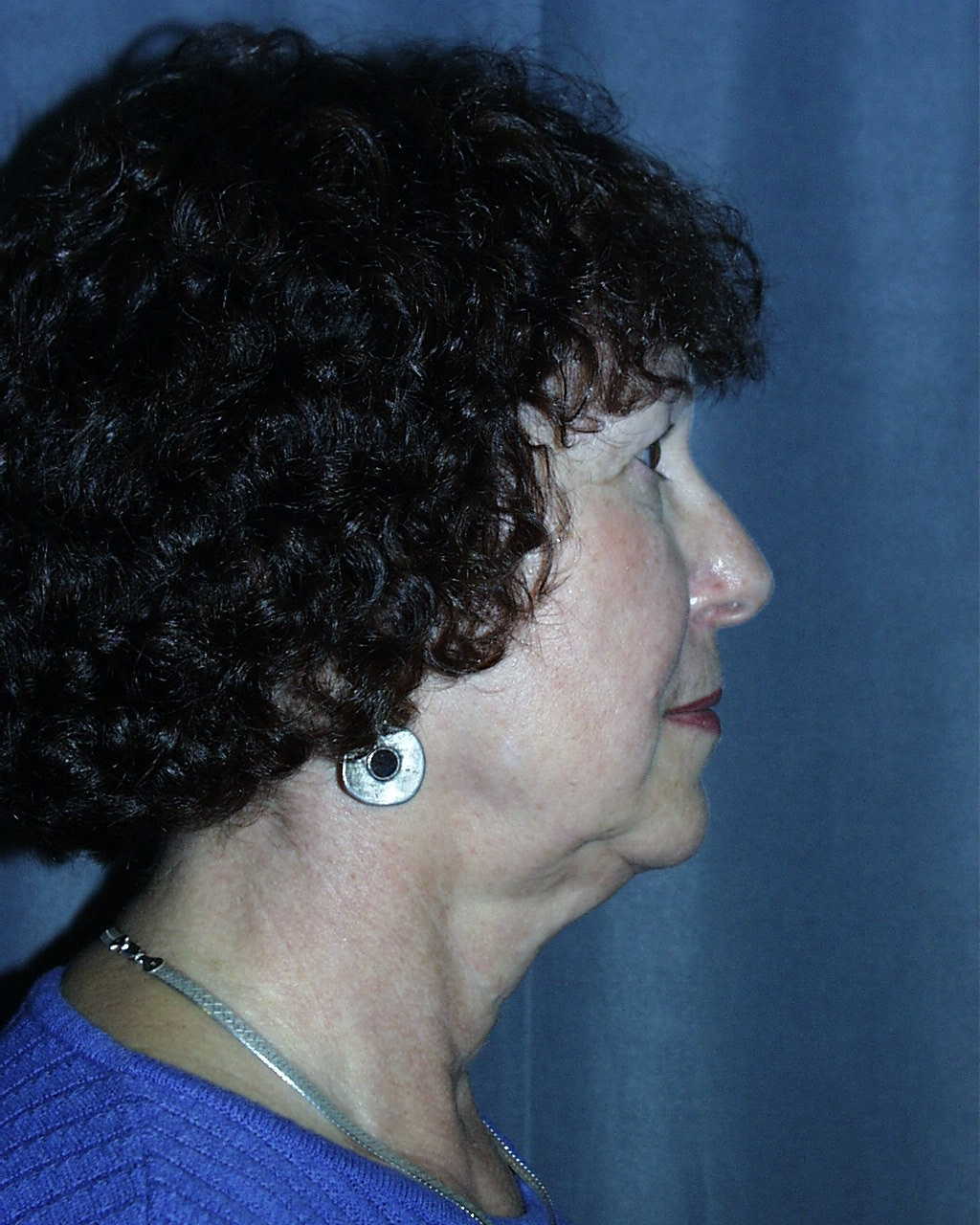
 Before a Full Facelift - The skin of the lower face and neck is loose, and the anatomic definition between the face and neck is lost. |
 After a Full Facelift - The skin of the lower face and neck is firm, and the anatomic definition between the face and neck is restored. |
The traditional facelift is the gold standard of facial rejuvenation. It can correct more aspects of the aging face, and can do so to a greater extent, than the mini-facelift. Severe skin laxity, platysmal banding and sagging of the cheek fat pads can be quickly and accurately improved with a facelift. While a facelift does more, and lasts longer, it requires more downtime for recovery. A facelift also takes longer, requires more anesthesia and accordingly costs more. The patient shown above had a full facelift with upper and lower eyelid surgery.
The Mini Facelift
 Mini Facelift Before - Loose skin on the lower face and neck obscures the jawline. |
 Mini Facelift After - The jawline is clean and the jowls are removed. |
If your primary problem is mild to moderate skin laxity, and the structures underneath the skin are in good shape, a mini-facelift may be able to get you the younger, rested look you want. A mini-facelift is a shorter procedure, which can be done under local anesthesia, resulting in a quicker recovery and a lower cost. The mini-facelift is great for early intervention, and while it cannot replace a full facelift in terms of the amount it can do, or how long it will last, it can significantly delay the need for a full facelift. A mini-facelift can also be used to rejuvenate a previous facelift, with relatively less effort. The patient shown above had a mini-facelift with lower eyelid surgery.
Caveat Emptor
Many brand name mini-facelifts have recently emerged: The Lifestyle Lift™, QuickLift™ and NewLift™. They try to keep the techniques secret (even from their patients), but they are essentially mini-facelifts. The companies that market the lift will train a doctor to perform the procedure for a price. They have tried to carve out a niche in the Cosmetic Plastic Surgery Market with a gimmicky name and massive advertising, but buyer beware. When you are purchasing a mini-facelift you are not just purchasing a one-size-fits-all procedure; you are purchasing the skills of the individual physician performing your surgery. There is nothing magical about a Lifestyle Lift™, QuickLift™ or NewLift™. It is a mini-facelift, and at a minimum, you will want to check for yourself the ABMS Board that has certified your potential surgeon (see links at the bottom of this article).
You Deserve a Board Certified Plastic Surgeon
When you check, you will find, most Board Certified Plastic Surgeons do not perform brand name lifts. Most Board Certified Plastic Surgeons do, however, offer similar procedures at a competitive rate. The American Society of Plastic Surgeons (ASPS) and the American Society for Aesthetic Plastic Surgery (ASAPS), find it unethical for a plastic surgeon to patent a procedure. Instead, new techniques are freely shared and discussed at our professional society meetings. This is how we reinvest in our profession, and allow the practice of plastic surgery to grow.
Board Certified Plastic Surgeons learn how to do facelifts and mini-facelifts during years of training, and continue to refine their technique with practice, continuing medical education and instructional courses. I find that one facelift technique is not enough, and I would rather tailor your facelift to the specific needs of your face.
Check if your doctor is Board Certified by the American Board of Plastic Surgery.
Check if your doctor is Board Certified by another American Board of Medical Specialties board. You will need to register to use this site, but it is safe, free and fast.
Check if your doctor has an unrestricted California Medical License. Read the disclaimer and click “Continue to Search” at the bottom. If you are not in California, Google your local medical board for a link.
Posted in Facelift (Rhytidectomy), Home, Mini Facelift (Mini Rhytidectomy) | No Comments »
June 10th, 2010 Dr. Mele

Dr. Mele is an Active Member of The American Society for Aesthetic Plastic Surgery
I am proud to be an active member of the American Society for Aesthetic Plastic Surgery (ASAPS). The ASAPS is the premier American professional medical society for cosmetic surgery. Its members are exclusively Board Certified Plastic Surgeons, who are actively practicing, and refining, the art of aesthetic plastic surgery.
About the American Society for Aesthetic Plastic Surgery
The ASAPS was founded in 1967, to serve both professional and public interests. The organization currently has 2600 members from around the world. The ASAPS membership is a subset of Board Certified Plastic Surgeons who specialize in Cosmetic Plastic Surgery. Only about one-forth of all American Board Certified Plastic Surgeons have been accepted for membership in the ASAPS.
The Goals of the American Society for Aesthetic Plastic Surgery
The goals of the organization are:
- Patient Advocacy –
- Promoting the utmost in patient safety
- Promoting the highest standards of ethical conduct
- Advocating for your right to be fully informed
- Public Education –
- Public outreach regarding procedures
- Maintaining an up-to-date web site (ASAPS web site)
- Media outreach via the ASAPS Communications Office
- Professional Educational –
- Sponsoring scientific meetings (2010 DC Meeting)
- Publishing the Aesthetic Surgery Journal
- Offering Continuing Medical Education
- Research –
- Collecting data on Plastic Surgery
- Publishing annual statistics on Plastic Surgery utilization (2009 statistics)
- Supporting research in Cosmetic Plastic Surgery
American Society for Aesthetic Plastic Surgery Membership
Physicians who have been trained in specialties other than Plastic Surgery, are not eligible for membership. To be a member you must:
- Be a Board Certified Plastic Surgeon
- Be in at least the third year of active practice after achieving Board Certification
- Participate in ongoing Continuing Medical Education to stay current
- Document the performance of a significant number and variety of cosmetic surgical cases to demonstrate experience and dedication to cosmetic plastic surgery
- Be sponsored by two active ASAPS members to help ensure applicants have a high professional reputation
- Adhere to the ASAPS Code of Ethics for professional conduct
Membership in the ASAPS is just one more way that I demonstrate my commitment to my patients, and make evident my dedication to the safe and ethical practice of cutting-edge Cosmetic Plastic Surgery.
Posted in About Dr. Mele, Home, Patient Safety, Plastic Surgery Societies | No Comments »
June 8th, 2010 Dr. Mele

Dr. Mele is Board Certified by the American Board of Plastic Surgery
The importance of Board Certification cannot be stressed enough, but what does it really mean, and how do you know if your doctor is certified by a legitimate board?
What is a Legitimate Board?
The oranization that oversees Board Certification in the United States is the American Board of Medical Specialties (ABMS). Anyone can create a Board, but the ABMS is recognized as the “gold standard” in physician certification. The ABMS oversees 24 approved medical specialty boards, and helps to develop uniform standards by which physicians are evaluated and certified. These 24 core boards are sometimes referred to as the “real” medical boards.
So You Want to be a Board Certified Plastic Surgeon?
If you want to be a Board Certified Plastic Surgeon, here is all you need to do:
- Obtain a Bachelor’s Degree
- Complete Medical School (4 years)
- Obtain Physicians and Surgeons License (more exams)
- General Surgery Residency (3 to 5 years)
- 3 years is the minimum and must be completed at the same institution.
- 5 years you can apply for General Surgery Board Certification (American Board of Surgery)
- Written Qualifying Exam (after completing an approved General Surgery Residency)
- Oral Certifying Exam (the year after passing the Qualifying Exam)
- Plastic Surgery Fellowship (2 to 3 years)
- Board Certification from the American Board of Plastic Surgery
- Written Qualifying Exam (after completing an approved Plastic Surgery Fellowship)
- Oral Certifying Exam (the year after passing the Qualifying Exam)
How I Became a Board Certified Plastic Surgeon
Here is how I did it:
- Bachelor of Science Electrical and Computer Engineering from the University of California, Davis – Davis, CA
- Completed Medical School at the University of California, Davis, School of Medicine – Sacramento, CA
- Obtained an unrestricted Physicians and Surgeons License from the Medical Board of California
- General Surgery Residency (5 years)
- General Surgery Internship – University of California, Davis Medical Center – Sacramento, CA
- General Surgery Residency (with Chief Residency) – San Joaquin General Hospital – Stockton, CA
- Board Certification from the American Board of Surgery
- Passed the Written Qualifying Exam
- Passed the Oral Certifying Exam
- Plastic Surgery Fellowship (3 years)
- Plastic Surgery Fellowship (with Chief Residency) – Saint Francis Memorial Hospital – San Francisco, CA
- Board Certification from the American Board of Plastic Surgery
- Passed the Written Qualifying Exam
- Passed the Oral Certifying Exam
Maintenance of Certification
A generation ago, once you were Board Certified, you were Board Certified for life, but this has changed. Since 1995 Board Certification needs to be maintained yearly and renewed every 10 years. Maintenance of Certification is now the norm.
In order to retain certification, each board now has specific ongoing requirements. For the American Board of Plastic Surgery, Maintenance of Certification includes yearly submissions and reviews which include reviews of hospital privileges, case logs, licensing, continuing medical education and peer reviews. Additionally, every ten years another written examination must be passed.
I maintain Board Certification and have recertified with two ABMS boards:
- The American Board of Plastic Surgery
- The American Board of Surgery
Why Recertify?
Board Certification is voluntary, expensive and time consuming. So when a Plastic Surgeon is Board Certified, it means they care about their patients and their profession. It demonstrates that they are willing to make the extra effort to prove that they are uniquely qualified to perform plastic surgery.
The goal of Board Certification is to improve patient safety. When you see a Board Certified Plastic Surgeon, you can be assured that their background has been checked by other Board Certified Plastic Surgeons who also care about their patients and their profession.
Board Certified Means
Board Certified means your Plastic Surgeon has:
- the proper medical license
- completed the correct training
- passed a written qualifying exam
- passed a review of patient care and surgeries after training
- passed an oral certifying exam
Board Recertified Means
If your Plastic Surgeon has recertified this means they have:
- maintained an unrestricted State Medical License
- maintained active membership in the American Society of Plastic Surgery
- maintained Hospital Privileges in Plastic Surgery
- operated only in Accredited Surgical Facilities
- completed a minimum of 50 hours of Continuing Medical Education a year
- every three years
- has all the above corroborated by the American Board of Plastic Surgery
- completed a tracer procedure
- completed benchmark reporting
- completed an action plan
- completed a review of 150 hours of Continuing Medical Education
- completed educational activities specific to Plastic Surgery Maintenance of Certification
- maintained an unrestricted State Medical License
- every ten years
- reapplied for Certification by the American Board of Plastic Surgery
- passed a case load review of all surgeries performed for a 6 month period
- satisfactorily completed a written cognitive examination
- and they have the opportunity to start the process over again.
It takes dedication, persistence and effort to maintain Board Certification, and so does being a Plastic Surgeon. You owe it to yourself to do the research and check your plastic surgeon before having any procedure, the Internet makes it easy. The following links, will make it even easier. Just click on what you want to do:
Check if your doctor is Board Certified by the American Board of Plastic Surgery.
Check if your doctor is Board Certified by another American Board of Medical Specialties board. You will need to register to use this site, but it is safe, free and fast.
Check if your doctor has an unrestricted California Medical License. Read the disclaimer and click “Continue to Search” at the bottom. If you are not in California, Google your local medical board for a link.
Posted in About Dr. Mele, Home, Patient Safety, Plastic Surgery Societies | No Comments »
June 6th, 2010 Dr. Mele

Dr. Mele is an Active Member of the International Society of Aesthetic Plastic Surgery (ISAPS)
The International Society of Aesthetic Plastic Surgery (ISAPS) will be celebrating it 40th anniversary this summer here in San Francisco. Established to facilitate the sharing of cosmetic plastic surgery knowledge, ISAPS meetings are cutting edge with an international flavor. ISAPS members are worldwide leaders in plastic surgery, and the symposium will include the latest techniques from all around the world.
What Does ISAPS Membership Mean?
ISAPS membership is a privilege. I am proud to be an ISAPS member, one of only 222 in the United States. Membership represents years of training (residency), the successful completion of qualifying and certifying exams (board certification), and active membership in good standing of both American national societies (the ASPS and ASAPS). Membership is by invitation, and I was accepted only after a rigorous evaluation process which thoroughly reviewed my qualifications, capabilities, ethics and commitment to patients safety.
Why do Plastic Surgeons Join Plastic Surgery Societies?
For me, the main reason is patient safety. Professional plastic surgery societies help disseminate information about the latest techniques. The ISAPS is worldwide professional medical society focussed primarily on Aesthetic (Cosmetic) Plastic Surgery. We spend most of our time talking about the best that plastic surgery has to offer, so that as individual physicians, we can offer our patients better results with a shorter recovery. We also review the lesser outcomes to learn how to prevent complications and provide the utmost in patient safety. A professional society is a forum in which I can share my experience and learn from the experience of my peers.
A Brief History of the International Society of Aesthetic Plastic Surgery
The ISAPS was established on February 12, 1970. To affirm its global nature, the site of inception was the United Nations Headquarters in New York City. Today, the society has 1864 Board Certified Plastic Surgeon members from 87 countries. The twenty countries with the largest memberships are:
- United States (222 members)
- Brazil (205 members)
- Mexico (131 members)
- Spain (73 members)
- Japan (69 members)
- Germany (63 members)
- France (62 members)
- Australia (60 members)
- Italy (59 members)
- Turkey (59 members)
- Argentina (56 members)
- Switzerland (49 members)
- Taiwan (46 members)
- South Africa (44 members)
- Serbia (34 members)
- United Kingdom (33 members)
- Russia (29 members)
- Greece (28 members)
- Canada (27 members)
- India (27 members)
The goal of the organization is the sharing of up-to-date and accurate information about the cosmetic side of plastic surgery to both its members and the public.
The Two Sides of Plastic Surgery Remain United
The discipline of Plastic Surgery encompasses both Reconstructive Plastic Surgery and Aesthetic (Cosmetic) Plastic Surgery. The distinctions my seem clean; however, they are difficult to separate. Both halves contribute to the whole of what the practice of Plastic Surgery means.
The ISAPS was the first chapter of the International Confederation of Plastic Reconstructive and Aesthetic Surgeons (ICPRAS). It was important to the founding members that the Aesthetic Society not divide plastic surgery into reconstructive and cosmetic disciplines, but to maintain aesthetic surgery as a specialty within Plastic Surgery. At the time cosmetic plastic surgery was the ugly step-sister, so it took some effort. This guiding principle lives on. The ISAPS maintains the word “Plastic” in its name to convey that its members are specialists in Plastic Surgery. Eventually, the International Society also added Aesthetic to show the inclusive principle was mutual.
Posted in About Dr. Mele, Home, Patient Safety, Plastic Surgery Societies | No Comments »