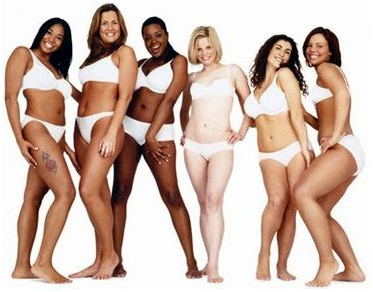
Dove took some criticism for its Curves ad campaign.
Perhaps the most difficult decision in breast augmentation surgery is the size. When Dove tried responding to criticism that the women seen in ads are not representative of real women, they found themselves being criticized again for selecting a broader, but still restricted, subset. It is really hard to represent all women in a single print ad or even a 60 second commercial. Women come in all shapes and sizes, and for this reason, so do breast implants.
Selecting the best breast implant is an important part of obtaining the optimal breast enhancement. And when it comes to breast implant volume, there is more to it than choosing a number. Size matters, and in more ways than you might think. The size of the existing breast, the size of the desired breast and the size of the woman, are all important. Here is one example.
Not Your Average Breast Augmentation
A young mother came to me with a desire to repair some of the damage caused by pregnancy. A big part of her concern was the almost complete loss of breast volume. She was not trying to “make a statement” with her breasts. She just wanted them back. Her clothing no longer fit, and she missed the more feminine curves she once possessed.
Trying to figure out your desired breast implant volume can be very confusing. For breast size, we tend to think more along the lines of cup size rather than cc’s, and cup sizes are confusing enough. The most common breast augmentation requested is a C-cup, but C-cup volumes vary by the manufacturer and even by the style of the bra.
Internet resources claim anywhere from 100 to 250 cc’s will give an increase of one cup size. The highest volume in the range is more than double the lowest volume, yet the range is about right. Cup size depends on band size — the distance around the rib cage below the breasts. To state this in the most obvious terms, bigger girls need bigger volumes, to get similar results.
Before breast augmentation.
After breast augmentation.
The average implant size used varies by region. The average volume used in the United States is in the 300-350 cc range. My patient desired a breast size proportional to her body. She wanted to be able to find clothing that would fit without being too baggy or feeling too tight. Being of average height and desiring an average size, you might think she would require the average implant volume. If only it were that simple.
The breast augmentation pictured above was accomplished with saline breast implants placed under the muscle via a periareolar incision. A moderate profile implant was selected so that the diameter of the implant matched the diameter of the breast. Matching the breast diameter is critical with saline implants. The correct breast implant diameter, especially for saline implants, is often more important than the implant’s volume.
The volume selected was above average at 420 cc’s. A larger breast implant was necessary because there was smaller amount of native breast volume present before surgery. Additionally, the larger volume was needed so that the implant’s diameter would match the chest. While 420 cc’s may seem large, in this case, the result is just what the patient wanted.
The result is a beautiful breast that is well shaped and well proportioned. Despite using a round implant, the shape is natural. Placing the implant behind the muscle, for a woman with little breast tissue to disguise it, can give a round implant a pleasing teardrop shape.
Too Small, Too Big, Just Right
Most patients want breast enhancement that is big enough, but not too big. They want enough change so that they know breast augmentation was done, but not so much that is becomes a new source of embarrassment. After breast augmentation, you want to feel comfortable, and you want clothing to fit well.
The most common reason for breast augmentation revision surgery is to increase the size of the implants. As a breast augmentation patient, the most helpful thing you can provide your surgeon is a good idea of how much breast enlargement is enough. I have tried to offer useful suggestions in: How to Choose the Correct Breast Implants: Size.
Breast Implant Profiles – Shape Matters Too
The profile of the implant can influence the final shape and location of the breast. For implants of the same volume, the wider diameter found in lower profile implants, adds more “side boob”. On the other hand, the narrower diameter of a high profile implant, will increase the space between the breasts.
For implants of the same diameter, the lower volume in a low profile implant will result in a breast with less forward projection. The opposite effect is obtained with a high profile breast implant. A high profile implant will result in a breast with more projection, and a larger cup size. Here is some additional information about Breast Diameter and Breast Implants in Breast Augmentation.
The Advantage of a Board Certified Plastic Surgeon
In determining the correct volume for my patient, the advantage I have, besides being a Board Certified Plastic Surgeon, is that I was able to do a physical examination, take measurements, determine skin elasticity and compare what I saw with the size, shape and volumes available for breast implants. There is no better way to determine what needs to be done for a cosmetic procedure than with a focused medical history and physical examination. My patient’s goals, combined with her measurements, determined that a larger than average volume implant was necessary in this case.
When it comes to breast size, there is no secret formula and there is no right answer, there is only the right size for you. It varies with each individual, and it is often the most difficult variable to pin down. This is the advantage of seeing a Board Certified Plastic Surgeon with experience in breast augmentation who cares about how you are going to look and feel afterwards.
Whether it is spring fashion or spring fever, the demand for breast augmentation is on the rise. If you are considering breast augmentation, you are looking in the right place.
Get Informed
Heidi Montag prior to her recent breast augmentation.
Many options are available for gathering the breast augmentation information you need. The Internet offers a wealth of information — some good; some not so much. While not all the information you read will apply to you, visiting reputable web sites can give you an idea of what your options are.
Friends and family members can be important allies. If you are fortunate enough to have friends or family members who have had breast augmentation, they can provide you with unique and personal insight into the procedure. It is important to note, however, that everyone’s experience (and body) is unique.
The best breast augmentation advice is found during your consultation appointment. As a diplomate of the American Board of Plastic Surgery, I put the focus on your goals, so that I can formulate a plan that addresses your unique needs.
Here are a few resources I have created to help you with some of the most common questions:
My main web site has a page dedicated to breast augmentation, including many frequently asked questions. It reviews options for incisions, implant placement, types of implants and size selection . Click here to visit the breast augmentation page on DrMele.com.
On this blog there are many posts and videos discussing breast augmentation. Clicking on “Breast Augmentation” to the left under Categories will give you pages of all the pertinent breast augmentation articles. The subheading “Breast Implant Options” list articles discussing how to pick the best implants for you.
Many of my television appearances discussing breast augmentation can also be viewed via YouTube. Clicking the YouTube button at the top of the left column will take you to my YouTube channel. For breast augmentation, I have also created two YouTube playlists:
Whether you are considering breast augmentation, or you want breast augmentation revision, when you are ready, the next step is to schedule a consultation appointment with a Board Certified Plastic Surgeon. You can check my (or any doctor’s) certification on the American Board of Plastic Surgery website.
A consultation with a Board Certified Plastic Surgeon will allow you to express your goals, explore your options and ask your questions. If you are ready to take the next step, call (925) 943-6353 for your personal consultation appointment.
It may be raining today, but spring is in the air. I am just not a winter person. It is nice to be able to shed a few layers and feel the warmth of the sun. If you have gynecomastia, however, spring is a mixed blessing.
Gynecomastia is the term for enlarged breasts on a man. If you are a man, and do not feel comfortable going shirtless, or wearing a fitted shirt, because of the size of your breasts, gynecomastia reduction may be right for you. Many men with gynecomastia are embarrassed by the size of their breasts, and compensate by wearing baggy shirts and multiple layers. Multiple layers are difficult to explain in the warm summer months of the San Francisco East Bay.
Gynecomastia Reduction Surgery – Many Choices
Everyone has heard about breast reduction surgery, but most of us think of female breast reduction surgery. Surgery is available to reduce the male breast also. The type of procedure which will work best for you depends on the type of gynecomastia you have. If your breast enlargement is mild and you have good skin tone, liposuction may be your best option. If the breast tissue is firm and dense, a small incision around the bottom of the areola (the colored skin around the nipple) may be necessary to remove the glandular tissue. If the skin is loose and redundant, an incision along the bottom of the breast may be needed to remove the excess skin.
Male Breast Reduction with Liposuction
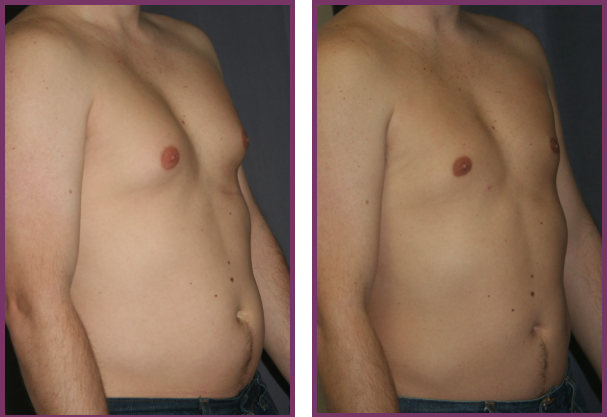
Before surgery: Breast enlargement from mild, soft gynecomastia and mild disproportionate belly fat.
After surgery: Gynecomastia and disproportionate belly fat reduced using tumescent liposuction.
If you have mild breast enlargement, good skin tone, and soft, fatty breast tissue, liposuction alone may be the best treatment. The advantage of liposuction is that it can be accomplished through small discrete incisions. Liposuction of the breasts provides a quick recovery period, and a prompt return to normal activities. Strenuous activity will need to be avoided for a few weeks to minimize post-operative swelling, but most normal daily activity can be resumed in a few days.
Gynecomastia Reduction Surgery
Before Surgery: Severe gynecomastia with a large volume of fibrous, firm, glandular tissue that would not respond to tumescent liposuction alone.
After Surgery: Gynecomastia reduction accomplished through a combination of tumescent liposuction and a small incision along the bottom of the areolas.
If you have larger breasts with firm, dense breast tissue, a small incision is used. The incision is made around the areola from 4 to 8 o’clock. This allows for the removal of dense, glandular breast tissue which cannot be reduced with liposuction alone. Unlike liposuction, this also allows for the tissues to be examined by a pathologist, to be certain the growth is a benign process. Men can get breast cancer, but this is not the most common cause of gynecomastia.
Both the above patients have good skin tone. As the skin becomes loose and redundant, other techniques are available for correction. This is most often seen after weight loss or after bariatric surgery.
Gynecomastia Video
I recently had an opportunity, on San Francisco television station KRON, to discuss gynecomastia. San Francisco Bay Area viewers were able to get information on the latest cosmetic plastic surgery innovations in gynecomastia reduction, and could call in to Body Beautiful with their questions. The gynecomastia video segment is available here: Gynecomastia Reduction – Male Breast Reduction. While you cannot call in to the show now, you can ask any questions you have about gynecomastia surgery via the contact form to the left. The best way to get specific questions answered is to call my Walnut Creek Plastic Surgery Office at (925) 943-6353, and schedule a consultation appointment. I am Board Certified by the American Board of Plastic Surgery and am an Active Member of both prestigious National Plastic Surgery Societies: The American Society of Plastic Surgeons and The American Society for Aesthetic Plastic Surgery.
Lattisse - Now available in our Walnut Creek office.
Latisse®, the only FDA approved prescription treatment for making eyelashes longer, thicker and darker, is celebrating it’s first anniversary. If you are a Latisse user, or if you want to be, Allergan is offering the Latisse® first anniversary rebate program.
If you are already enjoying Latisse®, BOTOX Cosmetic® and Juvederm®, Allergan is giving away money. If you have been interested, and would like to get started now is a great time. To cash in you have to use Latisse® and either Botox® or Juvederm® before July 15, 2010. Here’s how it works:
1) Purchase a Latisse® kit between now and July 15, 2010. (Now available in the office.)
2) Come in for a BOTOX Cosmetic® or Juvederm XC® treatment before July 15, 2010.*
You will receive $50 back from Allergan for using Latisse® and either Botox® or Juvederm®. You will receive $100 back if you use both BOTOX Cosmetic® and Juvederm® XC with the Lattise®.
The above is advertisement from Allergan and is an example of eye lash growth possible with Latisse®. Your results may differ. Unlike most the pictures on this blog this is not an actual Dr. Mele patient.
*Minimum purchase requirements apply to Botox and Juvederm. The minimums are less than the amount normally used to treat the average frown line or wrinkle.
Breast augmentation remains the most frequently performed cosmetic plastic surgery procedure in the United States. At the recent American Society for Aesthetic Plastic Surgery (ASAPS) meeting in Washington DC, breast implants, and breast implant revision surgery were hot topics.
I had the opportunity to compare notes with other breast augmentation revision specialists both formally and informally. National meetings are a great place to share information. Instructional courses are useful, but informal conversations with other Board Certified Plastic Surgeons who are faced with the same opportunities and challenges that I face can be just as enlightening.
What’s new in Breast Implant Revision Surgery?
Neosubpectoral Pockets
Implant malposition includes breast implants which are:
too close to the center (symmastia or bread loafing)
too low (bottoming out)
too wide apart (heading for the armpit)
or too high
are all addressed by modifying or changing the pocket in which the implant sits.
For symmastia, the problem is that the implants are too close together, so that the skin between them becomes elevated. Traditional treatment has been to close off the pocket centrally to reestablish cleavage. If the implant is above the muscle, they can be moved to new pockets below the muscle. This allows for the creation of two new pockets that are separated sufficiently in the center to preserve the definition between the two breasts.
When the implants are below the muscle, they can be moved to in front of the muscle. There are some disadvantages to moving the implants to a subglandular (in front of the muscle) position. This is where the neosubpectoral pockets can help. The name literally means “new pocket under the pectoralis muscle”. By working outside the old pocket’s capsule, a new space can be created for the implant. This can be used to correct symmastia and other problems with implant malposition.
Acellular Dermal Matrix (ADM’s)
An Acellular Dermal Matrix is dermis that has been treated to remove all the living cells, leaving a collagen matrix that can be used as an internal patch to help cover breast implants. It can be used to help disguise rippling and to help support an implant that is displaced. Both human and pig skin are used in the manufacture, and the off-the-shelf availability is a big plus when the native tissue is sparse. Brand names include:
The downside – it is very expensive. A sheet of ACD costs more than a breast implant. So when local tissues are available, it can save you thousands of dollars.
Fat Grafting and Stem Cell Grafting to the Breasts
Interesting cases where presented of utilizing fat (which contains lots of stem cells) as a volume expander for the breast. Some techniques involve suction expansion of the breasts for a month or longer before grafting to increase the size and vascularity of the recipient bed. This is bleeding edge new, and the long term results are unknown.
Breast are mostly fat, and the principle of replacing like with like is a good one. However, if some of the graft doesn’t take – it dies, and dead fat can lead to lumps, hard spots, infection and calcifications. The problems with lumps, hard spots, and infection are pretty clear, so what is the problem with calcifications? Calcifications are what we look for on mammograms to help identify breast cancer. They stand out as bright white spots in the relatively dark breast tissue, and make identifying breast cancer much easier. If a breast is already full of calcifications, it can be very hard to identify a breast cancer. Either every calcification would need to be removed (making the breast smaller) or risk the early detection of a breast cancer. The implications of increasing the number of stem cells (cells that can become anything) in the breast is also unknown.
For now, research in this area should only be performed in carefully controlled studies. The problems that still need to be overcome include insufficient volume, unpredictable take, interference with mammography, long term outcome. Remember, before breast implants, not too long ago, free silicone was injected into the breasts to increase their size. It worked and felt very natural, at first. Long term, however, the breast became firm, lumpy and painful. The outcome may not be the case with fat grafting, but long term follow up is not yet available, and an assumption that everything will be fine is naive.
Gummy Bear Implants (Gummi Bear Implants)
Still awaiting FDA approval.
The most recent delay was rumored to be that the FDA was waiting to see that the current breast implant follow-up studies where progressing. I am an investigator for both Allergan and Mentor, and each has filled both their Saline Breast Implant and SIlicone Breast Implant follow-up studies. All that remains is to collect 10 years worth of data.
Will it take 10 more years to get FDA approval for the gummy bear implants? It took 14 years to get the current silicone implants re-approved.
Emend
Originally marketed to prevent the nausea and vomiting associated with chemotherapy (CINV), Emend is meant to prevent nausea and vomiting rather than treat it after it has occured.
Emend would need to be administered prior to post operative nausea and vomiting (PONV) to be effective. Currently this is an off-label use, and it has only sparingly been tried to date. Zofran, another medication that is currently widely used, started down the same path 20 years ago.
Risk factors for PONV:
female gender
young age
non-smoker
motion sickness
Since most of my breast augmentation patients have several of these risk factors, they all get treated prophylactically, often with several medications. If one med could prevent all PONV, it would simplify the treatment. Fingers crossed…
My recent television appearance discussing liposuction, and recent posts on liposuction, have generated many questions about the use of lasers for fat removal.
Laser liposuction is red hot in the media, but the hype is louder than the truth about laser liposuction.
The Myth
Laser liposuction marketing is focussed heavily on the supposed skin tightening advantage of using a laser. The thought is that heating the subcutaneous tissues can tighten the skin.
The Facts
The only reliable way to tighten skin is to surgically remove the excess. While modalities like lasers and radiofrequency energy have shown promise in this area, in fact, the amount of shrinkage is usually small and unpredictable. Head to head studies of laser liposuction compared to tumescent liposuction show no difference in the amount the skin shrinks.
Thin cannula, tumescent liposuction remains the “gold standard” for all liposuction. It still provides the fastest, safest and most reliable method of spot fat removal available today.
The Science is Still Pending?
There are no published large prospective trials comparing laser liposuction to traditional tumescent liposuction. Laser liposuction has been available for some time now. I have to believe the manufacturers of these devices have tried to prove that is a superior product; however, the evidence is conspicuous by its absence. Evidence that it is not better is available.
The best randomized, double-blinded, controlled study shows no difference between laser liposuction and traditional liposuction. In this study, half the patient was treated with laser liposuction and the other half of the patient was treated with traditional tumescent liposuction. Neither the patients nor the doctors could tell which half was treated with the laser. Both sides appeared to have equally good results. This is a well constructed, prospective, randomized and doubly blinded study.
Laser liposuction requires a laser.
Lasers add expense and danger. You cannot be burned with a normal tumescent liposuction cannula, but ask anyone who works around lasers, lasers can burn. Without any benefits, you get only the risks.
Laser liposuction adds more steps, so it takes longer.
For most techniques, the laser is passed under the skin prior to traditional tumescent liposuction, and sometimes again afterwards. Without any benefits, you get only a longer operation.
Traditional tumescent liposuction has two steps:
Infiltration
Aspiration
Laser liposuction has four steps:
Infiltration
Laser applied to the fat
Aspiration
Laser applied to the subdermal skin
Infiltration is administering a wetting solution (saline+lidocaine+epinephrine) to the subcutaneous tissues. This decreases bruising and increases post operative comfort.
Aspiration is the suction assisted removal of the fat (or burned fat for laser liposuction). Fat is very soft and easy to remove with suction. The laser heats, melts, damages the fat cells (and surrounding cells). Some proponents advocate using only the laser and letting the body absorb the damaged cells, but removal decreases the inflammatory mediators.
Skin Shrinking Ray
Treat all you friends to the latest laser treatment.
I am a proponent of finding a way to shrink skin without surgery. This would be a huge leap forward for plastic surgery. Many technologies are being investigated; however, when it comes to liposuction, I am still waiting for a technology that does a better job. A technology that provides a result every time, for every patient, not just for those who have tight elastic skin. Great skin will remain firm not matter what is done to it. A true skin shrinking ray will tighten poor skin and make it great again. If I find a skin shrinking ray, my San Francisco Plastic Surgery Blog readers will be the first to know!
The American Society for Aesthetic Plastic Surgery concluded its 2010 annual meeting in Washington DC. From all over the world, leading Plastic Surgeons, specializing in the cosmetic side of Plastic Surgery, gathered to share the secrets to their success. The latest and greatest in Cosmetic Plastic Surgery was presented and discussed from head to toe.
It was a great meeting. Below is a selection of the hottest topics. Some you will recognize as recent posts here on the San Francisco Plastic Surgery Blog. Others you may be seeing here soon.
Hot Topics in Aesthetic Plastic Surgery
Facial Plastic Surgery – The Head & Neck
Treatment of the Jowls
Treatment of Frown Lines
Transpalpebral (through the eyelid incision)
Endoscopic
Creating Beautiful Lips (extensively covered in this blog)
Rhinoplasty – planning and revisions
Fat Transplantation for Breast Augmentation (small volumes, no long term data, interference with mammography?)
Breast
Breast Implants and Rare Lymphomas (very rare and not normally aggressive)
Maintaining Breast Elevation and Upper Pole Fullness
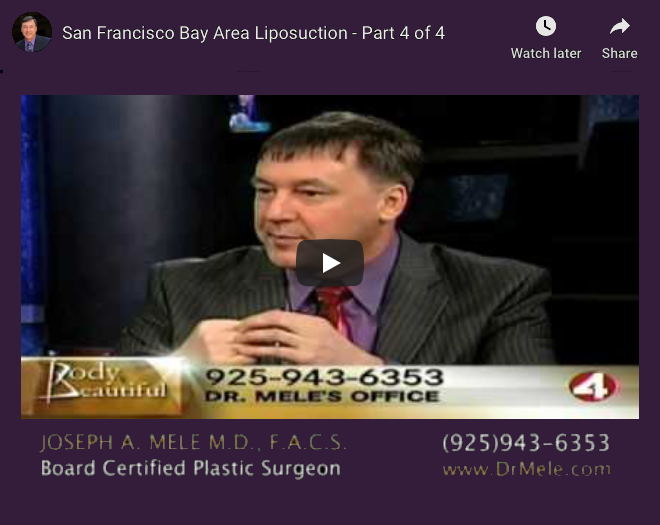
This is the fourth and final installment of my recent KRON4 Body Beautiful television appearance reviewing the latest techniques in Liposuction. Liposuction is one of the most popular cosmetic plastic surgery procedures, and there is on going research to make it even better.
With the advent of wet techniques, like tumescent liposuction, the safety and predictability of liposuction took a giant step forward. This innovation alone is what has made liposuction an accepted cosmetic plastic surgery procedure, that is applicable to a wide range of patients. Now matter how good it is now, plastic surgeons and patients both would like to make it even better.
The next leap forward may be the ability to skin the skin. Many patients have enough elasticity in their skin to allow for excellent post-operative results, but when the skin is loose, other surgeries are more effective and provide superior results. Many treatments have been tried, but none are effective enough for widespread use. Technology such as laser liposuction, smart lipo, ultrasonic liposuction, vaser liposuction, radiofrequency liposuction, cold or cryoliposuction, power liposuction have all been tried with varied success. None have had overwhelming success however. Is the magic wand of skin tightening out there?
Liposuction Video for San Francisco’s KRON Body Beautiful
What is the latest technology available for liposuction, and does it provide you the benefits promised? This segment reviews the current art of liposuction on KRON‘s Body Beautiful with host Vicki Liviakis. The show a half hour long, so I have divided this liposuction video review into four segments. The third lipo video segment is in this post. Links to the other three parts, and the liposuction introduction post can be found below.
Additional liposuction information is available on the Liposuction Page of DrMele.com. Your questions about liposuction will be answered if you to use the contact form to the left. Without an in person consultation, I can only offer generalized answers. Specific answers regarding liposuction are best answered in person.
For more liposuction information, liposuction price ranges or to schedule a personal professional consultation appointment, please call my Walnut Creek Plastic Surgery office at (925) 943-6353. Please do not call the 800 number in the video below. It is only used for viewer questions during the live broadcast.
This lipo video covers:
Laser liposuction
How to evaluate before and after pictures.
Why do we have to age at all?
When considering liposuction, What should I do?
Can I gain weight after liposuction?
The other segments of this broadcast can be found here: