August 31st, 2009 Dr. Mele
I previously posted articles on what’s new in Plastic Surgery San Francisco including Hydrelle® and Dysport®. Well, there is new information to share with both products, and this information can save you some money too. The news about Dysport® is here … Hydrelle® there.

$75 off coupons coming to a Plastic Surgeon's office near you.
Dysport® is the only FDA approved competitor to BOTOX Cosmetic®. To celebrate the launch of it’s new botulinum toxin, Dysport®, Medicis will be offering $75 rebate coupons to patients receiving Dysport® (botulinum toxin type A) wrinkle reduction. The coupons will be available after the Labor Day Weekend, beginning September 8th, and continuing through October 31st, 2009.
“Botox Day” is the usually third Wednesday of each month (e. BOTOX Cosmetic® and Dysport® will both be available. Other days may be available upon request, call the office for details (925) 943-6353.
If you haven’t heard about Dysport®, please see the post mentioned above. While Dysport® has been available in Europe for years, Medicis has only recently received FDA approval for its use in the US. Expect to hear move from them in the near future. The informational literature and advertisements for the United States have just now passed FDA review, so you will be hearing more about Dysport® soon.
Dysport® and BOTOX Cosmetic® are not fillers but are good for reducing wrinkles on the upper face. Fillers. like Restylane®, Perlane®, Juvederm® and the newest addition Hydrelle® are better for the mid and lower face.
Happy wrinkle reduction San Francisco.
Posted in Home, Wrinkle Reduction (Non-surgical) | No Comments »
August 31st, 2009 Dr. Mele
UPDATE: I can no longer recommend this product. I would suggest using Restylane®, Perlane® or Juvederm®. All three are now available with Lidocaine, all three seem to have fewer adverse reactions and superior customer service. Please see “The Ugly” below for details.
I previously posted articles on what’s new in Plastic Surgery San Francisco including two new cosmetic plastic surgery products: Hydrelle® and Dysport®. Well, there is new information to share with both products. The scoop on Hydrelle® is here … Dysport there.

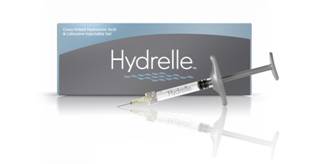
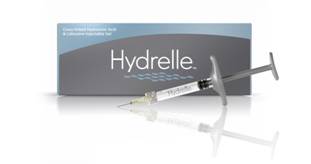
Hydrelle®: the first FDA approved wrinkle filler with numbing added.
Hydrelle® was featured on the hit television series The Doctors.
I have had a chance to use Hydrelle® and it is easy to work with. It is very similar to Restylane®, Perlane® and Juvederm®. If you are familiar with these dermal fillers, the results last for about the same amount of time; however, Hydrelle® is more concentrated.
The Good, the Bad and the Ugly
The good news is that Hydrelle® requires about half the volume of the other products for wrinkle correction. Similar correction, half the volume. Moreover, the local anesthetic (0.3% lidocaine), which is added to Hydrelle®, really cuts down on the discomfort of the injections. While I almost always use a local anesthetic block to administer the current HA fillers, with Hydrelle® I rarely need to block the area before treating.
The bad news is that the concentrated product tends to swell more than the others dermal fillers. This is most apparent the first day or two, and then it settles down. Also, if you are allergic to sulfites (red wine or dried fruit) this product is not for you.
The Ugly
EDIT: Three to four weeks after injecting a patient with Hydrelle® they developed two large sterile abscess on the cheeks which required weeks of antibiotics, steroids, and surgical drainage to treat. This complication is rare, but other examples can easily be found on line. The injection was in the nasolabial folds and technique used was as recommended by the manufacturer, and the same technique I use with the other HA fillers (Restylane®, Perlane® and Juvederm®) This patient’s cultures were negative and they were not allergic to Sulfites.
If I continued to use Hydrelle®, I might go the rest of my career without seeing this extreme reaction again; however, the only way I can be 100% certain the Hydrelle® will not cause more problems in my practice is to no longer use the product. Good, safe and time tested alternatives are available with and without Lidocaine: Restylane®, Perlane® and Juvederm®.
The FDA is currently reviewing this and other reports of adverse reactions submitted regarding Hydrelle®, and for now it remains on the market. I was very excited about this product as it seems to fill better than the other fillers; however, I will no longer be offering Hydrelle® in my Walnut Creek Plastic Surgery office.
I have used HA fillers since they became available in the US, and I have never seen this type of delayed onset and prolonged recovery with any other HA product, and I hope I never do again. Complications can occur with any procedure, so if you develop redness, lumps, pain, increasing swelling, or any other signs of an adverse reaction, be certain to contact your plastic surgeon immediately.
All adverse reactions, for any product not just Hydrelle®, should be reported to the FDA. The FDA’s online submission form is here. My patient sample size is too small to draw any conclusions, and the FDA is there to compile this data and make the appropriate recommendations. If you have had an adverse reaction, you should submit it. The FDA will compare the number of adverse reactions to the number of units sold to see if it is an acceptable number.
Please understand, my results may not be typical, and others will hopefully never have this type of reaction. My only goal in suppling the above information is to improve patient safety.
Posted in Home, Wrinkle Reduction (Non-surgical) | No Comments »
August 24th, 2009 Dr. Mele
Breast asymmetry is more the rule than the exception, and there are many ways in which breasts can be uneven. Size, shape and location all come into play. Asymmetry may effect the entire breast mound (see previous post) or just the nipples. Normally, the differences are small; however, as the magnitude of breast asymmetry increases, so does the desire for correction.
In my San Francisco Bay Area (Walnut Creek) cosmetic plastic surgery practice, I measure the differences between the breasts both subjectively and objectively every day. Small differences frequently go unnoticed. Often, asymmetry is first noted in the consultation for breast augmentation. When the difference is obvious, however, breast asymmetry can be the driving force toward seeking consultation with a Board Certified Plastic Surgeon.
This post is focussed primarily on areola asymmetry (the darker skin around the nipple) and nipple asymmetry (the raised part in the middle). Look for a post on breast asymmetry (the breast mound itself), including breast implant asymmetry, in the very near future.
One of the most common nipple asymmetries is caused by inversion (retraction) of the nipples. Inverted nipples can occur on one or both sides. Inverted nipples and even bifid (split or duplicated) nipples can be treated with minor surgery.

Before correction the nipple and part of the areola are hidden.
Inverted nipples are caused by short mammary ducts that pull the nipple inside the breast tissue. In the most pronounced forms even the areola maybe hidden. The scar for inverted nipple correction is normally hidden in the fold beneath the nipple. Since correction involves releasing the tight ducts, correction may interfere with the ability to breast feed, and this should be discussed with your plastic surgeon prior to surgery.

After correction the relatively large nipple can now be seen.
The size and shape of the nipple can also be adjusted.

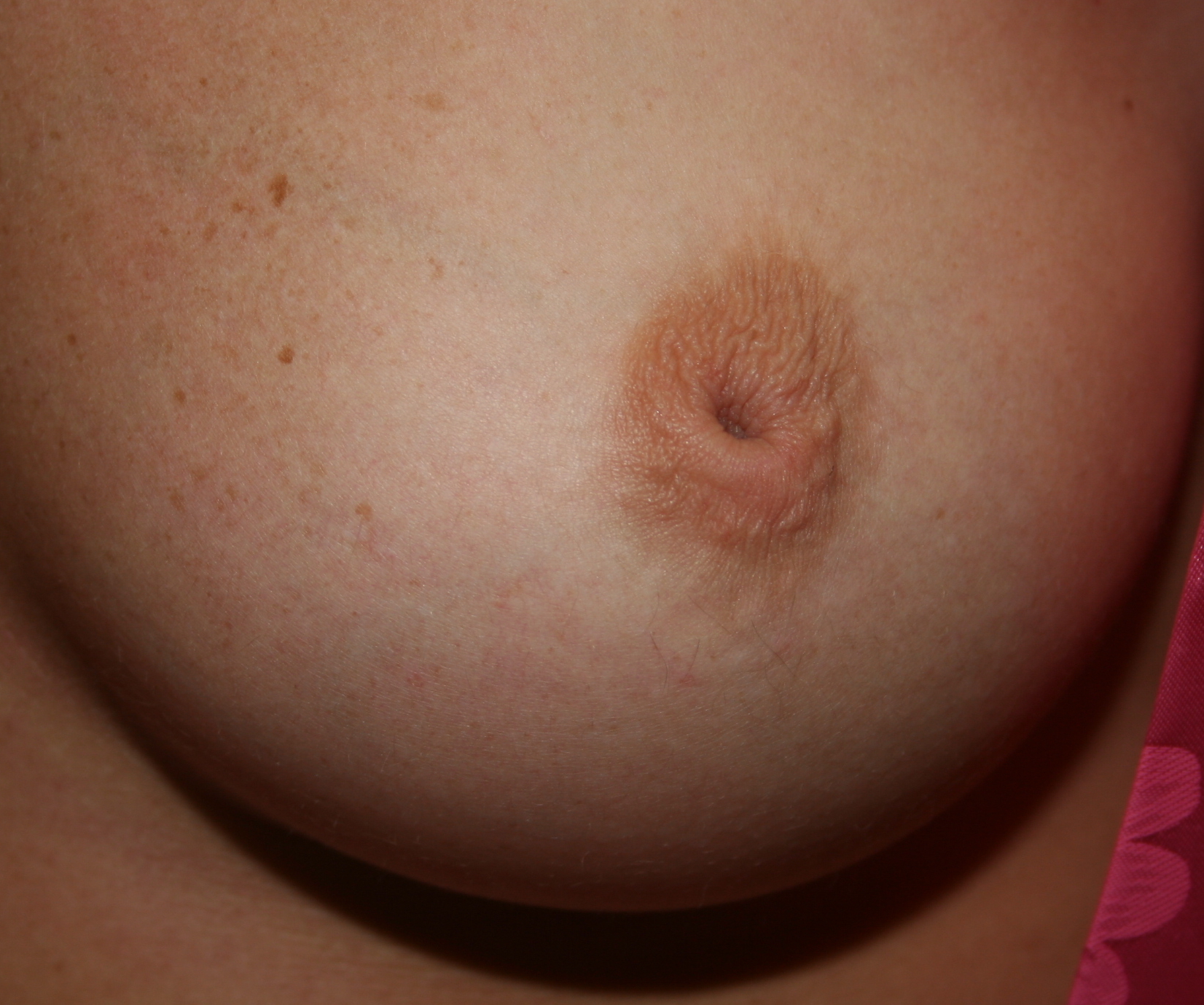
Close-up of breast showing appearance of nipple enlargement after pregnancy.
Overly large nipples can be reduced in length and girth. In general, it is easier to reduce a large nipple than to enlarge a small one. Nipple reconstruction is performed after a mastectomy when the nipple is absent. With nipple reconstruction, especially when the breast has received radiation, the most difficult aspect is creating and maintaining nipple projection.

Close-up of breast showing appearance of nipple after nipple reduction.
There are times when the nipples are normally formed, but their location on the breast is asymmetric or they are just too low. Modest changes in nipple location can be improved with a periareolar approach. Several centimeters of motion can be safely accomplished with this method. The same periareolar technique can also be used for areolar reduction or to correct the overly full areola, as seen with a tubular breast deformity.
Larger asymmetries may require surgery similar to a breast lift. Formal breast lifts allow the larger movement of the nipples, and reshaping of the entire breast mound. See the previous San Francisco Plastic Surgery Blog posting by clicking here Breast Mound Asymmetry San Francisco: Breast Mound, Breast Implants. There are many types of lifts, and each has its own pros and cons. The art of Plastic Surgery is choosing the best approach for each individual San Francisco breast asymmetry patient. This will be the topic of a future posting.
Posted in Areolar Reduction, Breast Asymmetry, Breast Augmentation, Breast Implant Revision Surgery, Breast Lift (Mastopexy), Home, Inverted Nipples, Nipple Reduction, Tubular Breasts | No Comments »
August 16th, 2009 Dr. Mele
There are many ways in which breasts can be uneven. Size, shape and location are the most common. There can be asymmetry of the nipples as discussed in Breast Asymmetry San Francisco: Inverted Nipples and Asymmetry, or asymmetry of the breast mounds themselves discussed here. If the differences are small, everything appears normal; however, as the magnitude of asymmetry increases, so does the desire for correction.
There are times when the nipples are normally formed, but their location on the breast is asymmetric or low. This post will discuss breast mound asymmetry, including breast implant asymmetry and nipple location.
Modest changes in nipple location can be improved with a periareolar approach. In these cases an incision is made around the areola and differing amounts of skin are removed to move the nipple and areola in the desired direction. Several centimeters of motion can be safely accomplished with this method.
The same periareolar technique can also be used for areolar reduction. When the areola is too large, it be reduced to better match the proportions of the breast. The periareolar technique can also correct the overly full areola, as seen with a tubular breast deformity.
Larger asymmetries, require greater movement of nipple areola, and are accomplished with surgery similar to a breast lift.

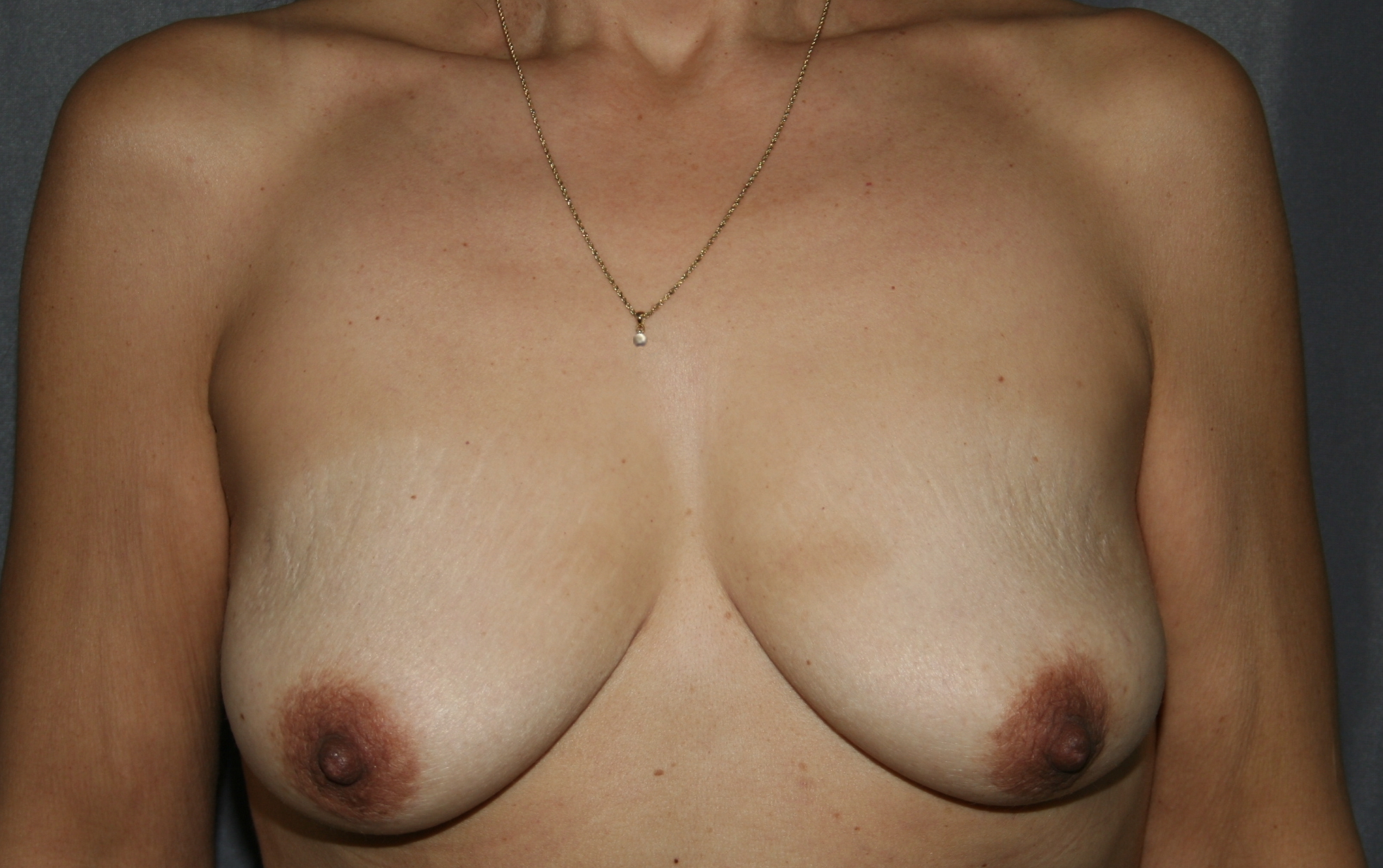
Before breast augmentation and formal breast lift. Note the asymmetries. On left side (patient's right) both the breast mound and the nipple areola complex are larger and lower.
Formal breast lifts are also know as inferior pedicle breast lifts, inverted-T breast breast lifts or anchor scar breast lifts. This is the most versatile of the breast lift and allows for the largest movement of the areola and nipples, as well as reshaping of the entire breast mound. Larger corrections are possible with preservation nipple sensation and circulation.

After breast augmentation and an "inverted-T" breast lift. The periareolar and vertical components of the scar can be seen. The horizontal scar is hidden in the inframammary fold.
In this case a breast augmentation was used to adjust the breast volume; at other times a breast reduction is more appropriate. As previously dicussed, breast implant revision surgery may also be indicated for breast implant asymmetry from capsular contracture.
There are many types of breast lifts and each has its pro’s and con’s. The art of Plastic Surgery is choosing the best approach for each individual San Francisco breast asymmetry patient. I call this, using the smallest hammer necessary to get the job done. While bigger lifts leave a longer scar, choosing too small a lift still leaves a scar but it does not correct the original problem.
Posted in Areolar Reduction, Breast Asymmetry, Breast Augmentation, Breast Implant Revision Surgery, Breast Lift (Mastopexy), Home, Tubular Breasts | No Comments »
August 8th, 2009 Dr. Mele
If you are the right person, there is nothing mini about the results of a mini tummy tuck (mini abdominoplasty). Part tummy tuck, part liposuction, the procedure combines the skin tightening ability of a tummy tuck with the spot fat removal of liposuction.

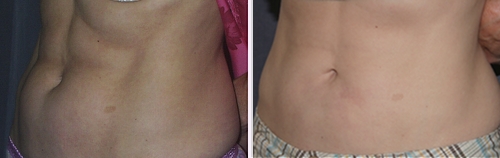
Liposuction of the Abdomen - Before (Left) / After (Right)
Liposuction alone is great for the tight belly that has a collection of disproportionate fat. This fat usually collects on the lower abdomen and can be easily pinched. It is also the major cause of “muffin tops”. With good skin tone, liposuction can vacuum away the fatty bulges and return pleasing proportions to the abdomen, flanks and lower back.

Full Tummy Tuck (Abdominoplasty) of the Abdomen - Before (Left) / After (Right)
When skin is loose, however, liposuction may leave the skin with more laxity. Moreover, the risk of causing waviness or ridges in the contour goes up with loose skin. In this situation, a tummy tuck is the most reliable method of skin tightening.
Since tummy tucks tighten the abdominal skin, the looseness is removed and ridging relieved. The tried-and-true tummy tuck is a well established procedure which can provide a dramatic improvement appearance. It can tighten the skin from the ribs to the pubic bone in my Walnut Creek tummy tuck patients. When combined with a back/buttocks lift, a tummy tuck becomes a lower body lift, which can help people who have accomplished massive weight loss, but are left with a skirt of loose skin around the trunk.

Mini Tummy Tuck (Mini Abdominoplasty) with Liposuction - Before (Left) / After (Right)
For lesser problems with abdominal wall laxity, a full tummy tuck may not be necessary. When the laxity in the skin is isolated to the skin between the umbilicus (belly-button) and the pubis. The lesser skin resection allows for a less involved surgery and faster recovery. It can also be combined with more aggressive liposuction of the upper abdomen for an enhanced result.

Another Mini Tummy Tuck (Mini Abdominoplasty) with Liposuction - Before (Left) / After (Right)
Patient selection is the key to a good result with a mini tummy tuck. It is important for San Francisco Tummy Tuck patients to seek out a cosmetic plastic surgeon who is Certified by the American Board of Plastic Surgery, and who is familiar with the unique abilities and the limitations of the mini tummy tucks.
For additional information comparing liposuction and tummy tuck visit www.DrMele.com here. Information on Board Certification is here. You will need to create a free account, but the information is up to date and your information is not shared. Lastly, it is also a good idea to check you prospective plastic surgeon’s license with your state’s medical board. For California check here.
Posted in Home, Liposuction, Mini Tummy Tuck (Mini Abdominoplasty), Tummy Tuck (Abdominoplasty) | 1 Comment »
August 1st, 2009 Dr. Mele
UPDATE: I can no longer recommend this product. I would suggest using Restylane®, Perlane® or Juvederm®. All three are now available with Lidocaine, all three seem to have fewer adverse reactions and superior customer service. Details here.

Hydrelle: first FDA approved wrinkle filler with numbing added.
Sometimes called the liquid facelift, injectable fillers have made there mark in cosmetic plastic surgery. While they cannot do what a facelift does in terms of removing loose skin, they can fill the deeper lines around the nose lips and mouth. These lines are one of the three main areas corrected by a surgical facelift. For my patients with only these lines, a filler is a quicker and less expensive option. For my patients with these lines plus jowls and loose neck skin, correcting the lines can often postpone the need for a facelift.
Additional information and educational movies about injectable fillers and facelifts can be found on my Walnut Creek Plastic Surgery Website. Here are the links: Injectable Dermal Fillers Walnut Creek and Facelift Walnut Creek. Below is a brief review of the injectable dermal fillers that are currently available.
Dermal fillers are some of the most commonly used cosmetic products in facial plastic surgery. They can be used to reduce wrinkles and add volume. Dermal fillers are also used to augment lips, cheeks and chins. And now a new dermal filler is coming soon to San Francisco Plastic Surgery offices.
The King is Dead; Long Live the King!
Collagen® is no longer manufactured by Allergan. It was the king of facial wrinkle injections and plumped lips for decades. Now there is a new king. The generic term for these is Hyaluronic Acid (HA).
Hyaluronic Acid has replaced Collagen® because HA is softer and longer lasting. You may know them by their brand names: Restylane®, Perlane®, Juvederm® and the soon to be available Hydrelle®. Hydrelle is the first HA preparation made with lidocaine (a numbing agent) mixed in.
While Radiese® is also an injectable dermal filler it is not a HA and it is not as versatile. Its use is limited to deeper wrinkles and to augmenting the cheeks and chin. It is not recommended for fine lines or lips. It is bright white and firm to touch as opposed to HA fillers which are a clear gel.
So What is Hyaluronic Acid
Hyaluronic acid (HA), like collagen, is naturally found in our skin and joints. It used in many commercially available moisturizers, and several manufactures purify it for the treatment of wrinkles. While HA is a good moisturizer when applied to the surface of the skin, the real benefit of HA is wrinkle reduction by direct injection.
HA is supplied in pre-filled sterile single-use syringes. It is a clear gel that can be injected directly into the dermis (deep skin) to provide immediate improvement in the appearance of wrinkles. It can also be used to enhance facial features, the most popular being the lips. Unlike Collagen®, which was quite firm, HA’s are soft, and softness is a big benefit for lips.
The biggest downside to current wrinkle reductions with HA’s is that it needs to be injected. Injections can cause discomfort and sometimes bruises. There is some mild swelling and redness associated with the treatments, but this resolves quickly. To help reduce the discomfort associated with the injections, all major HA manufactures/suppliers (Medicis and Allergan in the US) have added Lidocaine to their HA product. While Hydrelle®, was the first FDA approved combination of HA and numbing agent, Perlane®, Restylane® and Juvederm® are now also available with Lidocaine.
San Francisco Bay Area Plastic Surgery
So what can you expect from HA injections? Currently in my San Francisco Bay Area Plastic Surgery practice I prepare for HA injections by carefully cleaning the skin and then blocking the area with a Lidocaine injection. With the area now numb, I can concentrate on wrinkle correction, and you can feel comfortable.
What will be different with Hydrelle®? Hydrelle® numbs as it’s injected. The lidocaine in the Hydrelle® will not help with the first pass. Unless the area is blocked as above, the first pass will be felt. However, with deeper wrinkles, multiple passes over the same area are common. For these repeat injections, the site would be numb from the first pass, and any discomfort minimized. The advantage is that only the treated area is numb.
Collagen® also had lidocaine added and it worked pretty well. Being a Board Certified Plastic Surgeon who practiced through the transition from Collagen® to the first HA Restylane®, I can tell you many of my Collagen® patients made the transition to HA’s and preferred the block over the lidocaine in the injectable. This is especially true in the upper lip. For some, anesthetizing the area with a local block will still be better, but it is nice to have options.
Posted in Home, Wrinkle Reduction (Non-surgical) | No Comments »